There is extreme reluctance to put children into "special schools" or classes. For one thing, they don't exist. For another, such separation is almost impossible without putting those children at a disadvantage, even if there is no intention to somehow keep them away from natives.
And then that's also the connection to the US situation, where they actually had segregated schools and decided that this is impossible.
Tenuous at best. That was a different place and a different time. Different circumstances, different timelines, different politics, and even different differences.
Brown vs Board of Education was decided based on the 14th Amendment to the Constitution, which was specifically enacted after the Civil War to deal with the emancipation of slaves. Meanwhile during that same timeframe (1890s) governments of former confederate states sought to impose segregation laws clearly designed to oppress and disenfranchise blacks. The legal justification for these racially discriminatory laws was the "Separate but Equal" doctrine laid out by Plessy vs Ferguson.
So by the time of Brown v Board you had a substantial black population who spoke English and had been in the US for over a century(The 1790 census reported 17.8% of the US population was enslaved). You had a history of state governments enacting discriminatory laws clearly motivated by racism. You had legally mandated segregation in all aspects of life, not just schools.
It was not a case of sudden mass migration over a span of less than 10 years. And while you did have some ethnic differences, there wasn't a major language barrier. Furthermore, many of what you might call ethnic differences at the time (such as lower literacy levels) were substantially a consequence of slavery and discriminatory laws in the first place.
Also there is a long history of "expecting" lower performance from certain ethnic minorities in Germany, putting them into the "special needs" category extremely easily.
I suspect that parallels to the situation in the US go a lot deeper still. But people aren't paying close enough attention yet and somehow believe that with our constitution discrimination is impossible and so all disadvantages must be the immigrants' fault by default.
>There is extreme reluctance to put children into "special schools" or classes.
https://sportsmediachallenge.com/wp-content/uploads/2018/06/...
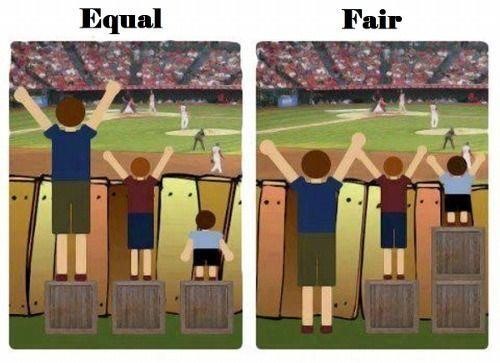
Where the difference in view might come from, i do care about the people stuck in that horrible system instead of the way it is framed. I dont know what another perspective then "what aid can we offer the people stuck in that situation" really helps anyone but your ego. How anyone can construct an addition schoolyear to learn the language as racism is really beyond me.
It's completely ridiculous and impractical for the state to teach Pashtu to Afghan children in Germany. For English it is almost as bad. Also, learning German does help you learn English, and exposure to different languages does actually make subsequent language learning easier. Multilingualism is not a zero-sum game.
School education is not like a downloadable Database. If it were, it would be more efficient to teach them all the 13 years of stuff at age 18, because that's when they learn fastest. If it were all about usable knowledge (or skills) we should not teach arts, gymn, philosophy or music. Biology and History would also be on the brink for most children.
But it isn't. And yes, it would be nice to help them more specifically, but that's easier said than done. Since we can't recruit a few thousand non-existing experts on the fly, the existing teachers have to deal with it.
The system simply assumes people will be staying, reality looks different. If entering the German school system is something you want to do, the current system is still nonsense. It assumes people will be able to learn a second language overnight and comprehend the course material in a language they dont speak in the same time as people whos first language this is. For that more time is simply needed.