The real reason is that the gov't simply decides what drugs are worth and then tells the drug companies. If the drug companies don't like it, then the gov't tells them they can't sell them in Canada. Think of it more like "price by fiat" than anything else.
It was a lot like playing songs on the radio: nobody could stop you as long as you paid.
Then the system was switched to give the pharma companies total control of the distribution of their patented molecules.
Perhaps United Healthcare cannot negotiate as much because it's bound by regulation, there's a large number of drugs that it cannot realistically stop covering, and the drug companies know it?
Usually we use the market to set the prices of goods which works unreasonably well. But the pharmaceutical market is so far divorced from any normal market forces that what's the right price probably has very little relation to the prices charged.
And I think there are definitely two different discussions to have. "How much should be spent on pharmaceuticals" and "what should the unit price be?". The holy grail are solutions that reduce the cost of bringing a drug to market. But I'm also very interested in solutions that reduce the unit price without affecting total pharmaceutical spend.
Drugs aren’t a perfectly competitive market involving commodities, like say wheat or corn, but there is oligopolistic competition similar to say mobile phones, internet search, or social media. Would having the government set prices in those markets improve efficiency? Or are they competitive enough—even if not perfectly competitive—where the government probably wouldn’t do better?
I'm in 100% agreement that the government shouldn't get involved in markets that look anything like what you'd see in an ECON101 course. But the prices of drugs and healthcare in general are set in a way that is so far removed from ECON101 models that I don't think you can call the price of any pharmaceutical medicine a "market price". There are 100's of market prices, the price negotiated between any given oligopolistic supplier of drugs with a oligopsonic collection of governments and large insurance companies(which all set different price). The actual price an individual pays for a given medication and insurance, and the price the oligopolistic supplier sets for a lone individual.
I'm not sure why we call the price set by one relationship(uninsured individual with large oligopolistic supplier) with the largest negotiating imbalance the "market price".
It seems like this policy has two effects.
"Reduce the unit price of drugs to individuals". Good because more people can access medication, and consumers pay less.
"Reduce funding available for drug R&D". Probably bad because this reduces the number of future drug we have.
I'm don't know whether this will be good or bad on net for U.S. consumers in the long run but I think it requires analysis far more detailed than assuming the highest of a 100 possible prices for a medication is "the market price" and any deviation from it is creating an inefficient market.(Which is a good assumption for most near-perfect markets).
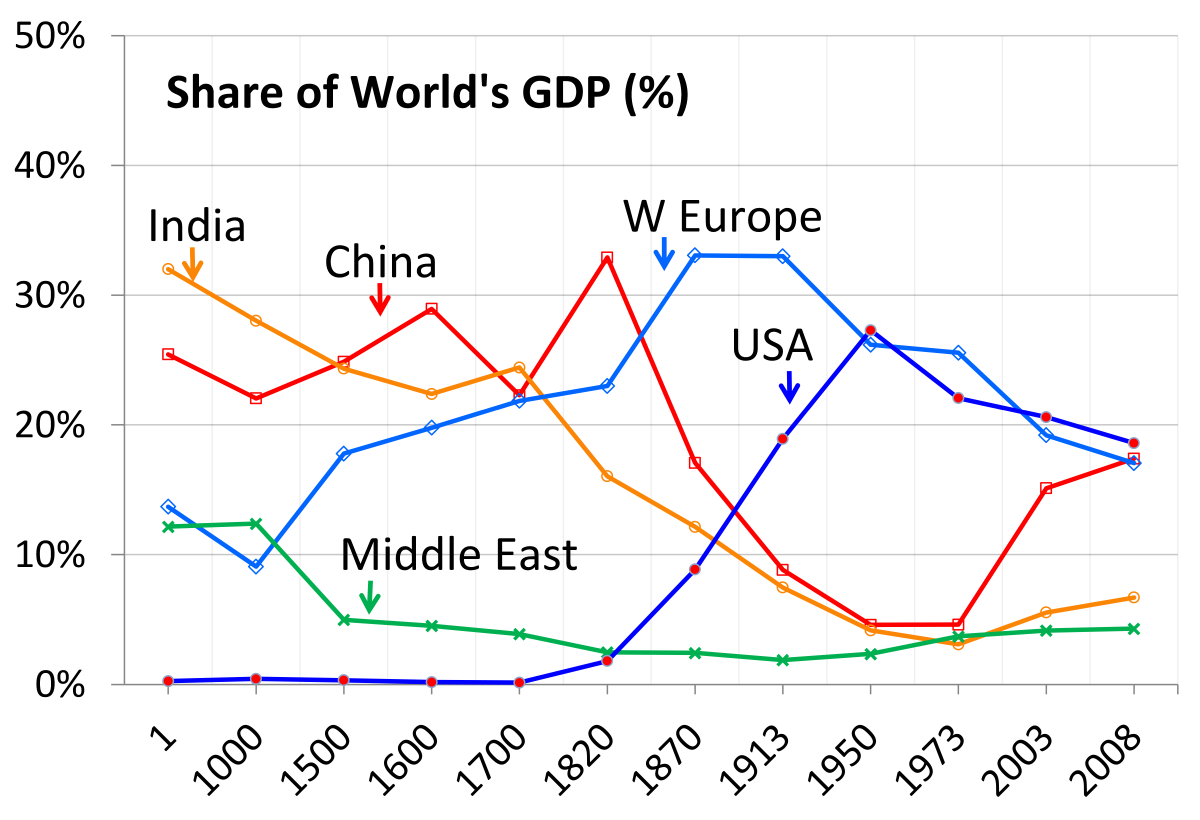
Weird then that we became the richest most powerful country in the world precisely during that same time period.
That may or may not be a good idea. But the reason it's easier to allow imports from Canada, instead of doing what the Canadians do, is politics. The U.S. has a long history of price regulation. After FDR, the government regulated everything from the price of milk to what airlines could charge for a ticket between Chicago and New York. That regime was almost uniformly disastrous, and starting with Jimmy Carter there was a bi-partisan move to eliminate price regulation all over the economy. So there is a huge political opposition in the U.S. to anything that smacks of price regulation.
Allowing imports from Canada effectively outsources the regulatory exercise of price setting to the Canadian government. So the U.S. can achieve the effect of price regulation, without having to actually admit that it's engaging in price regulation.
[1] https://en.wikipedia.org/wiki/Patented_Medicine_Prices_Revie...
> The Review Board establishes the maximum prices that can be charged in Canada for patented drugs.[1][2]