How does taxation do this? Taxation is a mechanism for funding the maintenance of an ordered society which enables extreme wealth creation. It's the wealthiest citizens who benefit the most from law enforcement, infrastructure, and national defence.
This is a new type of tax that has never been implemented in the US. If the goal is to reduce poverty, it won't do that. So what is the goal?
[citation needed]
[1] https://media.nationalpriorities.org/uploads/budget-graphic.... [2] https://en.wikipedia.org/wiki/Expenditures_in_the_United_Sta...
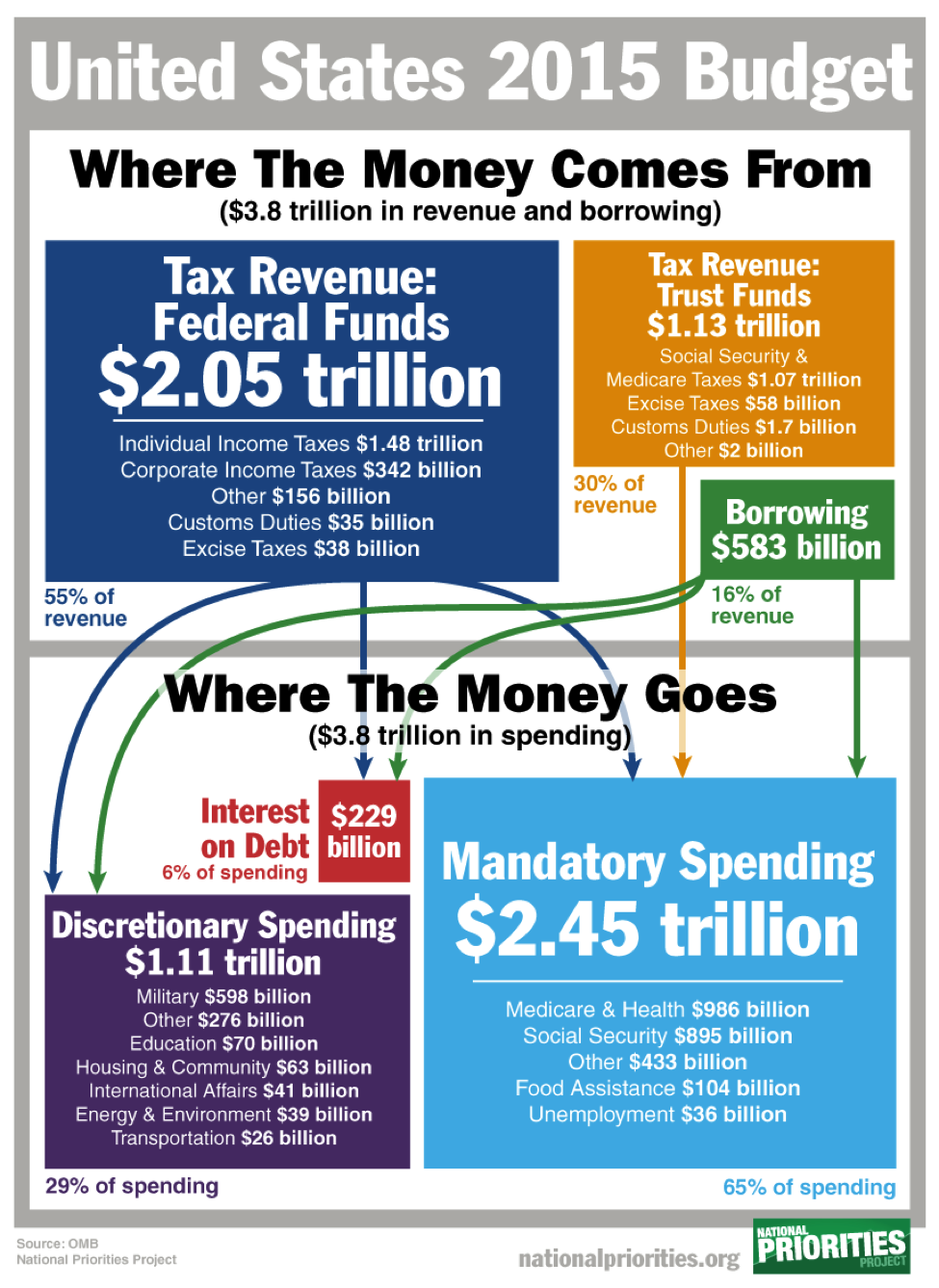
[citation needed]
It's been shown that a comfortable reliance on welfare disincentivizes becoming independent again. Especially when welfare recipients have a higher income than minimum wage. Any rational actor will have a hard time transitioning to minimum wage work at the risk of losing welfare when income from welfare is higher. This is plainly obvious https://www.cheatsheet.com/culture/states-welfare-recipients...
Would you be in favor of adding a time-limit to welfare eligibility to disincentivize long-term reliance on welfare?
I never claimed the top 1% is just the top 100 wealthiest Americans.
I'm not saying you're point isn't valid, but your reference to the wealthiest 100 Americans is relatively meaningless to any discussion being had here.
Also, the federal budget is composed of so many things[2], saying that taxing high wealth individuals couldn't affect it is a bit disingenuous. The bottom line is that if you have more money in the pool (either by raising revenue or cutting expenses), you can pay for more new projects. Taxing these people could add millions of dollars to that pool. I'm not trying to say that's good or bad. It's a zero sum game here, either the individuals spend it on the projects of their choice, or the government gets it and spends it the way they want.
1-https://dqydj.com/how-many-millionaires-decamillionaires-ame... 2-https://www.nationalpriorities.org/budget-basics/federal-bud...
The greatest effect of this policy is that it will harm individual liberty. It will have nearly no effect on improving poverty or increasing social programs.
In 2016, the US took in about 1,442,385,000,000 total of which 839,898,000,000 was from the top 5% of individual earners. That's OVER HALF of the total amount[1].
You're wrong. You're point is not valid or based in the actual data. To say that hundreds of millions or billions of dollars in extra revenue couldn't help fund social programs or improve the conditions of the impoverished is factually inaccurate.
[1]https://taxfoundation.org/summary-latest-federal-income-tax-...
You're wrong if you think that taxing individuals is going to decrease poverty or wealth inequality. Wealth inequality is not due to wealth individuals holding assets, but due to pay inequality. Corporations hold their profits instead of paying their workers fairly. It would be much more effective to impose a wealth tax on corporations to incentivize them to pay their workers.
Large multi-national monopolies are the problem, not rich people. If you can't see that, the corporations have effectively used your own morals against you. The uber rich won't be affected, only the new rich, people rising from the middle class.
But in a response to an article about the top 1%, you used the top 100 wealthiest Americans as a counterpoint. If you're not trying to make a connection, why bother with the analogy?
Taxing the rich sounds nice as virtuous political rhetoric but it won't effectively address poverty, just further erodes the liberty of private citizens. If you want to fund more social programs then tax corporations, like the oil companies and the large investment firms, like ExxonMobil and Goldman Sachs. Don't punish success.