Together with a friend I was one of the geocaching and confluencing pioneers in Germany.
Some large papers and TV stations reported about this "phenomenon" and wanted to make an article/ documentation about us. Every one of them came with a story in their head which we had to fill with our pictures and quotes. No one was interested in "reality". For a news clip we had to shoot situations several times, I remember leaving a house 5 times until they shot was done. Up until then I thought news would be unstaged.
I think what we really take issue with is something related but different. And that is people voluntarily believing things that confirm their biases, while ignoring or even denying things that challenge them. Pew did a nice piece on that here [3]. These [4] are just their poll questions, which are quite interesting. For instance, "spending on social security, medicare, and medicaid make up the largest portion of the US federal budget" - 41% of Americans incorrectly labeled that as an opinion. And of those that labeled it an opinion, 82% further incorrectly labeled it as false. Going the other direction, "increasing the federal minimum wage to $15 an hour is essential for the health of the US economy" - 26% of Americans incorrectly classified this as a factual statement, and of those 83% claimed it was accurate. The same is of course true on both sides of the aisle, with the questions affirming as such.
People have a tendency of believing what they want to be true, while challenging (often quite aggressively) everything that goes against that, or even simply denying it. This can create the perception of a naive people being misled by malicious actors, but I think reality is that people tend to pick the views that they want to be true often for entirely subjective reasons that cannot be clearly qualified, and then work to find evidence to support that.
[1] - https://www.washingtonian.com/wp-content/uploads/2017/01/gar...
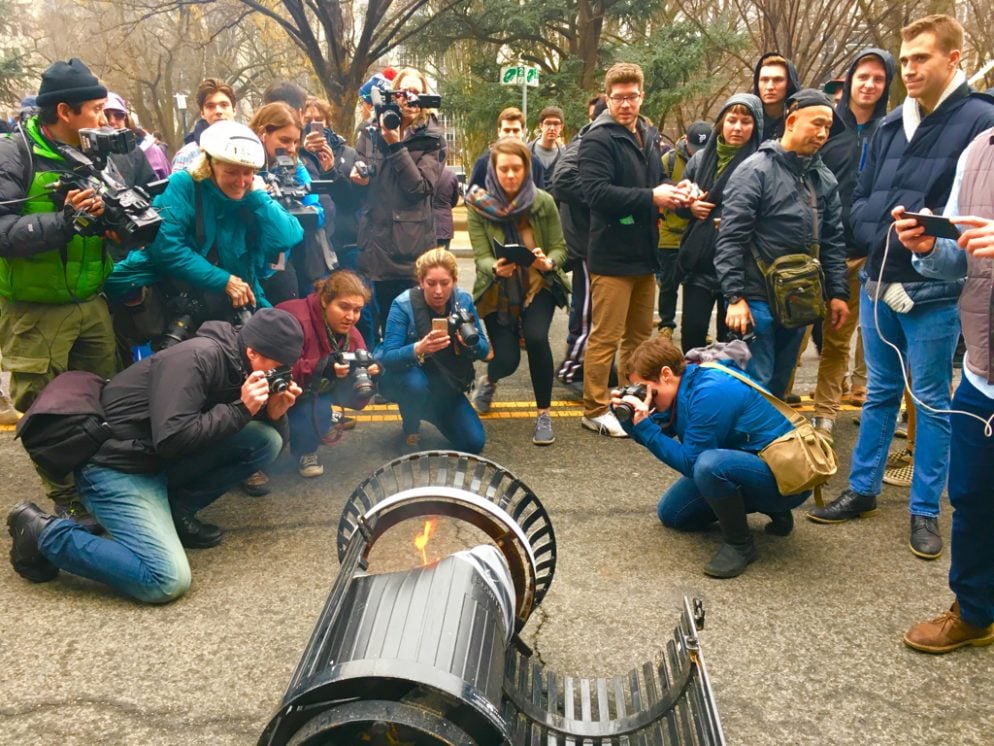
[2] - https://news.gallup.com/poll/195542/americans-trust-mass-med...
[3] - https://www.journalism.org/2018/06/18/distinguishing-between...
[4] - https://www.journalism.org/2018/06/18/distinguishing-between...
I think people vastly underestimate how much editing and framing change the perceived truth of what happened. It is more subtle than manipulating the contents of video, but I think it can be in many ways more effective as most of this stuff bypasses your cognition and is not straight up lying.
It feels the same as in written news changing the quote vs. changing text around the quote.
I think we would be better of looking at video like it was picture drawn or text written by someone. It's an artistic rendition of the events.