When all your money (and more) goes on just living, inflation is a complete irrelevance (so long as your wages keep up, of course).
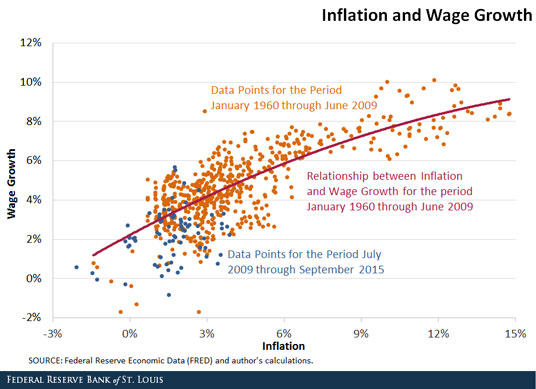
Yes, but dismissing this caveats is waving away the entire point. High inflation of course includes wage growth (and when it doesn't, you've got a wage growth problem,not an inflation problem). But it does so _on average_: every worker doesn't get an automatic raise every time a price goes up. The poor are the least able to sustain situations that are good on average, because they have the smallest savings buffers to weather the downswings of an average trend.
If a poor person falls prey to the various life catastrophes that might make you miss some income, not get a raise, etc, a high inflation provides a much less forgiving environment, since the real value of whatever modest amount was in your bank account is rapidly eroded (and as pointed out above, this type of buffer is rarely if ever kept in inflation-correlated assets)
Getting knocked off of an unstable cycle is practically the central challenge of the working poor, and high inflation gives you a lot less wiggle room to avoid this.
Year 1: debt of £100k and salary of £20k and 2% interest and 4% inflation. £18k left over, £100k owed (5x wage).
Year 2: debt of £100k, salary of £20,800. £18,800 left over, £100k owed (4.8* salary)
Year 10: debt of £100k, salary of £29600, £27,600 left over, £100k owed (3.4* salary)
In Year 1 pounds, salary stays at £20k, but debt drops to £67,566, and interest payments drop to £1351 a year.
It is simply an annual cost for having assets, and an annual benefit for having debt. Since poor people necessarily have more debt on average than rich people, poor people on average benefit from higher inflation whereas to rich people it acts like a tax.
For people who want a weath tax, I say, why not just target a slightly higher inflation rate?
With regards to "no one has their savings wiped out by inflation", tell that to, say, Russians in the early 90s. Very real and very significant savings in Sberbank turned to virtually nothing, i.e. wiped out, by inflation.
I would still argue that a higher unexpected inflation rate would hurt the poor the most, but may benefit middle class holding mortgages (although the more likely effect is that the negative effect on the overall economy would end up hurting everyone, with the poor being hurt the most).
And also inflation is not uniform and depending on its composition can hurt poor people much worse than rich ones.
Historically I haven't found any clue that a higher inflation would help against inequalities. Actually the only literature I have found on the topic seems to indicate a positive correlation between inequalities and inflation but the relation between both seem very complex and not really understood/modeled correctly right now.
all the more reason to keep moving away from defined benefit plans.
Not all assets, just cash or claims denominated in cash (like loans). Most investments don't lose purchasing power just because you devalue the dollar. The poor are most likely to have the majority of their savings in the form of cash, for various reasons; minimum investment limits, for one, and also investing in general is more efficient when you have more money to invest. Below a certain point, the brokerage fees alone would outweigh any likely annual return. Moreover, in an inflationary economy consumer prices tend to rise faster than wages, so the purchasing power of labor declines. Deflation is just the opposite: Sure, wages are falling as the dollar becomes more valuable, but prices tend to fall even faster, so purchasing power increases.
If you're looking to tax wealth then inflation is not the answer.
https://www.stlouisfed.org/~/media/blog/2015/november/graph_...
Inflation is basically an unvoted regressive tax on the poor that increases every year.