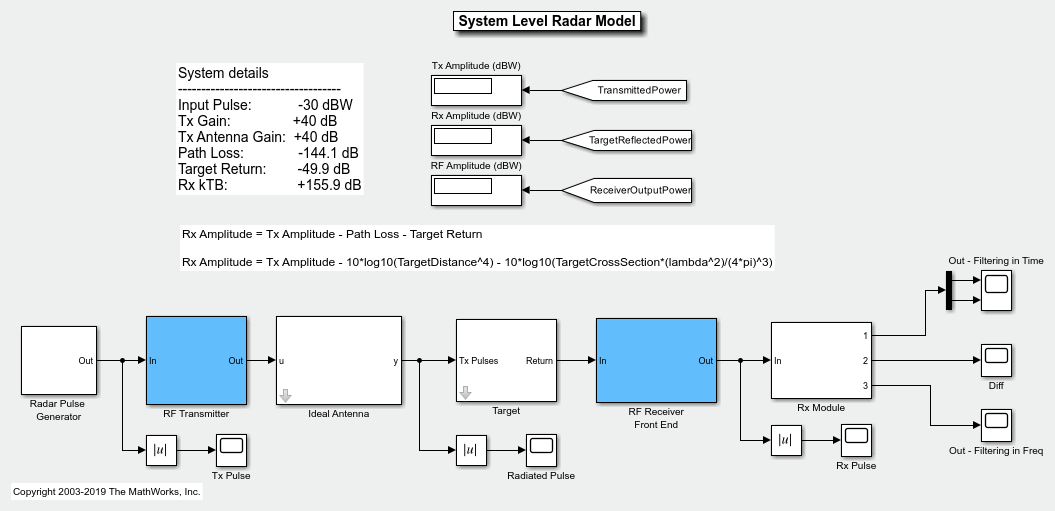
Just like written code, you need to create higher level abstractions. In simulink for example, you might have 1 top level box called a "Radar". You drill down into that, and find lower level components like an RF transmitter, but still those are abstractions that you can drill down into [0]
Yes if you squeezed all low level implementation onto one screen it'd be hard to read, but same as if you put all low level c code in one giant file without any abstractions.
[0] https://www.mathworks.com/help/examples/simrf/win64/RadarSys...
  public void shittyLongFunctionPart1(...) { //First line of screen 1
  ..
  ..
  shittyLongFunctionPart2(...);
  }//last line of screen 1

  public void shittyLongFunctionPart2(...) { //First line of   screen 2
  ..
  ..
  shittyLongFunctionPart3(...);
  }//last line of screen 2
But this is easily hackable around. What you really want is a programming language that does not allow functions longer than 25 lines.
Anyway then you would get stuck policing exactly how long a "line" is, do comments count, etc...
A line is 80 characters. Indent is 8 spaces. Comments do not count.
https://www.kernel.org/doc/html/latest/_sources/process/codi...
https://wiki.musl-libc.org/coding-style.html
https://www.freebsd.org/cgi/man.cgi?query=style&sektion=9
https://man.openbsd.org/cgi-bin/man.cgi/OpenBSD-current/man9...
That would also help with one of the main arguments against "visual" programming languages - they get too hard to read as programs get larger. Simply don't allow scrolling or zooming the source.