You're comparing the UX for a customer who already has a credit card registered to a Paypal account with the UX of a user who doesn't have a credit card registered with Stripe. If your customer has a Paypal account with a registered card the UX is better. If they don't then Stripe is much nicer because you'd need to include the Paypal sign up process in your UX and that's horrible.
Plus Stripe offers the same benefit of remembering the customer's card details for subsequent purchases (https://stripe.com/docs/saving-cards).
I think that's important because some people (such as myself) tend to avoid storing card details with arbitrary merchants. I would be far more comfortable knowing that my card details are stored with a specialised payments company like Stripe.
It's harder to make that kind of mistake in a Paypal integration so if I'm buying from someone outside of my comfort zone I'll look to use Paypal.
Stripe also makes that kind of thing more difficult to do accidentally. I've occasionally had a look to see if a company used stripe.js before putting in my details.
[0]: https://developer.mozilla.org/en-US/docs/Web/API/Payment_Req...
Also theres a german law which forbids additional fees for paying with CC.
[0]: https://reisetopia.de/wp-content/uploads/2017/06/Zahlungsm%C...
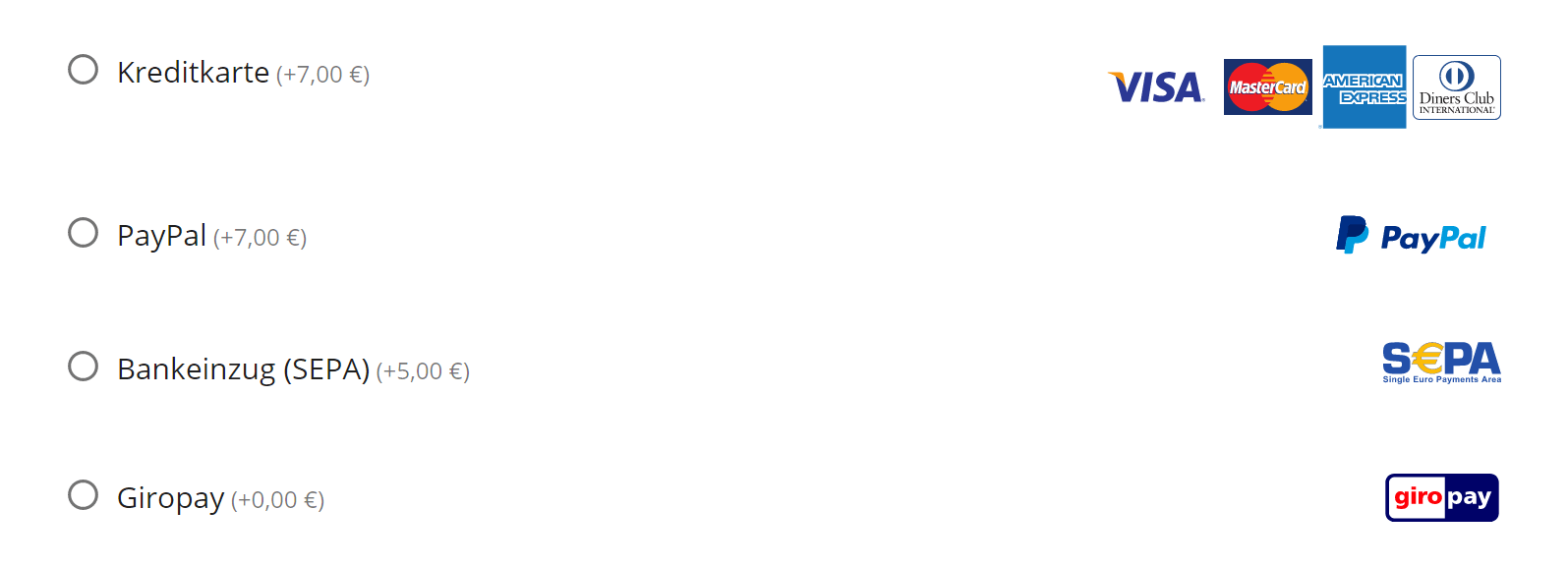
[1]: https://reisetopia.de/news/abschaffung-kreditkartengebuehren...
Interesting, because lots of brick-and-mortar German businesses (especially restaurants) simply don't take credit cards, because of the processor fees. You'll go very hungry in Germany if you go there with a credit card and no way of getting any cash.
It's unfortunate but people will always choose the easiest way irrespective of the costs to the merchant. It would be interesting to see what happens if you charge 2% more for PayPal (or whatever the difference in fees are / amount you need to cover the costs/risk of working with PayPal). I suspect checkout conversions would drop.