And therein lies the solution to Baltimore's problems. If you were to somehow provide 30-50,000 low-skill living-wage jobs and maybe an additional 10-15,000 medium-skill white-collar jobs, you could start to "fix" Baltimore. Because the net effect of all those people having money to spend plus the halo effect adding another 10-15,000 jobs (providing new services for all those working people) would be so massive it would change the city. The problem is really just that simple -- total lack of economic opportunity for a large fraction of Baltimore's population who are lacking in skills or education.
Baltimore has "good bones" but intractable economic problems. And the root problem is, how would you provide those jobs? If I had that answer, I'd run for emperor of Baltimore.
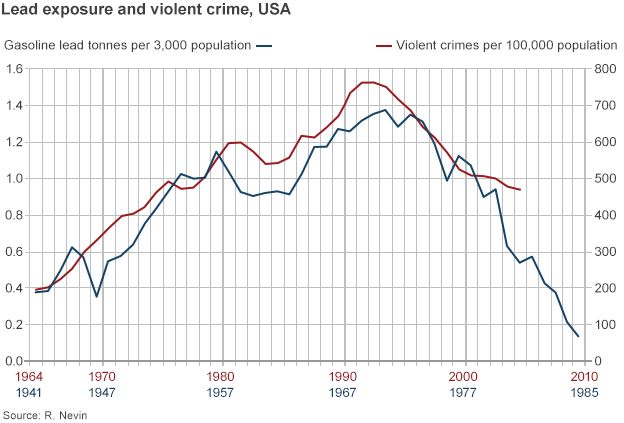
Possibly also relevant is this graph: https://ichef.bbci.co.uk/news/624/media/images/74298000/gif/...

Birth rates for the last 100 years. You can exactly see the 1929, 1979 and 2008 economic crashes; just by observing birth rates.
Sometimes we look for complexity, and overlook the boring demographic stats. We need to take demographics more seriously.
It was weird generation to be in. The Baby Boomers were all settling into their careers (mid-career to retirement). Their children all hitting their teens about the same time 80s/90s. The population was growing older, and quickly. As the two main groups, Boomers, and Gen X, were both transitioning to more mature roles; mid-level managers and teens.
The sense of utopia that younger people could feel in the 50s and 60s was gone. People, as a whole, started to worry about retirement. As people get older they get more conservative.
As the Boomers left school, the money was cut. The new buildings in the 1950s had worn out. Their children now entering school now had their music programs cut, and saw the cracks in the walls.
Everything was just grungy.