Of my cousins (about 12 people), only half are married at 35-40, and three couples have kids. That’s not uncommon.
At some point, acquisitions and trips became more important than family. Personally, I think that it is really sad.
Ahh... the Internet delivers:
https://en.wikipedia.org/wiki/List_of_U.S._states_and_territ...
... also:
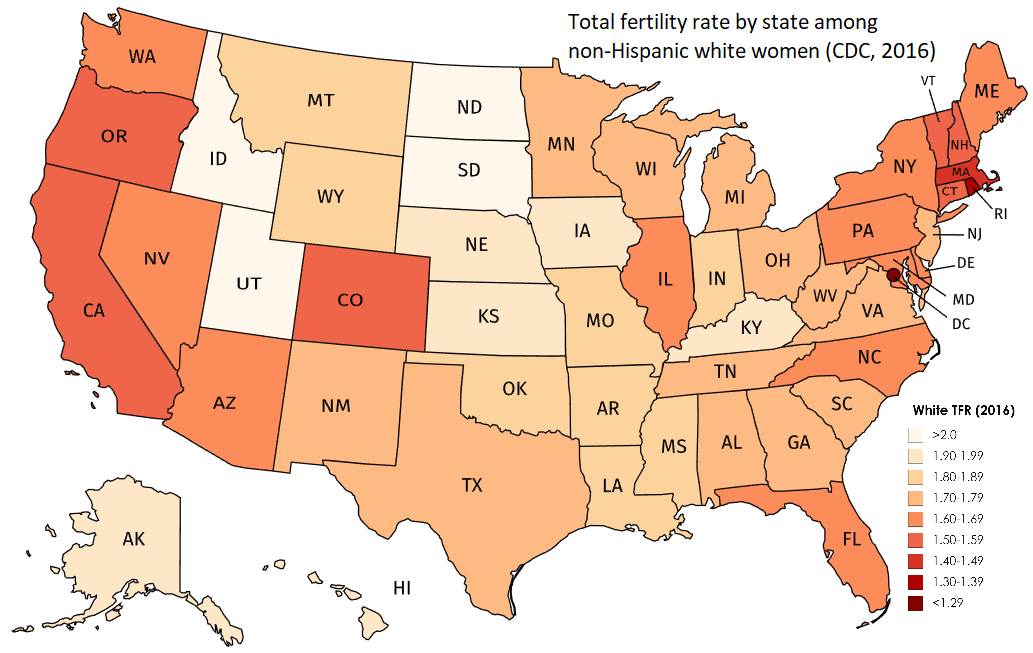
https://3.bp.blogspot.com/-vWDFXMF6R7Y/Wp4PBC3EpyI/AAAAAAAAF...
That's just your opinion. Thriving suburbs are practically sustained in toto by middle class (broadly speaking) people in nearby cities who want a greener, safer, larger space with better schools (at least by their perception) for their children on their given level of income.
Perhaps your source is per square kilometer? That seems really low for a suburb. E.g. Bay area cities (not particularly denser) are around 3k people per square kilometer.
And of course there are disadvantages: * Commute time. It takes me 28 minutes to get to work in the morning, so I lose almost an hour per day to travel, but this is relatively ok compared to other cities. * Fewer public transportation options - must transfer from the train to a bus to get to my remote corner of the metro area. These days it's easier to take Uber to the nearest train station when my car is not available. * Fewer night life options within walking distance of home * Fewer dining options within walking distance of home * Businesses have difficulty hiring, with so few people looking for work who are not already employed. * Not near a coast
All of this is to say, if growing a family in a neighborhood with other families with children is a priority, there are absolutely affordable cities around the US where you can make this happen. Even on a single income. Even in low population density areas. Even without giving up access to a nearby metro area and all of the culture and services it has to offer. If you are not willing to move to any of those places, maybe there is something more important to you, as has already been said.
That doesn't necessarily mean much. Moving from urban areas to suburban ones already greatly reduces density and access to services and the sort of institutions we are talking about.
To give some sense of proportion, the average American suburb has[1] a density of about 2.7k people per square mile. That's about 2 1/2 times less dense than a Western European suburb (6.2k), and about eight times less dense than a Western European core urban area (18.8k).
American suburbia is extremely sparsely populated and fundamentally unfit to provide the cultural institutions that modern, small families and communities require. Calls for larger families is simply unrealistic, because the opportunities that each kid in a large family on a single income in a developed knowledge economy gets are abysmal. In our modern world, quality trumps quantity so to speak.
[1]http://www.demographia.com/db-intlsub.htm