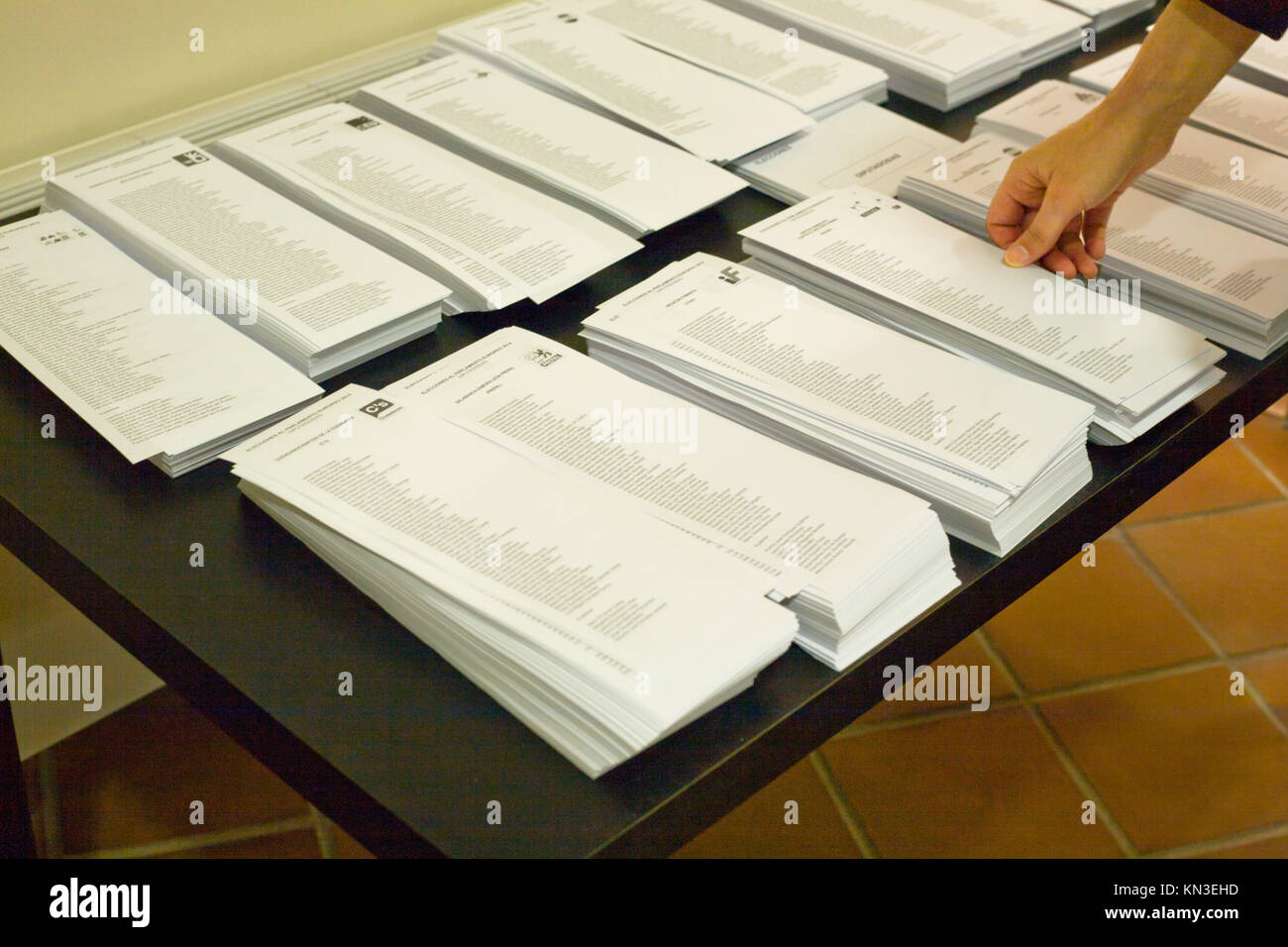
Being from the UK where we mark who we are voting for in a private booth, on a slip with all candidates [1] fold the paper in half so no one can see and post that into a box, the Spanish system makes me uncomfortable. Let alone that people mess with the stacks of slips, hiding smaller party's slips under other piles…
[0] https://c8.alamy.com/comp/KN3EHD/a-hand-pick-a-voting-paper-... [1] https://www.unlockthelaw.co.uk/images/Ballot_Papers_General_...

I can remember as a 17 year old trying to convince my Dad to vote a certain way in a referendum which I myself was too young to vote in, and he ended up voting the way I wanted him to (although, it is entirely possible that he might have still voted that way even without my input.) I think my reasons for wanting to vote that way (despite not being allowed to) were likely better informed and better thought-out than those of most of the voters who were old enough to vote.
Lack of representation means politicians care about children only to the extent required to get a parental vote. Take the lot of a child in my country (Australia):
* Childcare is a political football. The primary aim of the system is to allow parents to work rather then provide the best environment for children. Excellence is a result of individual centres rather than a product of the system.
* Children are taxed at 45%. If you want to prevent parents from putting investments in children's names, write laws about parents exploiting their children rather than penalising the child.
* Schools are a political football, with politicians debating funding, testing regimes and curriculum and the children nowhere to be heard.
* Old men (and a few old women) are making decisions that will affect the world long after they are dead. The currently disenfranchised children are the ones who are going to be stuck with the mess.
Adults wouldn't (and don't) put up with it, so why should children?