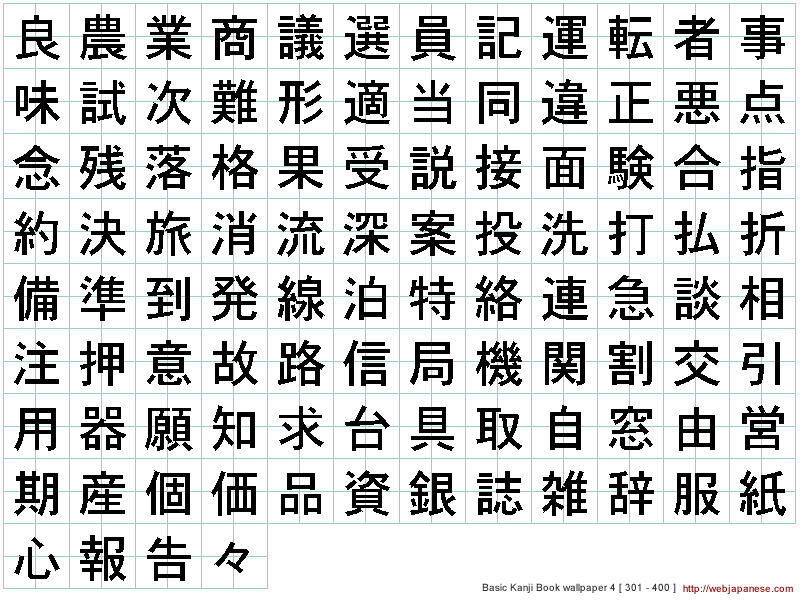
I studied Japanese, and I found that once you learn a Chinese character, you recognize it instantly like a picture. They have unique shapes, and not many are similar enough that you have to peer at it to discern the difference.
Identifying Chinese characters, to me, is like distinguishing the letter "A" from "B"
http://mural.uv.es/ciucama/kanji.gif <= it may well look like gibberish to you, but I'm sure you can notice that they are largely unique, and even if you only look at the 'shape', you can tell the difference.
From what I've seen of Arabic, identifying characters is often like distinguishing "0" from "O" and "l" from "1", or "W" from "VV"
http://www.stanford.edu/dept/lc/arabic/alphabet/images/Arabi... <= disclaimer: this IS gibberish to me, but even so I can notice than many many letters are very similar to others.

No, worst case it's like trying to tell appart l, i, j
Anyway, being a native Arabic, I don't see any inherent difficulty in the writing system.
I only encounter a problem if the font is bad or too small, or a combination of both. 10px in most standard Arabic fonts doesn't work very well.
I don't know if Kanji is readable at 10px, but I personally can't read it at that size. Any native Japanese/Chinese to shed some light?
At least Japanese has katakana & hiragana, though, which have only a few strokes and are quite prevalent in normal writing. I've seen dense walls of tiny Chinese writing that looked positively impenetrable.
I blame it not.... simply not using it everyday :)
I still wonder how those mongolian folks are doing with it. I can read cyrillic just fine, but mongolian is gibberish to me!
Ah well languages! Hate them, love them...
When that happens, it just shows a poor command of the Arabic language.
>It's like learning Latin, Italian, Spanish and French at the same time.
Let us not make it harder than it actually is.
I would say it is like learning English for the writing part, but also knowing a few words here and there like "Bonjour", "Hola" and "Grazie" for when you talk to people in various regions (in addition to the English language that they would all understand...)
>If you understand Classical Arabic, Modern Standard Arabic, Egyptian, Syrian, and Iraqi dialects, then you can communicate effectively with 90% of Arabs.
If you learn Classical Arabic (this is what you would learn at school, not any of the dialects), and you learn a few important words from the following oral dialects: Egyptian, Syrian, Moroccan/Algerian
then you are good to go from Morocco to Iraq.
BTW, native Arabic speaker here.
From my point of view (as an Arab), Italian and Spanish are too similar to be considered separate languages.
It's mostly a matter of culture. We Arabs think of ourselves as one culture. We accept regional differences between dialects as a natural phenomenon. But if you actually think about it, there are big differences in basic expressions and various grammatical structures.
izzaiyak - kiifak
kwaiyis - mneeh
buss - leek (look)
3aiyz - biddi
mush raiye7 - maani raie7 (I'm not going)
Most Arabs know Egyptian and Syrian because they're constantly exposed to these dialects on TV, not because they're intrinsically mutually-intelligible. Izzaiyak doesn't resemble any word in Syrian or Iraqi Arabic, and I can't think of a possible Classical Arabic word as the origin for it, and yet we all know what izzaiyak means because we learned it from TV.
If you move to a region whose dialect isn't popular, you'll find it difficult to understand at first, but you'll quickly be able to pick it up; probably in about a week or so.
In the west, these concepts seem foreign; maybe it has something to do with focusing on individuality over the group.
I know in Japan there are many regional dialects, and they can be mutually-unintelligible at times. The Standard Japanese is the Tokyo dialect. I don't know what it's like if you're a native Japanese, but as a non-native, studying the Standard Japanese doesn't seem to be enough to pick up the various dialects just by ear.
I was watching a Japanese drama once, and some character was speaking a weird language. I thought he was speaking Korean or something, but I asked on a Japanese forum and they said it was a dialect of some region.[1] It seemed even natives have trouble deciphering it.
[1]: http://www.guidetojapanese.org/forum/viewtopic.php?pid=22386...
- Many basic expressions might be different, but they're learn-able without any formal education; simply watching TV in the other language constantly for some time allows you to pick up most of these differences
- If you speak slightly slowly, and stick to standard vocabulary, you can communicate with native speakers of the other language without much trouble.
If these above two points are true, then they're about as different as the various Arabic dialects.
Whether you identify these languages as separate languages or regional dialects is largely a political/cultural issue.
There are actually quite a lot of regional dialects within the US, not even getting into the differences with how Canadians, Brits and Australians speak. Some such differences have stalled political negotiations and such historically.
FWIW: I speak conversational German but can't really follow the News in German and can't really read or write it. I read and write French a little but never developed an ear for it so I have enormous difficulty following spoken French and struggle enormously to put together a spoken sentence. I think there are substantial differences between written and spoken, formal and informal for any language.
How's this different from any other language?
> telling the characters apart involves looking at very small details such as the placement of dots.
Really? Try reading Chinese characters.
The real challenge with learning Arabic is that no one speaks the classical/standard Arabic as a native tongue, each region has its own dialect, and so to be really effective at using Arabic to communicate with real life Arabs, you have to know a lot about 2 or 3 major dialects. Even in online writing, people mix standard Arabic with their own dialect or major dialects. If you understand Classical Arabic, Modern Standard Arabic, Egyptian, Syrian, and Iraqi dialects, then you can communicate effectively with 90% of Arabs.
Basically you have to learn several (related) languages before you can communicate like a native Arab in the middle east. It's like learning Latin, Italian, Spanish and French at the same time.
Reading is trivial in comparison.