That is a nice claim, based on no evidence.
Intel spends billions subsidizing non-competitive products in order to try to build market share all the time. (mobile, ultrabook, etc, etc)
Unless you can present any evidence to the contrary (still no bandwidth numbers) it is just as likely that this product has EMIB because they couldn't get anyone else to use it and they need some shipping products with the tech to try and sell it.
The concept of market share does not apply to EMIB. It's an internal implementation detail, and Intel gains nothing from using EMIB in one of their own products over a cheaper solution that would still result in the end product being an Intel-branded part.
The only motivation that Intel could possibly have to use EMIB as any kind of loss-leader would be to entice third-party foundry customers to use Intel for the sake of EMIB. But attracting foundry customers is clearly not a priority for Intel, and Intel's primary goal with EMIB is to produce Intel products that may incorporate some third-party silicon, not to produce silicon to be incorporated into third-party products.
Correct. There's a conventional link through the package substrate carrying the PCIe signals from the CPU to the GPU. The only EMIB on that product is between the GPU and its DRAM. That's why the GPU and its DRAM are adjacent, while the CPU is about 1cm away from them: https://images.anandtech.com/doci/12003/intel-8th-gen-cpu-di...
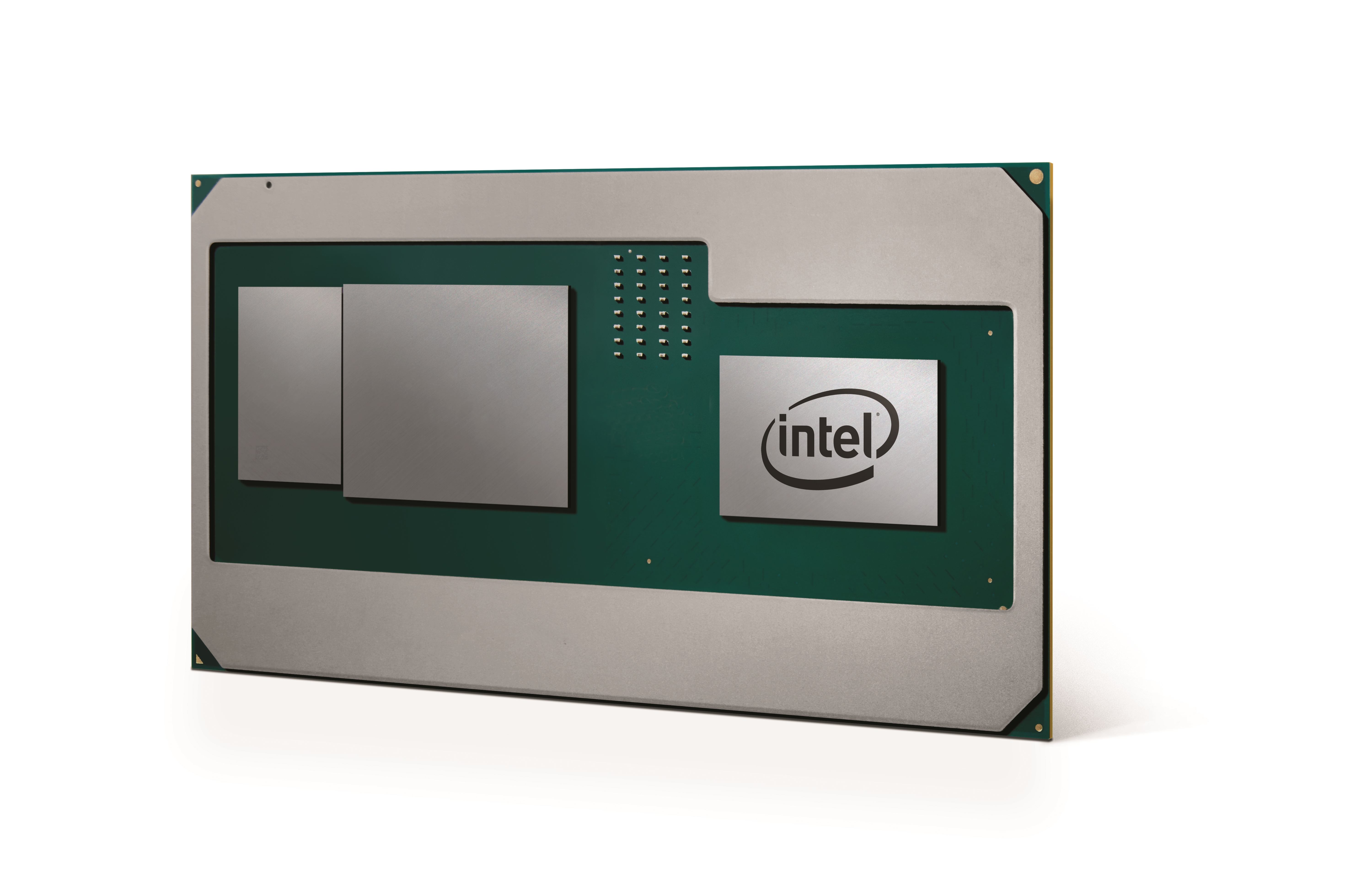
Intel would need to redesign the CPU die to accommodate an EMIB connection to the CPU. As it stands, an EMIB link would probably get in the way of lots of contacts that need to go to something other than the GPU, and EMIB wouldn't be worth the trouble for a relatively narrow and slow link like PCIe. The point of EMIB is to enable very wide and fast links between dies, so that inter-die communication is almost as fast as communication across a single die.
The only EMIB in that product is between AMD's GPU and that GPU's DRAM; the Intel CPU die in that product is not using EMIB. The fact that the AMD GPU is using EMIB is significant—it's a somewhat external validation that EMIB has value as an alternative to conventional MCM packaging or large scale silicon interposers, both of which AMD uses for products of their own.
If EMIB wasn't saving money while offering sufficient performance, then Intel would have integrated the AMD GPU into this product using the off-the-shelf silicon interposers that AMD's own products use to connect the GPU to its HBM DRAM.