For anyone who wants a good safe cracking story, this book is excellent: https://www.amazon.com/Flawless-Inside-Largest-Diamond-Histo...
A group of Italians went to Belgium's diamond district and bypassed an very expensive vault door. The best part was using an aerosol can of hair spray attached to a broom to defeat the top of the line motion sensors.
Edit: Can anyone explain why it's a 30 minute test for UL 30x6?
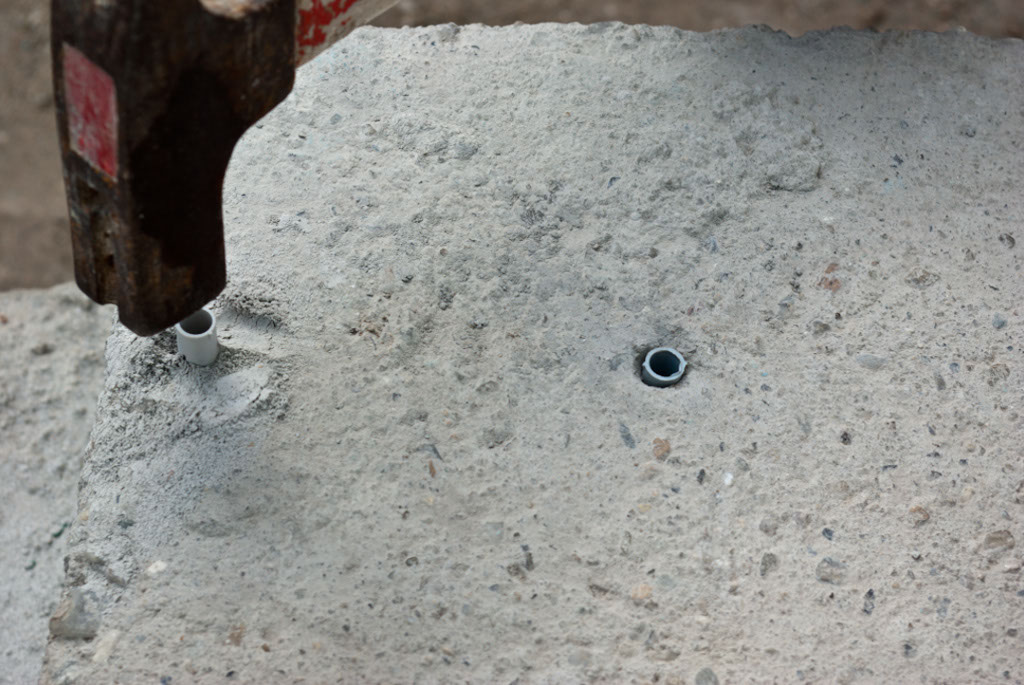
Not at all! If you're renting in a high-rise building, the floors will be concrete below the laminate or hardwood. A good safe will have either 4 holes or 1 center hole in the base to allow you to anchor it to the floor. Use a concrete drill bit to drill a hole in your apartment floor in a discreet area, like in a closet or laundry room. If you can borrow a hammer drill it'll be faster, but even an ordinary drill will work, though slower. Make sure you buy a concrete drill bit.
Then attach the safe using concrete screws and anchors. You can use either a self-tapping concrete screw or, better, put the correct size expanding sleeve into the hole first[1]. Even with a single concrete anchor/screw, the safe will be 100 times more difficult to steal. I've seen expensive TL-15 safes ($5000+) with only one center hole in the base, so I assume the manufacturer thought that was sufficient (if properly anchored).
Before you place the safe, put down a sheet of plastic or a very thin patch of carpet to protect the laminate or hardwood floor. Cut holes in the plastic sheet or carpet for the concrete screws.
When you move out of your rented apartment, fill the holes with putty matching the color of the laminate or hardwood floor. If you make a small effort at patching up, the holes will be invisible.
One more piece of advice: The drilling won't take long, but it'll be very loud. If you have a nosy landlord or superintendent, do the drilling when he's not around. A superintendent, for example, is unlikely to work on a Saturday or Sunday.
Also, cover the safe with a sheet or blanket, so if someone casually looks in your closet or laundry room, the safe won't be noticed.
http://howtospecialist.com/wp-content/uploads/2012/01/How-to...
Edit: in an appartment building check your floor loading. A little jewelry/document safe is probably fine. Big get very heavy very quick on a relatively small surface area.
Anecdotal I know, but I wouldn't assume most people are terribly attentive.
Forget about stealing safes from apartments, I wouldn't be shocked if you could rob an actual bank vault by dressing as a construction crew.
Ross Anderson's Security Engineering has a fun chapter on this topic.
As a sibling commented RSCs are the lowest level and appropriate for home use of low level valuables. Expect $500-1000 and up. TL rated products are almoat always geared towards commercial use. When I was looking a local safe company had a korean made TL-15 with 1 hr fire resistance for about $2500. This was a very bare bones commercial demo/returned unit about 2'x3'x5' interior.
All safes and RSCs must be anchored to the structure on 2 or more sides to be effective. RSCs or "gun safes" will simply be pulled/cut out of the structure if not anchored. TL safes will be knocked over and attacked at the door or floor.
Heres UL testing a safe that probably costs $10,000+ today. https://m.youtube.com/watch?v=OtbGUbeM860