The house is still there, still looks fine. A little cramped for adult me, but a perfectly fine place to live and grow up. The house I live in now could fit that house inside of it and have plenty of room to spare. My parents still live there, have all the amenities of a modern home. They turned half the basement into their master bedroom suite and the other half into a nice extended home office.
Housing crises are not going to be solved by tiny houses on half-acre properties. The houses are a tiny fraction of the overall property values -- and are made in a factory, on the cheap, in mass quantities. Making structures has been solved for hundreds if not thousands of years, making land is the problem.
   > Making structures has been solved for hundreds if
   > not thousands of years, making land is the problem.
Especially for "consumer" facing government services like libraries and postal centers.
I think getting local governments to mix in more "official" functions might be harder since some of the legitimacy of those functions sometimes stems from the power signalling they use to distinguish the building from the rest of society -- e.g. courthouses tend to be big official looking buildings with lots of wood paneling in the courtrooms.
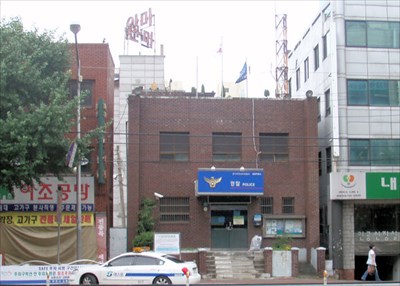
In Korea, where land is at a premium, you find tiny police stations all over Seoul, but even the very small ones tend to be stand-alone affairs. IIR courthouses tend to be either standalone or as part of larger local government centers.
http://img11.deviantart.net/5c0d/i/2013/337/5/1/police_stati...

https://s3.amazonaws.com/gs-waymarking-images/fb6d6675-11fb-...
In the backwaters of upstate New York, half the post offices are in leased buildings, including parts of private houses in otherwise residential neighborhoods.
So, you don't really need anything special to provision for local government, just a local government with tax dollars to spend.
Lethal Weapon 4?