If the car is electric, it isn't so bad on the environment, and it can park itself in a no humans allowed garage (so little chance for breakins). As for rush hour, I'd hope swarm scheduling lowers congestion substantially (though this and making longer commutes tolerable really just means I'll live further from work).
http://john-s-allen.com/blog/wp-content/uploads/2010/03/muen...
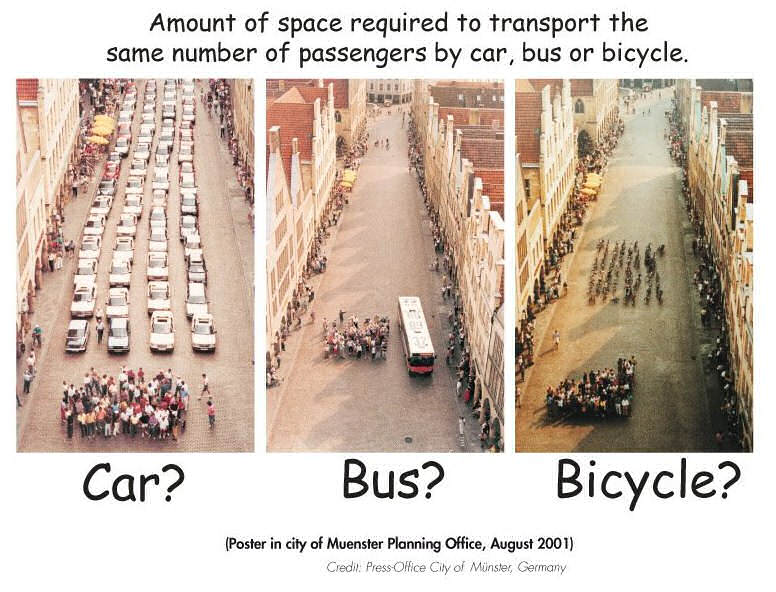
Still doesn't solve the problem - just moves it. If everyone in my office complex needs a ride to the bus around 5pm, and everyone at the other end of the bus line needs a ride home at 5:42pm when the bus arrives in SuburbTown, there will still be unmanageable shortages of self driving small vehicles - unless you own your own.
Huh? If suburban Americans aren't opting to share rides into work now and don't have or want bus services now, particularly not connecting bus services, what difference is non-human drivers going to make?
That's really the key point. Not that roboTaxis are on the near horizon but, if you believe they'll change everything when they arrive, you basically need to point to all the cases that today are almost (but not quite) enabled by Ubers driven by minimum wage drivers.
Do Zipcar and Uber make a difference on the margins? Sure. I know people in fairly dense non-NYC urban area that probably would still have ended up with a car 10 years ago who can get by without one today. But there's a big difference between change at the margins and fundamental shifts.
Like everything - high bandwidth vehicles will do the bulk of the work, and seamlessly trade off to "last mile" self driving small vehicles.