To me this is one of the most important aspects. It is so sad to see this being unraveled.
I would add the quite inspired Erasmus student exchange program to this - encouraging people to do (parts of) their university studies in a different European country is a brilliant way to perform cross-pollination both with DNA/family ties and ideas. I think this could end up being the most powerful way to guard against future intra-european wars.
a) making lots of people in all of the european countries related to each other in a big, beautiful and complex manner - thus preventing future wars
b) spreading ideas - good for the economies of the countries and the union
Ergo: UK people, please pressure your politicians to maintain membership of the Erasmus program. (Or something equivalent.)
If I recall correctly, all advisory referendums in the UK have been winnable by a simple majority.
I imagine there would have been an outcry if the bar for leaving the EU was set higher than 50% of voters, especially because the 1975 referendum to remain in (what became known as) the EU had a 50% threshold to succeed.
It's natural that the people on the wrong side of the result feel a bit aggrieved. This is true in any voting system, for any vote - but can induce relatively severe regret for long-lasting or wide-ranging decisions.
The only solution I can suggest in order to minimise regret is to adopt a strategy of "deciding how we decide" as a preliminary step before the actual vote to decide. (The "Remain" camp were fairly sure they'd win the vote, and foolishly neglected to consider this.)
This approach can also be useful in meetings where a technical decision needs to be made. For instance, it might often be preferable to adopt a consent-based process rather than a consensus-based process. See here: https://en.wikipedia.org/wiki/Consensus_decision-making
Agreeing how to decide something can also be useful in adversarial negotiations, where it is often easier to agree a "fair process" leading to a result than it is to immediately try and haggle about the result itself. (For example: "Will you pay me the average of 3 repair quotes for the damage you did to my car?" vs "Pay me XYZ for the damage you did to my car.")
If "advisory" meant opinion poll, then a 51% result would be meaningful. But as a binding referendum it's ridiculous. We'd never build a control system that flip-flopped wildly at the boundary point the way first-past-the-post elections work.
> The "Remain" camp were fairly sure they'd win the vote, and foolishly neglected to consider this.
It's always the sane people's fault for failing to realize how shitty the trumps and farages are willing to get.
In a practical sense, you're right. When people start racially scapegoating we need to watch out. But in a moral sense, no you aren't right. Their repulsive actions aren't our fault, especially not simply because we failed to stop them.
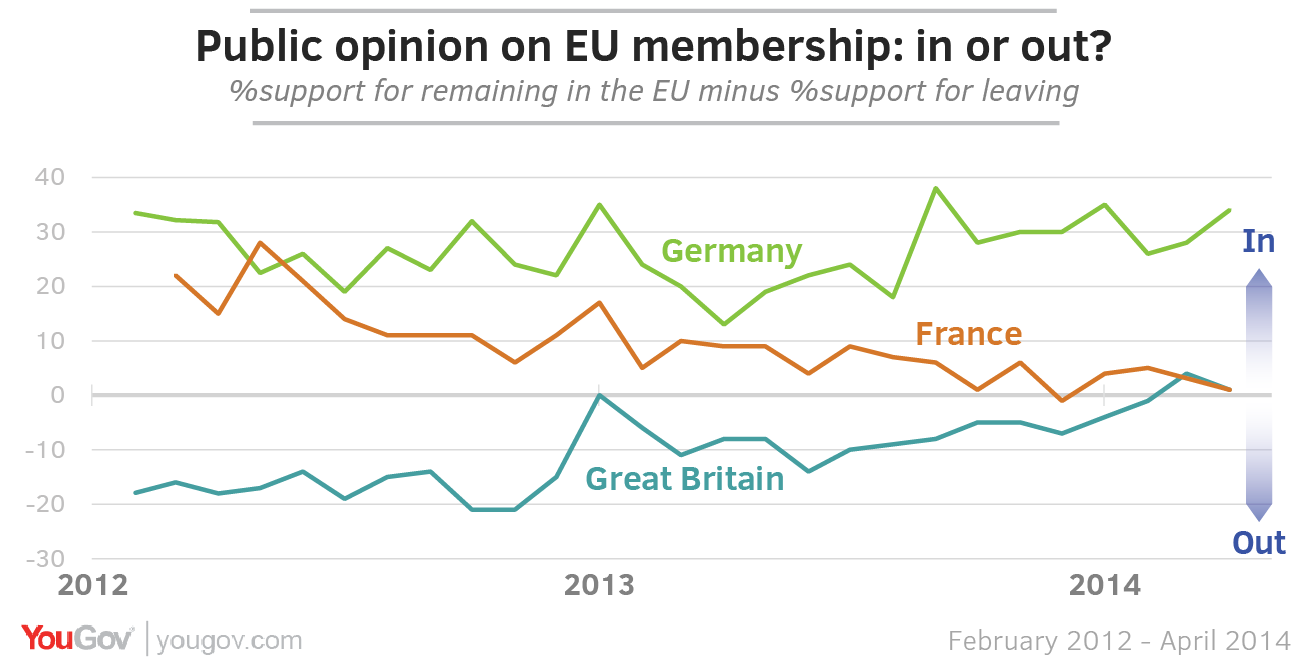
Two-thirds majority may not have been reached this referendum but it would have been eventually. Euro-scepticism has been festering in the UK for some time and is surging in France [1]
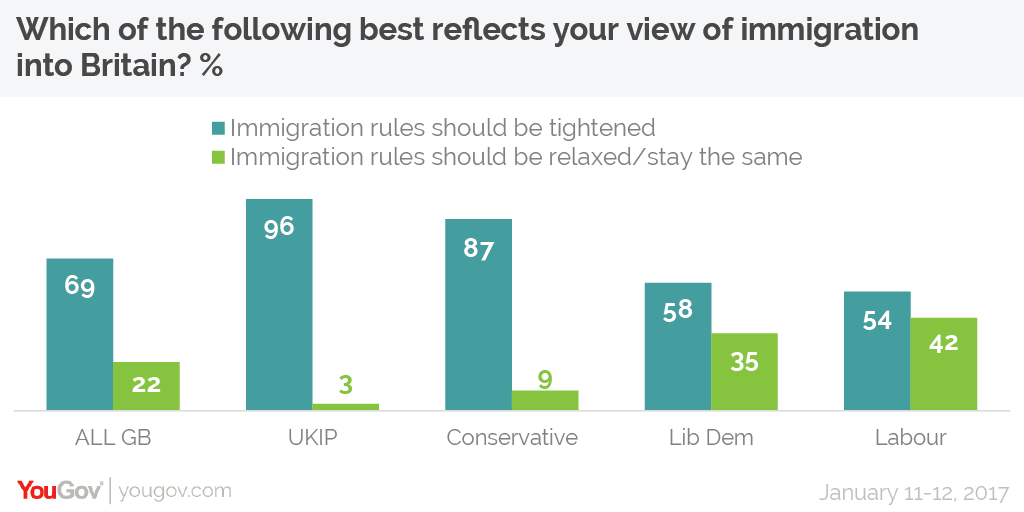
Most of the British public believe that immigration controls need to be tightened [2] something that is not possible when being a member of the EU.
[1] - http://cdn.yougov.com/cumulus_uploads/inlineimage/2014-05-10...
[2] - https://d25d2506sfb94s.cloudfront.net/cumulus_uploads/inline...
How do you figure that?
Absolutely. This is an example of how unreasonable it is for politicians to make these sort of changes on the weak mandates that they have.
When a politician elected with maybe 40% of the popular vote, from the 65% of people who vote, gets a 51% advisory mandate from those few who show up to vote in the referendum, it's a pretty weak reason to drag everyone else along. Democracy is built on the idea of false consensus. That once enough people decide on something that it doesn't matter if others do. The closer we go to simple-majority, the worse that is.
fwiw, I find it funny that you think that's conservative. I get more feedback that it's hyper-liberal. I don't think either are correct.
To get those higher mandates we'd have to try to pass less-controversial things. Again, not that it's meant keep us here as if this is a special reference frame that I cherish, but that it would force us to reach out to both sides and find change everyone can support.
Both parties in the US election were looking to force their politician on everyone else. A healthier answer would be if we picked everyone's compromise president. But first-past-the-post is designed to produce all-or-nothing outcomes.
No they didn't (if "UK" = "population of the UK")
The cynic in me might suggest that it isn't because having the people uneducated on these matters greatly benefits a certain wealthy and influential section of society.
The big investment banks are struggling to be profitable these days and it has nothing to do with Brexit or the EU. After the financial crisis in 2007 they have had to hold more and more capital and be more transparent about their complex transactions. And rightly so. In order to be competitive they build software that lets them comply with the regulations as tightly as possible, to maximize profit. The more the financial regulators see the more they regulate. Smaller institutions like hedge funds don't bare such a high burden. My building has been quietly emptying out for two years and so are the others. The giants are dying but it's not because of Brexit. I see purely software companies and specialist hedge funds taking over in this area in the future.
Truth be told, Brexit will hurt the EU more than it will hurt the UK and I won't hold any grudges if the EU member states fought hard to defend their union. If they impose punishing import and export duties on us then it will most likely not be out of spite but to protect them from other member states leaving too. Picture yourself on the other side of the fence, what would you do?
And one last thing, the EU was created to economically tie as many countries in Europe together so they would all depend on each other for resources. That way no one country could start world war three. By design it should maintain connections and dependencies regardless of what localized people living in it desire in the short term. Making member states more wealthy and comfortable is secondary.