There is actually a solution (EDIT: nope, see replies), but it's tricky: If you stack two sheets of polarizing filters on top of each other, then rotate them, you can get them to pass all light at 0 degrees rotation and block all light at 90 degrees rotation. It's like special paper that adjusts brightness depending on how much it's rotated relative to the sheet of paper behind it. https://www.amazon.com/Educational-Innovations-Polarizing-Fi...
So you could imagine cutting a series of circular polarizing filters and using them as "pixels". If you had a grid of 800x600 of these tiny filters, and a way to control them at 60 fps, you'd have a very convincing way of "displaying dark" in real time.
It'd require some difficult R&D to be viable. Controlling 800x600 = 480,000 tiny surfaces at 60fps would take some clever mechanics, to put it mildly. Maybe it won't ever be viable, but at least there's theoretically a way to do this.
A minor problem with this approach is that the polarizing filter may affect the colors behind it. But humans are very good at adapting to a constant color overlay, so it might not be an issue.
(Also, if the pixels are dense enough I imagine you'll get diffraction.)
Here's is Michael Abrash's better explanation:
>“But wait,” you say (as I did when I realized the problem), “you can just put an LCD screen with the same resolution on the outside of the glasses, and use it to block real-world pixels however you like.” That’s a clever idea, but it doesn’t work. You can’t focus on an LCD screen an inch away (and you wouldn’t want to, anyway, since everything interesting in the real world is more than an inch away), so a pixel at that distance would show up as a translucent blob several degrees across, just as a speck of dirt on your glasses shows up as a blurry circle, not a sharp point. It’s true that you can black out an area of the real world by occluding many pixels, but that black area will have a wide, fuzzy border trailing off around its edges. That could well be useful for improving contrast in specific regions of the screen (behind HUD elements, for example), but it’s of no use when trying to stencil a virtual object into the real world so it appears to fit seamlessly.
http://blogs.valvesoftware.com/abrash/why-you-wont-see-hard-...
https://www.youtube.com/watch?v=bmHSIEx69TQ&feature=youtu.be...
That approach is devastatingly hard, but probably the best way to do it.
Right, that's how all existing HMD systems work - but generally not with the whole FOV re-rendered so it's not so cut and dry.
Note that such a system doesn't give you black ever. It gives you muddy [insert lens color on the grey spectrum].
The case you describe ends up with what is practically an opaque lens that is replicating the environment that is not virtual. So you might as well just use VR with camera pass through at that point.
One idea that comes to mind is that a regular screen leaks light. If you adjust the brightness on your laptop as low as it will go, then display a black image, there's still a massive difference between what you see there vs when the screen is completely powered off. But if you take two sheets of polarizing filter and stick them in front of your screen, you can get almost perfect blackness. That's why I thought it was a different idea, since the difference is so dramatic. You can block almost all the light, whereas a regular screen doesn't seem to be able to get that kind of contrast.
Yes, yes, it's still not a hologram, but the popularized version of holograms (from things like star wars) is still the best way to think about AR display.
If you can show SOME black, text legibility becomes a lot easier. Everything can look way better, even if the world always shines through enough to see it.
If you can show PURE black, enough to ACTUALLY obscure the world, now you can erase stuff. Like indicator lights, panopticon optics, and people.
[1] http://media.bestofmicro.com/V/H/563597/original/Meta-Collab... [2] http://www.roadtovr.com/wp-content/uploads/2015/10/magic-lea... [3] https://winblogs.azureedge.net/devices/2016/02/MSHoloLens_Mi...


Anyone seen a TFT "filter" mounted on the front of a transparent OLED "backlight"?
Yes I'm sure they must have thought of it. Wonder what the issue is.
[edit] I read the explanation further down now
It can give pure black if the polarising plates and liquid crystal is accurate enough.
Sounds very suspicious to me.
Profitable startups with hockey stick like growth can't even raise a couple million...damn.
They've said they have a solution, and it's more optical illusion than optics. They don't darken the real world, but will make you perceive something similar.
What about those windows where, at a press of a button, they turn relatively opaque?
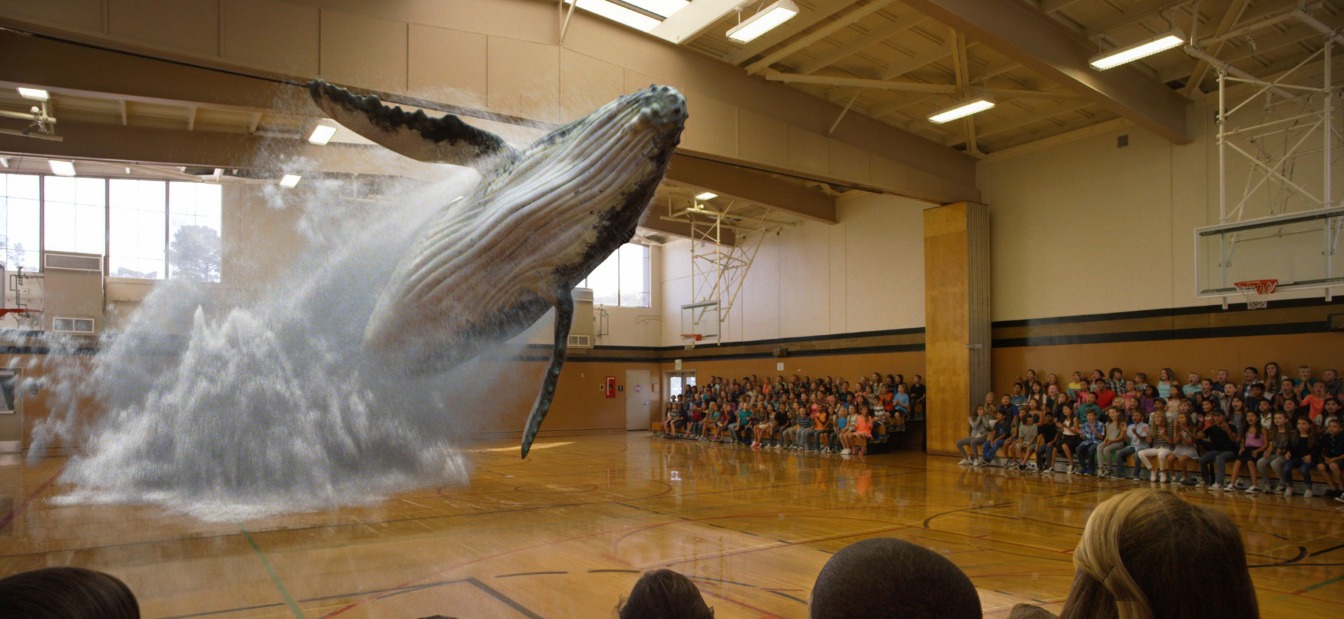
Is there any AR headgear which displays the real world optically and can selectively darken the real world? Magic Leap pretended to do that, but now it appears they can't. You could, of course, do it by focusing the real scene on a focal plane, like a camera, using a monochrome LCD panel as a shutter, and refocusing the scene to infinity. But the optics for that require some length, which means bulky headgear like night vision glasses. Maybe with nonlinear optics or something similarly exotic it might be possible. But if there was a easy way to do this, DoD would be using it for night vision gear.