No, Indians devised the decimal system, wasn't adopted by the rest of Asia. Instead it spread west and was adopted by Europe before the countries east of India.
> Asians devised paper currency
No, China devised paper currency, wasn't adopted by the rest of Asia, but was adopted by Europeans when they encountered it.
> Asians devised wooden block printing.
Again this was China and it didn't spread to neighboring countries for centuries.
> Asians deviced compass.
Just China and was adopted by Europeans before other Asian countries...
So most of your examples were adopted earlier in Europe than in Asia, so it seems like Asians mostly traded goods and not ideas.
And stating that Rome was a backwater country is patently false given that they had by far the most advanced architectural techniques at the time. They might not have been the most advanced in every field, but it is not like they were that far behind either.
Now to nitpick your claims:
> Indians devised the decimal system, wasn't adopted by the rest of Asia
I'm pretty sure the Persians, Arabs, Tibetans, Samarqand, and South-East asians were using decimal system extensively. It was adopted pretty much widely in Asia. BTW India is in Asia, and that makes them Asian.
The compass was adopted by the central asian and south asian sea fairing states. It simply didn't leap from China to Europe.
> they had by far the most advanced architectural techniques at the time.
Which is a grand and unsubstantiated claim. The Great Wall Of China, Indus valley grand megapolis, Persepolis etc stand witness to the grand architecture of the East. Rome while had great architecture, wasn't necessarily superior to any of these.
> The Great Wall Of China, Indus valley grand megapolis, Persepolis.
Those doesn't require more advanced architectural skills than just knowing how to pile bricks, Greece and Egypt built similar things long before the Romans. Roman architecture allowed them to build impressive stuff with far less effort which is why they were able to build hundreds of aqueducts.
https://upload.wikimedia.org/wikipedia/commons/1/14/Segovia_...
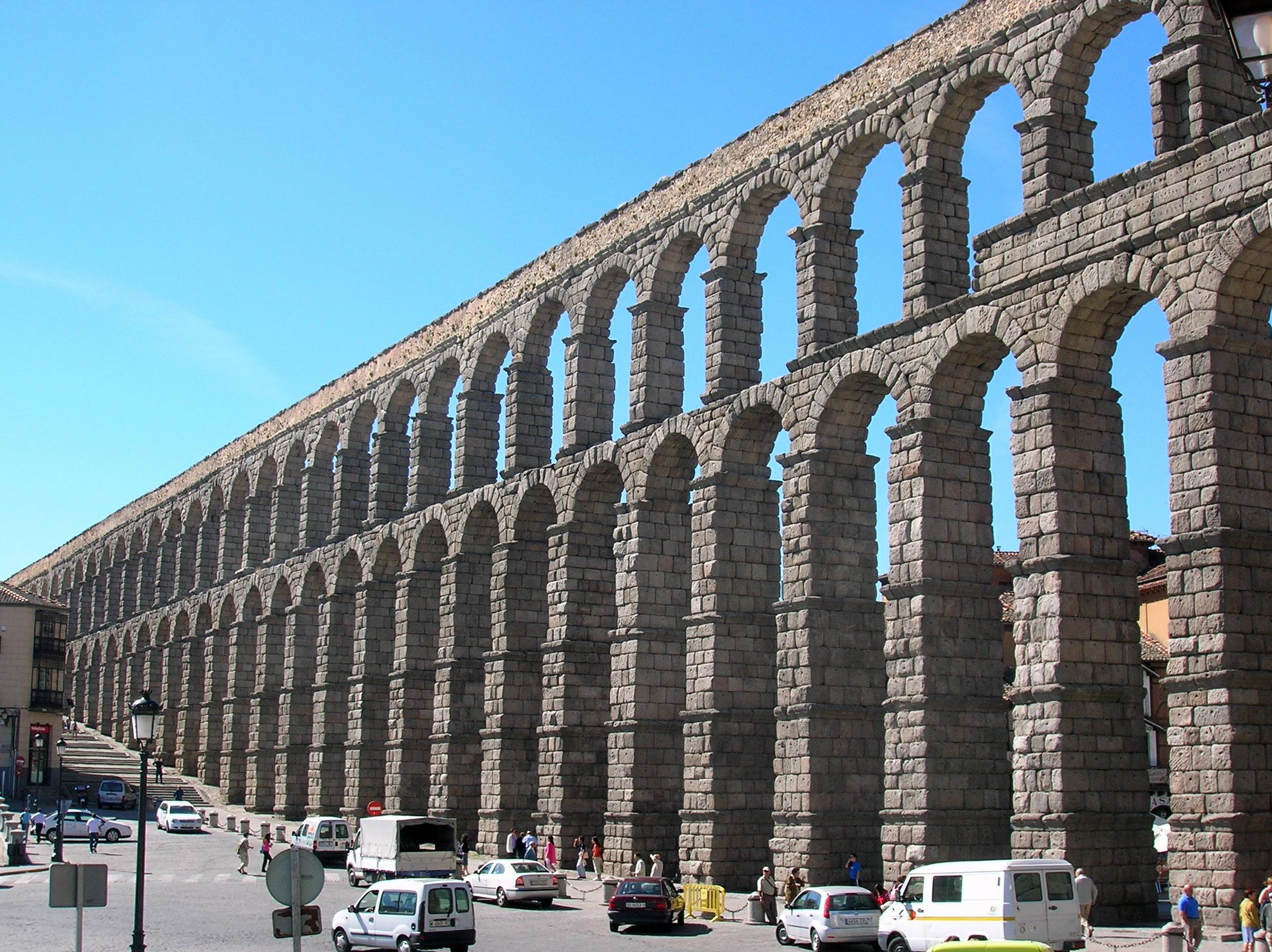
Also most of the Great wall of china was built more than a thousand years after Rome's prime, so it doesn't count. The ancient parts of the wall wasn't much more than a very long rock fence, not really comparable to roman aqueducts.
So building aqueducts is impressive than building a complex functional megapolis, in the bronze age, with top-notch sewer system, with millions of people? Not sure what to make of this claim. I would still love to see evidence of the 'impressive stuff' that Romans built that was way ahead of all of the world civilizations.
...originally was mostly made of rammed earth and wood; it was rebuilt using brick only during the Ming Dynasty (1368-1644). The Great Wall that tourists take photos on today has very little in common with the primitive Wall of two thousand years ago.
Actually, it was superior and that was thanks to a very impartial thing - concrete. You have concrete, you can build things that others without concrete can't. That's it!
> Imperial Rome was a dim backwater by comparison.
And it was, by comparison. Why do people have the audacity to think that Rome alone was greater in all aspects than the collective synergy of Persia, India, China, Swahili Coast etc? These regions were in extensive trade and cultural contacts and the cold hard truth is we Europeans were not a central part of that scheme. That's why Asians devised decimal system, paper currency, and wooden block printing, compass, and other ground-breaking inventions, due to its sheer vibrancy.