Measuring browser performance is hard because there's a lot of different functionality but notice how routinely we see reviews where the device the Android flagship phones are trying to beat is the iPhone 6 or even 2013's 5S:
https://cdn.arstechnica.net/wp-content/uploads/2016/09/iPhon... https://cdn.arstechnica.net/wp-content/uploads/2016/09/iPhon...
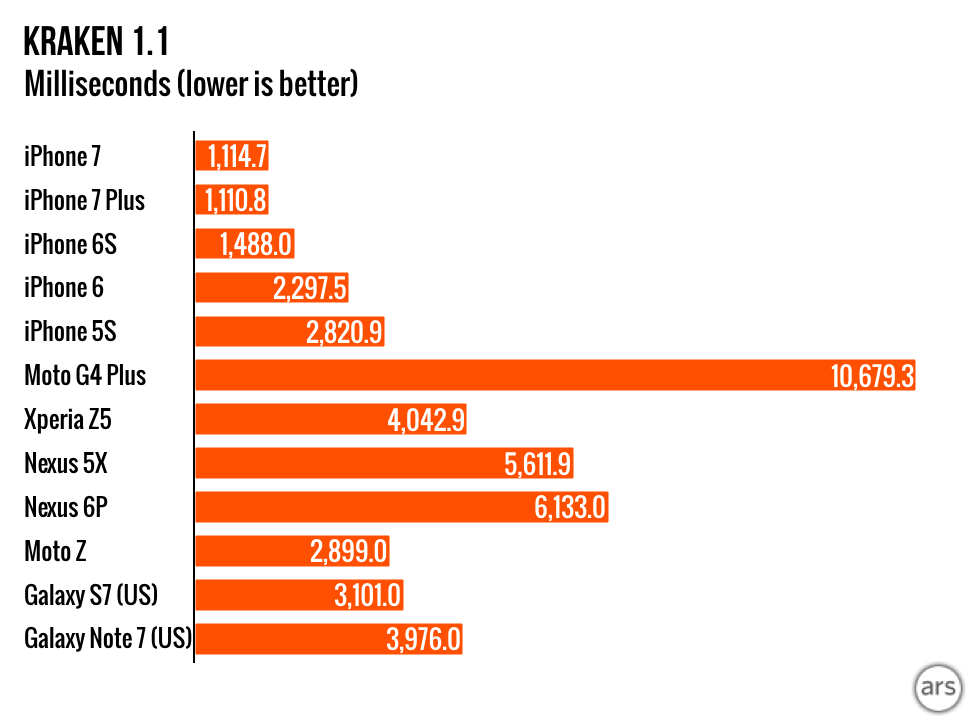
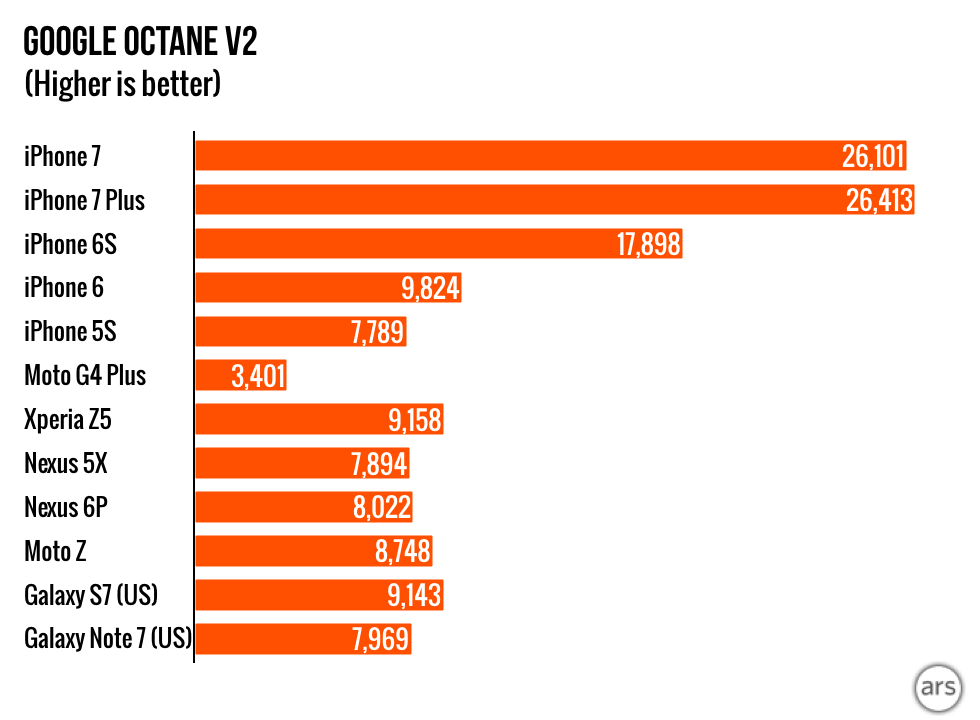
(from https://arstechnica.com/apple/2016/09/iphone-7-and-7-plus-re...)
Some of that reflects the considerable amount of work which Apple has put into Mobile Safari but a lot of that is going to come down to single thread performance.
This is an empty statement backed by no data. The only evidence you provide to the superiority of single core perf is browser performance. Except,
1) browser usage is now a mostly insignificant part of time spent on mobile (http://flurrymobile.tumblr.com/post/127638842745/seven-years... )
and
2) The bottleneck in mobile apps which depend on the network (including browsing the web) is rarely the CPU, it's the network.
The other side of this is that we're not really talking about which app has the most time in the foreground so much as which app causes the user to wait the most. Much of that time will be network I/O which is a real challenge but also not relevant to this discussion about CPU performance.
Fundamentally, all I'm trying to say is that Amdahl's law still applies until we're at the point where the user is never waiting on computation. Developers have been getting better at multithreading but uneven CPU usage is still common enough that I'd favor fewer faster cores over more slower cores.