Then at the NRC, there's been multiple DPOs (deferring opinions) (e.g. http://www.nrc.gov/docs/ML1425/ML14252A743.pdf)
The UCSUSA has weighed in on its concerns (http://www.ucsusa.org/nuclear-power/nuclear-power-accidents/...)
When the USGS, NRC, and UCSUSA think something is a bad idea, it's worth listening to them - these aren't anti-nuke people.
There are serious complaints from qualified people about the safety of a specific thing. Please don't inflate this to some generalized "anti-nuclear" movement - it's not about that.
But I'm not making this about nuclear power in general. The State of California and the media have already done a fine job of that.
I came up with an analogy to help me think about this. Say you are a medical researcher and found some serious adverse health effects to an abortion pill and as a medical professional you think it's unsafe to be on the market. Who do you go through to take action and how will this be portrayed in the media? You have a problem on your hands.
The grid cannot realistically be more than about 20-30% solar PV without matching storage.
Storage is expensive, like 20-30 cents/kWh expensive.
It's just not competitive with natural gas which is available for ~6 cents/kWh.
The price of natural gas will increase again [3] (and currently, its closer to 7-10 cents/kWh, not 6); when that does, it only makes renewables more competitive. Renewables will never get more expensive than they are today; coal will be gone in the next 3-5 years, and natural gas not far behind.
[1] http://cleantechnica.com/2016/02/19/solarcity-deploy-tesla-e...
[2] http://cleantechnica.com/2015/03/26/ev-battery-costs-already...
However for solar PV with storage to replace natural gas their combined cost is going to need to be less than 6 cents/kWh.
The combined cost of solar PV and storage is currently 20-50 cents/kWh.
Do you really see a 10x performance/cost improvement right around the corner?
I see batteries under $100/kWh in <5 years.
Utility scale solar is ~$1/kw, and can be operational in a fraction of the time. Importantly, costs continue to decline.
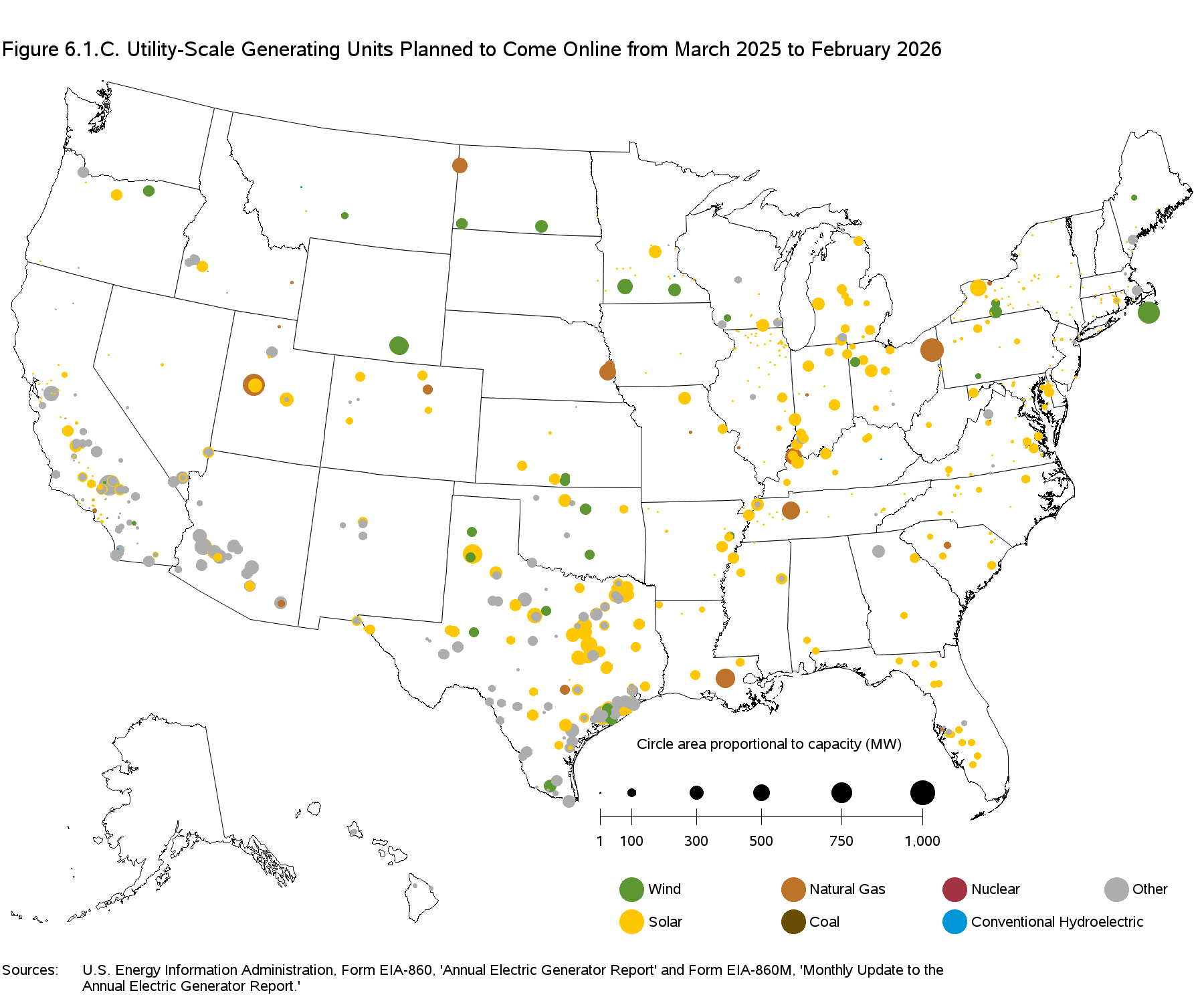
Planned utility scale generation coming online in the next year: http://www.eia.gov/electricity/monthly/images/figure_6_01_c.... (note its almost exclusively solar and wind)
Battery storage costs are falling as fast, if not faster, than renewables did:
http://blog.rmi.org/blog_2016_01_21_how_much_does_storage_re...
http://www.utilitydive.com/news/why-battery-storage-is-just-...
There is no other option other than wind and solar, full speed ahead.
Hence why the very same leading climate scientists who first alerted the world of global warming wrote a detailed public statement pleading for use of nuclear power, and stating that renewables are insufficient to stop climate change.
To believe that all four of them, PhDs hailing from some of the most prestigious institutions in the country with decades of experience, failed to include projected price declines is simply incorrect.
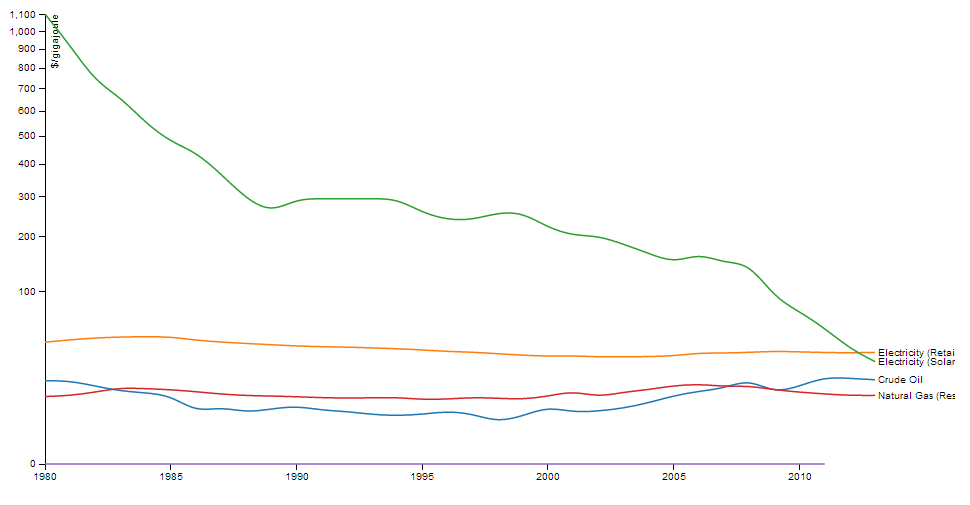
http://costofsolar.com/management/uploads/2013/06/disruptive... (This is log scale)
There's even less time when you're taking existing power capacity offline.
Build. more. renewables. faster.
And I'm sure that's exactly what the regulators and the politicians controlling the regulators want to hear. Smart business sense, given the political climate in a state that sees its insurance commissioner trying to strongarm insurance companies doing business in the state into not owning anything related to coal.
Wind and solar are simply not enough to bridge the gap between fossil fuels and fusion.[0] Shutting down the country's safest, cheapest, and most consistent method of power generation would be disastrous.
[0]http://phys.org/news/2013-11-experts-nuclear-power.html
Four scientists who have played a key role in alerting the public to the dangers of climate change sent letters Sunday to leading environmental groups and politicians around the world. The letter... urges a crucial discussion on the role of nuclear power in fighting climate change.
Environmentalists agree that global warming is a threat to ecosystems and humans, but many oppose nuclear power and believe that new forms of renewable energy will be able to power the world within the next few decades.
That isn't realistic, the letter said.
"Those energy sources cannot scale up fast enough" to deliver the amount of cheap and reliable power the world needs, and "with the planet warming and carbon dioxide emissions rising faster than ever, we cannot afford to turn away from any technology" that has the potential to reduce greenhouse gases. The letter signers are James Hansen, a former top NASA scientist; Ken Caldeira, of the Carnegie Institution; Kerry Emanuel, of the Massachusetts Institute of Technology; and Tom Wigley, of the University of Adelaide in Australia.