(2) You want us to oversimplify? Climate is still not stable, and CO2 isn't the only thing that is involved. The main cause for the start/end of ice ages are orbital shifts. CO2 rise was a lagging result, that then amplified the warming.
(3) You still want us to oversimplify? Aerosols are known to cause cooling, and in that period rapidly expanding aerosol use caused a significant amount of cooling. Various countries then passed clean air acts which reduced the levels of aerosols in the air. (They also fixed a pretty major acid rain problem.) In fact one of the proposed solutions for global warming is to deliberately inject aerosols in the stratosphere.
From these examples, it looks like your mind is made up. You don't even want to find out what the science says. Instead you engage in a game of oversimplification and gotcha to convince yourself that what they are saying doesn't make sense.
No. I was just responding literally to the question. Or, for a more socially acceptable response, the Vostok data has me have trouble with the idea that humans are causing climate change.
> Those models uniformly project human-caused global warming, and are passing various kinds of sanity checks.
The data I have on that indicates that essentially all the models ("uniformly") are wildly wrong. They predicted that by now the temperature would be much higher.
Some of that data is reviewed in
http://online.wsj.com/article/SB1000142405297020430140457717...
The way too high predictions are plotted in
http://www.drroyspencer.com/2013/06/still-epic-fail-73-clima...
> Those models uniformly project human-caused global warming
Not all the models. There is a model that fits the data much better -- at least since the last ice age: The model claims that the variation in rates of sun spots causes the temperature changes and that CO2 has essentially nothing to do with climate.
Yes, CO2 is a greenhouse gas -- it absorbs in three narrow bands out in the infrared and, thus, absorbs some of the infrared radiation from the Planck black body radiation of the surface of the earth warmed by the sun. But according to the model I am mentioning, this effect from CO2 is tiny. Instead, again from the model I am mentioning, overwhelmingly, the main driver of global temperature since the last ice age has been just clouds, and they have varied with the sun spots. Just why is a longer argument made clear, e.g., in
https://www.youtube.com/watch?v=52Mx0_8YEtg
So, that is another model that needs to be tested. For now, that model seems to fit the temperature data much better than the CO2, greenhouse gas, Navier-Stokes, atmospheric diffusion, etc. models.
To me, the CO2 models fit the data so poorly we have to reject CO2 as relevant to climate change and look elsewhere for the significant cause(s) of climate change. For now, to me, the best model is the one I mentioned here based on sun spots -- you didn't mention sun spots.
I have other things to do.
The Al Gore, IPCC arguments look bad to me, just from what I wrote, that the temperature record and the CO2 record convince me that CO2 has little or nothing to do with temperature.
There is a biggie point: The Al Gore crowd has a claim about CO2 that would have us shoot in the gut much of current civilization. There are at least two ways to respond:
(1) From a lot of really good science, find a better answer.
(2) F'get about finding a better answer or even any answer but just debunk the Al Gore answer by finding holes in its argument.
Then for (2), one way is really simple, just look at the temperature and CO2 record back through the Vostok data 500,000+ years ago. I've basically done that and concluded that from the records we can reject the Gore claims about the effects of CO2 on climate. That Vostok data is what Gore gave as his main evidence that the higher temperatures were from higher concentrations of CO2. Alas, the CO2 concentrations rose about 800 years after the temperatures rose.
Another way to do (2) is just to use one of the main criteria of science: Can it make accurate predictions? Well, from some of the references I gave, apparently not. That is, by the CO2, Planck black body radiation, Navier-Stokes, etc. models, the temperature should be very significantly higher now. Well, it's not. So, in science, we reject the prediction and the modelling that made it.
So, as in (2), we don't find a good answer but just debunk and reject the Gore CO2 approach. Finding a good answer might be really difficult science, but debunking a proposed answer need not involve much science at all. That rejection is likely just what we are all supposed to do and maybe not publishable. So, we don't look for an academic record of it.
For the references I gave, right, they are not primary, but they do give some pointers to primary references. E.g., one of the graphs does name all the models. If that graph is all hogwash, I'd be among the first to want to have good information on that.
For that graph with results of the 70 or so models, I just found a link to the graph. I have the graph on my computer from years ago, but I didn't have a link to it on the Internet (I confess -- sloppy record keeping). So, I just took a long gibberish string left over from when I downloaded the graph, pasted it into Google, and let Google give me a link to the graph. I don't know where the graph came from originally (it may say but I haven't looked at that graph in detail for years) but likely not the Web page of the URL I gave. Sorry 'bout that, but I just found a way for you to see the famous graph.
You citing Al Gore is enough to prove that you don't want to learn about the actual science and that you already have a position that won't change
Conclusion? All caused by CO2.
Oh, and temperature going down is also caused by CO2 going up. I haven't seen it yet but I'm sure Ocean going down is CO2-related also.
Models are just models, they're only as good as their design and the data they are fed. We have solid temperature data for only a few hundred years, if that. That's a lot of time to try to model something with so many variables.
Both sides have been found to be tweaking the models and input data to tune the output to their agenda, and nearly every time I see it presented, it's "average global temperature rise of x over the last y years has contributed to z inches of sea level rise. We must reduce CO2 because climate change"
Average global temperatures have gone up, and down, and up, and down many many times, even before we were even here. If the science were more solid, there wouldn't be so much controversy over it.
For every model presentation you can find that predicts it, I can find one that doesn't.
Is CO2 a greenhouse gas? Yes. Can it trap heat? Yes. Does that conclude that the extra CO2 we are generating is the cause of global temperature rise? Not by a long shot. Does it warrant further investigation? Absolutely. The consequences of being wrong are far to great to ignore.
I can't tell you what to think or what models to select, but the rapid and sustained increase in temperatures over the past 30 years would suggest something is up, so I would at least focus on models that would have retroactively explained that rise.
http://www.nap.edu/catalog/11676.html
(1) the temperature in 2006, and, thus, also now, is essentially the same as in the year 1000 and
(2) there was a rapid rise in temperature from year 900 to year 1000.
But for the temperature increase from year 900 to year 1000, the usual arguments about CO2 from human activity do not apply. Apparently CO2, from humans or anything else, had nothing to do with it.
So, the current temperature and the rise of the past 100 years also happened between year 900 and year 1000. Can't blame humans for the rise from 900 to 1000. And, since the rise of the past 100 years is much like 900 to 1000, it doesn't have to look like "something is up" now, especially not human activity.

By eyeball, their graph looks a lot like the graph in the Wikipedia page you gave. I was unsure just when the Medieval Warm Period was, but the Wiki graph seems to say it was near year 1000.
My eyeball reading of the graph in the PDF says that the temperature in year 1000 is essentially the same as in year 2006 when the PDF was published, and the increase from year 900 to year 1000 was much like the increase from 1906 to 2006. I may be off by some 0.1 C or some such, but there are several curves so that about get to take your pick.
Bottom line: Year 1000 wasn't a disaster and wasn't caused by humans releasing CO2, so I'm not much worried about now and not convinced that the current temperature or recent increases were caused by CO2.
E.g., was the Little Ice Age caused by less CO2? I doubt it!
"E.g., was the Little Ice Age caused by less CO2? I doubt it!"
Who knows? Based on what I could find from ice core studies it appears atmospheric CO2 was 5-10% lower from 1600-1800. I don't anyone making a causative claim.
From you is the first I've heard that CO2 levels decreased during the Little Ice Age (LIA). Makes some sense -- it was darned cold then which means less biological activity.
But there is a cute point: During the LIA, no doubt a lot of people were burning everything they could find to stay warm and, thus, emitting more CO2. Still, CO2 concentrations went down. Gee!
The biggie point about the LIA is the Maunder Minimum: That is during the LIA, the sun had nearly no sun spots. Then that agrees with the model in the YouTube video with the URL I gave that claims that the cause of climate change is changes in the rates of sun spots. Just why sun spots could change climate (not really that the sun might be hotter) is explained in the video.
The model in that video is not really predictive if can't predict sun spots. At times in the past could do that since there was a definite cycle to sun spots, and the period was right at 11 years. Then, if from such a cycle can predict sun spots, then can use that model to predict climate.
To me now, a question is, what the heck are the sources of the rise in CO2 concentrations of the past, say, 100 years? While I'm not convinced that the CO2 levels now are affecting the climate, I'd still like to know where the CO2 is coming from. So, there is a big system with some parts emitting CO2 sources, and others taking it in, sinks. One source is volcanoes, and maybe over half of those are in the ocean. Supposedly another source is sea water: So the warming, from wherever, is slowly heating the ocean, and warmer water absorbs less CO2. So, maybe left over from the LIA, the oceans have a lot of CO2 and as the climate warms from whatever causes are releasing that CO2. The estimates I've seen for the amount of CO2 from human activities has too much variation to take seriously. Then the estimates of CO2 from other sources also has huge variation.
Ah, back to work.
Which is why I have a problem with anyone who does come to a conclusion, because they do not have enough evidence either.
Observational evidence says temperature is going up, it's gone up in the past, and it will go up again in the future. Sea level has gone up in the past too. Guess how a shark tooth winds up buried in Montana?
What will decide my stance is good, solid, open, scientific results, based on sound input, conducted by a neutral party, with sufficient data to draw conclusions, and done in a manner that any interested party can reproduce the results from their own, independently collected data. If only one dataset is available, then the data collection itself must be open and scrutinized. There's too much 'religion' surrounding the issue to trust anyone not to manipulate anything(not necessarily intentionally).
Ans since when those points are not met?
What is a neutral party for you?
Why do you thinkg that data is not open and cannot be scrutinized
> There's too much 'religion' surrounding the issue to trust anyone not to manipulate anything(not necessarily intentionally).
Any example of this manipulation?
My guess is plate tectonics.
Since this trough only covers the western 1/4 or so of Montana[2], I think it would be safe to say that, on average, a shark tooth found in Montana was not found in an area of orogenic lifting, thus was likely deposited there by a shark, or something higher on the food chain than a shark, during a period in which the sea levels were much higher than they are today. Are there places in Montana where orogenic lifting created dry land? Yes. Are they as likely to be trafficked by humans as the others? No.
I suppose they could also have been recently deposited by a migratory bird.
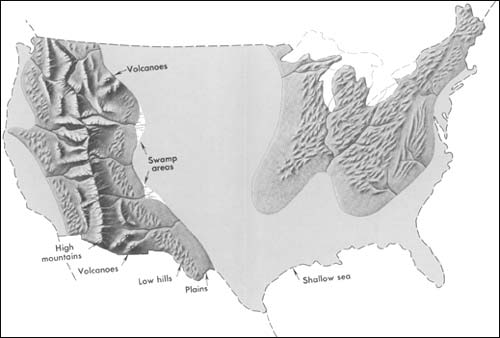
I looked up the elevations of cities in Montana and it looked like the minimum was 2000 ft. This implies that we've seen more change due to plate tectonics than the 750 ft (generous) sea level change. [0]
Granted, to really resolve the argument on the shark's tooth we'd have to know how deep that shallow sea was in the Cretaceous Period.
On the positive side, even if sea levels rose 750 ft now, Montana wouldn't be underwater. :)
[0] http://www.open.edu/openlearn/ocw/pluginfile.php/69982/mod_o...

(2) We would have to get rid of the big temperature changes going back 500,000+ years from the Vostok ice core data that Al Gore plotted and where the CO2 concentrations went up about 800 years after the temperatures went up.
(3) It would also help to cancel the global cooling from about 1940 to 1970 while CO2 concentrations were going up.
E.g., from these examples, IMHO, the temperature record and the record of CO2 concentrations don't support that CO2 concentration changes caused the temperature changes.