https://blogs.aws.amazon.com/security/blog/tag/Transparency+...
However only one report (covering a 6-month period) has was issued and posted in the initial blog post on June 2015. None have followed:
http://d0.awsstatic.com/certifications/Information_Request_R...
(more likely the people who decided that all have new jobs now)
The exact same verbiage was used for a few other companies including Comcast who bent over backwards to lower their dragnet.
This statement by Bezos rings really true to me and they will keep my business.
[1] http://writersrelief.com/blog/2011/05/biannual-biennial-or-s...
If something is supposed to occur every other Friday? Write it just like that, or "every 14 days". Don't say, "Paychecks are distributed bi-weekly"
Maybe typically 5 of them have had a job before in the area, 3 have had a job elsewhere and 2 have never had a job. Not all of them have the same level of education.
How many will misunderstand your sign? Might any of those misunderstandings about money cause problems for people?
Considering the comparitive cost of writing the sign as "every two weeks", and the reduction in potential confusion, it seems like a no-brainer to write it that way.
By assuming a high-education environment you might nudge down the number of misunderstandings. You'll nudge it further if you assume English is everyone's first language. [Note that these assumptions are probably discriminatory]
You'll nudge it further if you assume that nobody in your working environment is dylsexic, or has any other linguistic impairment. [This assumption is certainly discriminatory]
You'll nudge it further if you assume that everyone is operating at 100% all the time... which is just plain untrue, as nicely summed up by this slide from Microsoft's Inclusive Design reference: https://marcysutton.github.io/mobile-a11y/img/injury.png
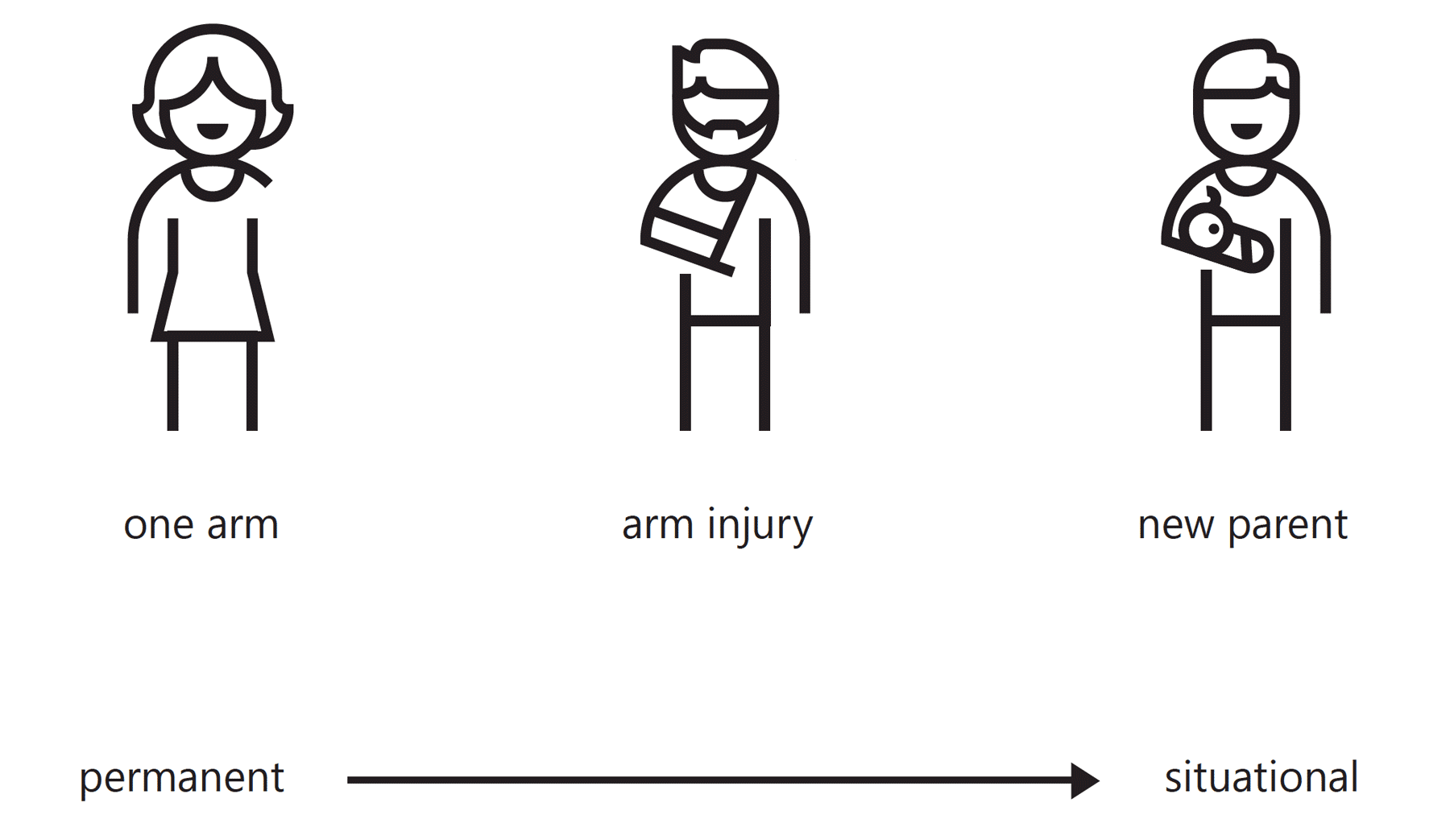
While you might be insulted by language that insufficiently feeds your desire to feel good about your intelligence, your right to not be insulted is a lower priority than communicating important information clearly.
2) I'm only pleased if it works. I suspect in this environment it is going to flop and is largely for PR.
I have no idea why you're bringing up Amazon since the article is about Microsoft.
That said, assuming you're asking the question about MSFT: Microsoft has always been a lapdog of the Feds, as evidenced by handing over hotmail data simply from a pleasant LEA request, to centralizing and backdooring skype, to removal of the elephant diffuser, to jumping at the chance to join PRISM, to any number of chunks of evidence.
But now that data security is a marketable good (per Apple's example), MSFT feels the fiduciary duty to pretend to fight the Feds for profit.
Whenever a fundamentally evil actor gives a show of doing good, always follow the money.
I have no idea why you're bringing up that you have no idea why he's bringing up Amazon since the article is about Microsoft since the article is about Microsoft and the comment is about Amazon.
Apple's stance may have tweaked the business incentives back in line with the moral good.
Apple has always been big on the idea that best way to alter behavior is to alter incentives.
"what's evil? this is so subjective and [insert complaint]"
suppose an organization is committed to tricking the public, ripping off the government, committing crimes, gaining power at the expense of any idea of the public good... don't you think at least some people would be confident in thus concluding "business X is evil"?
again, regardless of microsoft's motives for litigation (which i'm going to go out on a limb and suggest are probably more nuanced and confidential than can be explained in a single article), shouldn't "business X is fundamentally evil; ie they are united in the pursuit of a criminal or publicly hazardous goal," be available for discussion? all the more if the speaker has evidence?
neutrality is great if you want to be level headed and find facts... but it can't be true by stipulation. that's just crazy, and truly "dogmatic and not very conducive to discussion". yeah, "x is evil" statements require more evidence, and more explanation of what you mean (because rando on the internet stating "x is evil" conveys pretty much no information at all), but they have to be admissable.
...unless you think it's somehow impossible for organizations to come together to pursue evil (by most standards) goals?
(and, again, not asserting that microsoft is evil myself, but didn't the karma-bombed author cite reasons that s/he found microsoft taking legal action to protect its customers dubious? if someone provides argument for a conclusion, and you--without even handwaving at a reason to dismiss their argument/evidence--dismiss her conclusion out of hand, aren't you doing some serious violence to intelligent discussion? you're expressly taking a discussion that had progressed to the point of thesis-with-argument back to bald-statements/opinions/theses... that's nothing to endorse)
This is pleasing news, but to be honest I am a little concerned about the fact the Amazon didn't attempt one of these lawsuit earlier. I am not sure how cooperative AWS is with the government but I would assume they are the largest target for these types of requests. In general I like Amazon as a company but this makes me question their respect for user privacy.