windsignaling
Ah, the ol' gaslighting you into thinking you're gaslighting me trick.
"226 karma in 10 years." - What does that even mean to you? Should I be posting more? Does my behavior not align with your list accepted human behaviors for a non-Chinese?
The ridiculousness of your post shows how far the anti-China bias goes with you people.
> There's a search bar at the bottom of the page.
The dishonesty here is coming from you. You're assuming something exists. I'm saying show me. If it's so easy to find, wouldn't it be way easier to simply put this definitive proof in my face instead of this weird roundabout argument you're trying to make?
> The final accuracy is 90% because 1 of the 10 observations is on the incorrect side of the decision boundary.
Who is using K-means for classification? If you have labels, then a supervised algorithm seems like a more appropriate choice.
> K-means clustering is a recursive algorithm
It is?
> If we know that the distributions are Gaussian, which is very frequently the case in machine learning
It is?
> we can employ a more powerful algorithm: Expectation Maximization (EM)
K-means is already an instance of the EM algorithm.
This is a well-known and documented phenomenon - the paradox of choice.
I've been working in machine learning and AI for nearly 20 years and the number of options out there is overwhelming.
I've found many of the tools out there do some things I want, but not others, so even finding the model or platform that does exactly what I want or does it the best is a time-consuming process.
I'm no fan of schools forcing STEM students to study boring electives but this is a prime example of why that might be useful.
The entire premise of the post is wrong - average pixel value has nothing to do with how orange the oranges look - it's all about perception.
Here's an example where the same exact color (pixel value) can be perceived as either light or dark depending on the context: http://brainden.com/images/identical-colors-big.jpg
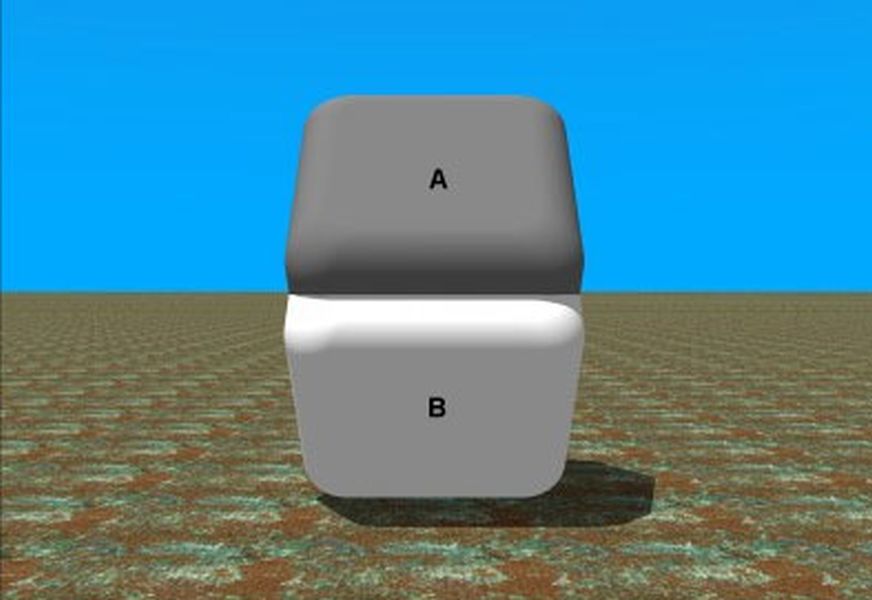
That's what the bag adds - context - but the author hasn't made this connection.
Neural networks are trained commonly using maximum likelihood estimation, a common parameter estimation technique.
See: "Program".
Linear regression appears in pretty much every ML textbook. Can you confidently say, "this model that appears in every ML textbook is the only model in the ML textbook that isn't an ML model"?
Kalman Filters are like a continuous-state HMM. So why are HMMs considered ML and Kalman Filters not considered ML?
IMO it's an ego thing. They spent decades rigorously analyzing everything about linear models and here come these CS cowboys producing amazing results without any of the careful rigor that statisticians normally apply. It's difficult to argue against real results so the inflexible, hard-nosed statisticians just hang on to whatever they can.
Would like to download everything first before requesting deletion.
Quite frankly this is the worst advice. As other commenters have noted if you tend to enjoy solo activities or activities that don't naturally involve the types of women you'd like to date, then it's not going to lead to you meeting anyone.
> You will eventually meet a partner through these group activities
Ah, the hope and pray method. Doesn't work. And when you do meet a girl you actually like, how do you figure you'll have the social skills to carry yourself through the dating process and developing a relationship? It's just natural? No, it's not.
This also doesn't work if you want to date an abundance of women and it doesn't allow you to meet women when you choose. Ever see a cute girl at the grocery store or at a coffee shop and you wanted to ask her out but you didn't know what to say? No amount of skiing and mountain climbing is going to fix that.
> but as the author admits a bit autistic
I don't know why (well, I can guess) it's such a turn-off for people to approach dating systematically. We don't criticize people for practicing math or coding, yet when it comes to social skills, if you're doing anything other than "just being yourself", it's somehow "wrong".
> How they interpret one another and respond.
That sounds like it just falls back to "how LLMs work". It's the wrong level of abstraction in this case, because it's one level down from the topic being discussed here.
Although I personally don't think the graph implementation for agents is necessarily as established or widely standardized, it's helpful to know about why such an implementation was chosen and how it works.
> the inner workings of the processing, probing agents, and getting into the weeds
These feel to me like empty words... "inner workings of the processing"? You can say that about anything.
Like counting the number of R's in strawberry, many of these are character-counting or character manipulation problems which tokenization is not well-suited for.
I'm sure an engineer could come up with a clever way to train for this, but that seems like optimizing for the wrong thing.
IMO these questions go in the wrong direction. Character permutation is a problem for "Software 1.0", not LLMs. Just as you wouldn't use an LLM to multiply 2 large numbers, you'd use a calculator.
On one hand, I get the annoying "Verify" box every time I use ChatGPT (and now due its popularity, DeepSeek as well).
On the other hand, without Cloudflare I'd be seeing thousands of junk requests and hacking attempts everyday, people attempting credit card fraud, etc.
I honestly don't know what the solution is.
Sadly, that sort of rhetoric is usually used negatively.
If you meet someone really backwards, they'll say anything involving something remotely Asian, "Chinese".
Your post seems to say "See? It's not so bad" but you used the tame white example, completely overlooking the "muscular black guy" and the "analytical Chinese guy"...