voronoff
http://www.argunet.org/wordpress-argunet-2/wp-content/upload...
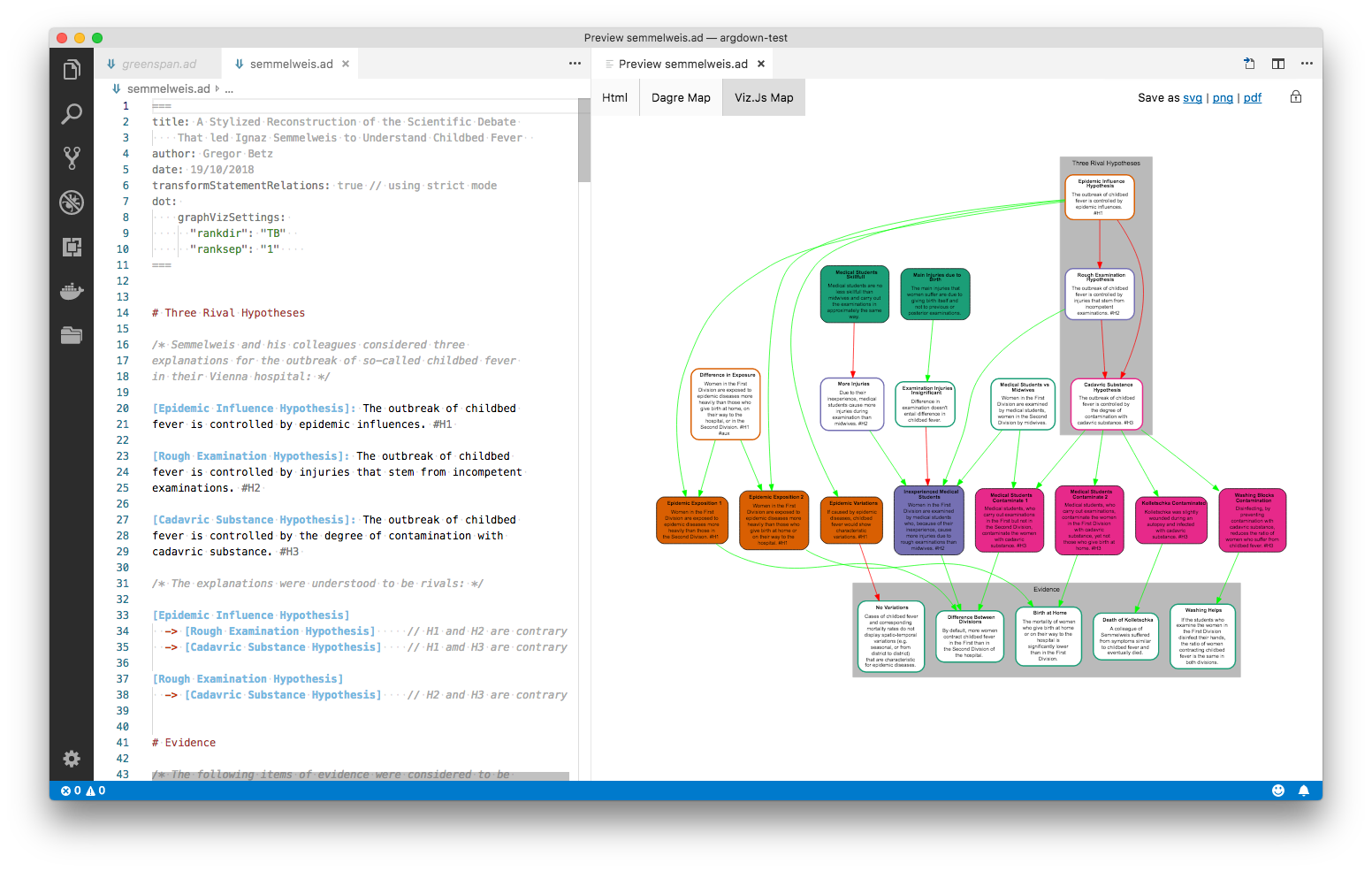
They are saying that their is no downside, outside of running foul of laws and regulators, for banks to take money without review instead of flagging transactions as suspicious.
Your response is about additional benefits for them taking the money without questions.
The Slate Star Codex article fails to make the case that lowering the general regulatory thresholds for medical devices or drugs improves societal outcomes. It makes a compelling, if possibly flawed, case for the EpiPen, but assumes generalizability rather than showing it.
We know the costs of not having something like the FDA. All one has to do is look at the supplements industry and imagine if real drugs were like that.
Oh, you thought you were getting what was on the label? Silly you. https://healthyfoodusa.com/fda-finds-majority-of-herbal-supp...
You thought you'd get something that would help? Silly you. http://www.health.harvard.edu/staying-healthy/dietary-supple...
You thought you'd get something that didn't have major unknown side effects? Silly you. http://emedicine.medscape.com/article/817427-overview
Edit:
Also ignored is how the FDA is a major incentive to create something new that both helps with the problem and doesn't generate an unreasonable amount of other ones. If the barriers to market entry are removed, you are putting the informational cost on the consumer. If it's cheaper to fool them than to do the due diligence in development, that's what will be done. And it's pretty clear from the supplement industry that it is cheaper.
Scott Alexander likes to make the future costs of a lack of new medications argument a lot. He has to account for the costs of a lack of new effective medications as well.
Edit 2:
Scott Alexander doesn't try to make the case the FDA is corrupt. He talks about how Mylan uses the court system and lobbies congress. And his point about costs is undercut by a later post he made about coming up with the chairs statistic: http://slatestarcodex.com/2016/08/31/terrorists-vs-chairs-an...
http://www.theatlantic.com/magazine/archive/2012/11/general-... for one discussion of this.
http://www.nytimes.com/2015/09/22/science/when-radiation-isn...
"For instance, there seems to be a consensus that the most lucrative cab market in the world is in Japan, where yearly revenues are estimated to be about $20 billion to $25 billion just in Tokyo, followed by the United Kingdom with revenues of $14 billion, the bulk from London, and the U.S. with $11 billion overall and about $3 billion in New York. Assuming taxi revenues in the rest of the world add another $50 billion to this total, I arrive at a total market of $100 billion."
http://fivethirtyeight.com/features/uber-isnt-worth-17-billi...
What's really getting to me is the overwhelming number of responses containing idea that everything that isn't explicitly banned is permitted, despite the recipient saying "No" (even indirectly/without justification) at some point. How to deal with the grey area of consent is something that every adult should know, and it's worrying to me that so many here seem to feel entitled to whatever they can take as long as it wasn't explicitly forbidden.
Obviously FB should update their policy, but at the same time it's important that we as the community use this as an opportunity to learn and discuss where the implicit boundaries are, where one needs clear-cut agreement to proceed.
Consent is sexy.
FB: He's an experienced bug bounty hunter and should know where reasonable borders are.
All the experienced security guys itt: He's an experienced bug bounty hunter and should know where reasonable borders are or at least not pivot/escalate without asking. Also never dump and hold data.
Everyone else: What he did isn't technically against the rules FB wrote, so they are screwing him, despite it also being written that they have sole discretion.
Assuming that science news corresponds to scientific results will get one in trouble though.
It can be used in both, and can use science, but that doesn't make it the same thing.
P.S. http://europepmc.org/abstract/med/1524537 is a study on parachute effectiveness
"Why blocks make Ruby methods 439% slower" implies something that isn't happening here, at least to me.