stevenrace
[1] https://www.att.com/esupport/article.html#!/wireless/KM10848...
The carbon fiber is then chopped and used as reinforcement in other material likes plastics. SGL Group, who supplies/partners in production with BMW, even uses reclaimed and production waste in it's production process for the new 7-series.
A more technical breakdown and state of the industry can be found here: http://www.compositesworld.com/articles/recycled-carbon-fibe...
- Weapons of Mass Casualties and Terrorism Responce Handbook - Charles Stewart MD FACEP
https://books.google.com/books?id=7ZnXZfwWwgcC&pg=PA221&lpg=...
referencing a Boston Globe article: May 4th 1999 page A27
---
I recall reading of another accident, but can't easily find the source.
  >Nobody's bothered to try to figure out how to create a
  small-scale EMP without a nuclear blast
Targeting power grids 'the old fashioned way' in Desert Storm, Lockheed F-117As dropped a cluster bomb full of carbon graphite filaments (BLU-114/B). This shorted out power lines/transformers and destroyed 85% of Iraq's power grid. Later used in Serbia and accidentally in SoCal during testing [3].
---
[1] http://www.boeing.com/features/2012/10/bds-champ-10-22-12.pa...
[2] http://mil-embedded.com/3908-air-forceboeing-emp-weapon-movi...
The Tesla battery is a liquid cooled battery and thus can be warmed via coolant that is heated by the inductive heater for the HVAC. Same for the GM Volt/Bolt.
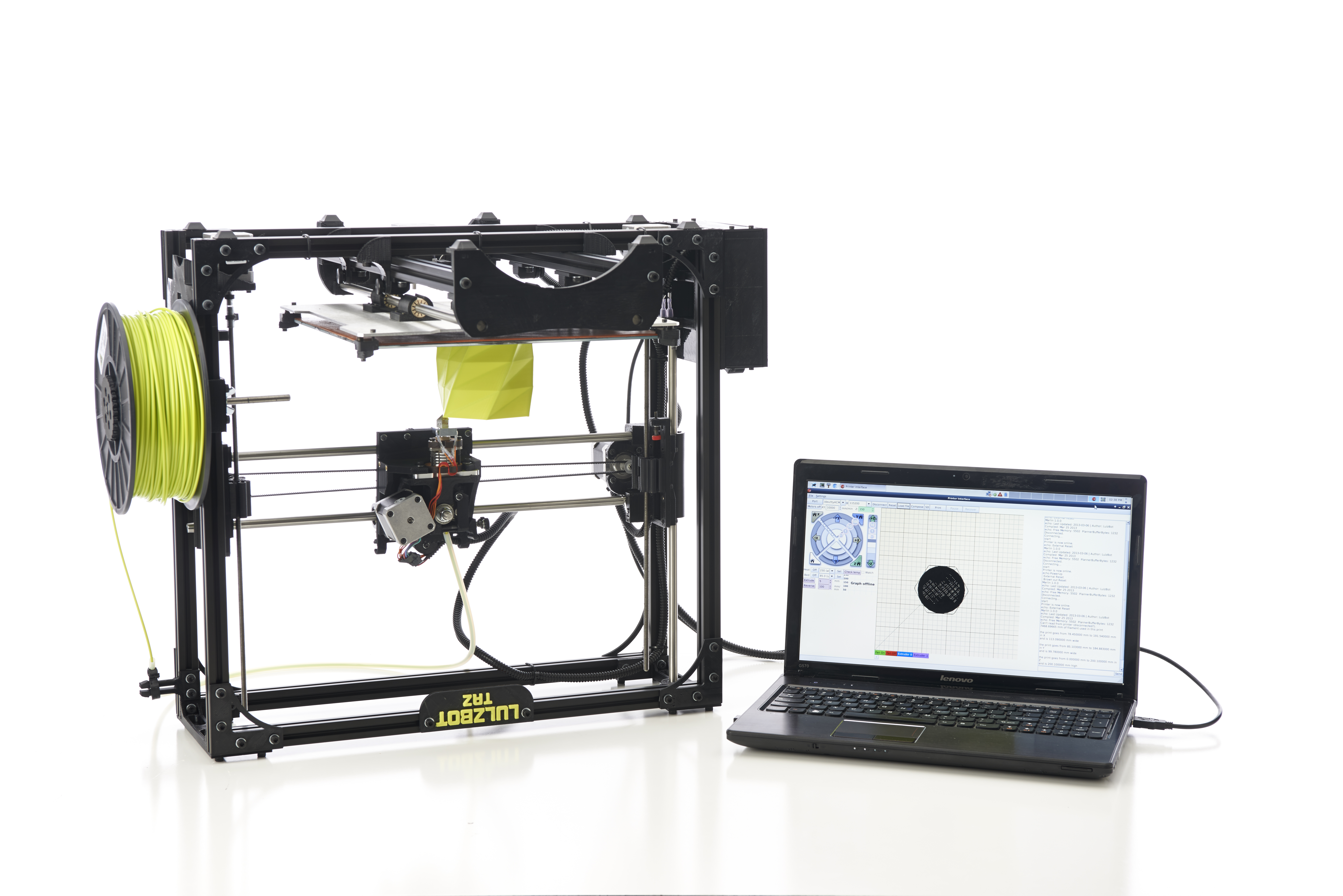
The Lulzbot mentioned below was based on the Mendelmax 1.5. This line of printers moved RepRap from a threaded rod construction to extruded aluminum. Also the first to have linear rails instead of steel rod+linear bearings. The new Mendelmax3 is a mix of laser cut parts and extrusions - and has required less service than any of my printers to date.
'The first was in 1973 when the USAF shot down a winged drone at their Sandia Optical Range, New Mexico, using a carbon dioxide GDL and a gimballed telescope. Subsequently, in 1976, the US Army employed an electrically pumped HEL to destroy a number of winged and helicopter drones at the Redstone Arsenal in Alabama. The USN, in March 1978, then engaged and destroyed an Army TOW missile in flight' [1]
The first targets destroyed from an airborne platform (KC-135) were in 1979.
[1] http://liquidr.com/technology/waveglider/how-it-works.html
If you search for the MD5 hashes of the code you can find code snippets and incidents where such code was used in the past (hacking attempts at DHS, etc). Even though none of these were '0-days' or written by those with ties to NK, the attribution seems to be based on such code reuse.
As for layer/bed adhesion. Even here on Earth, the RepRap MendelMax/Lulzbot [1] can print upside down. I imagine that's true for most of the units made from aluminum extrusions. And there have already been prints done in parabolic 'zero-g' flights using a Makerbot looking printer [2].
[1] http://download.lulzbot.com/TAZ/photos/upside_down/Lulzbot_p...
To be fair, 250W on an ebike is 'not fun' or anywhere close to the legal limits in the US (750-1000W).
The happy spot seems to be 2500-5000W for most hub driven ebikes. I turned my bike down to 1000W this afternoon and couldn't imagine running anything less.
Endless-sphere [1] is the place to go if you're interested in eskateboards/ebikes with a bent towards DIY/highpower.
At what speed do you replay text->audio (ie realtime, 1.5x,2x,...)?
Lastly, if you disregard price is the braille 'refreshable display' a better experience?
The number quoted as $9,000/'Snakeriver Sockeye' that made the 800 mile journey upstream to Redfish Lake, Idaho. In 1992, as they tell it, only one fish made it. But that apparently was the first year after the project began. Then again, only 243 made it 2011 [1]. Only ~1,500 made it back to Granite lake, which is 400 miles upstream [2]. So it's part of a larger problem in the area.
So the $40million spent equates to 222 fish per year on average.
I'm pretty sure the 'Fish Canon', however humane, can at least match the 1 fish every 36hrs rate of existing systems.
It's also worth noting the US Army Corp of Engineers ship large numbers of juvenile fish downstream on barges. Collecting them with the 'Fish Cannon' and then shipping them on barges back upstream (or furthest upstream lock) is just a budget/politics problem not one of technology.
[1] http://seattletimes.com/html/localnews/2019705443_captivefis...
[2] http://www.bpa.gov/news/newsroom/Pages/Snake-River-sockeye-c...
I was familiar with Project Sanguine, but had hoped there were less ambitious public projects I had overlooked (perhaps closer to VLF which operates <30m seawater depths).
After reading about the Navy E-6B aircraft, which trails a 5km antenna behind it to communicate with subs, I had presumed modern 'submarine -> other underwater radios' were akin to large commercial fishing trawling nets - or the really long antennas were packed into hilbert curves and epoxied to the hulls or something.
Anyhow, it seems 'acoustic modems' using 'CSMA' [1] are the norm for commercial underwater ROVs (such as James Gosling's 'wavegliders' [2]).
I've explored all the ISM bands - I just want to play with something even slower/longer range whilst sailing (in international waters, of course :)).
Also your 'HN Profile' lacks contact info...
Are you just making Zigbee hardware API calls - or custom firmware? Are you a part of the Zigbee aliance? How did that effect development?
As for claims of range, I'm impressed. Since 2010 onward my startup has built various configurations of Zigbee networks (some >100sq km) - but only saw a max reliable range of 4km (rooftop of 4th floor, clear line of sight, 1W)...which prompted experiments in moving things down to 433Mhz. Just curious what magic is going on....
Will there be an API available? Or will I have to get creative with Form POSTs :).
It's silly and I'm glad you made it.
Pager messages are sent OTA in plaintext. No NSA level wizardry was needed. Just some 133/433/900mhz antennas and knowledge that could have been gleamed from 90s era 2600 'zines.
Thanks for the link.
Microfluidics is near the 100nm range today. Throw in a bit of ferrofluid and something like this is at least plausible. The challenge is in making all this transparent. The microfluidic channels would need to not create a 'screen door effect' and the fluid transparent.
The Royal Society of Chemistry's 'Lab on Chip' Youtube Channel [1] is a good place to daydream about the future of such things.