sbradford26
sbradford26 on Hacker News
Yes those benefits can now be realized now with modern controls. Back when the Saturn V was designed the control systems necessary to manage 30 engines didn't really exist. Digital control was in it infancy and was only really implemented with a backup on the whole Apollo stack.
Trying to manage that many engines while technically possible with controls of the era (check out the N1) means your control system would be introducing reliability issues instead of adding fault tolerance through redundancy.
Spray foam doesn't remove the need for a designing a proper insulation and moisture barrier system for the building. If you spray foam an interior wall with closed cell foam you most likely will add something to allow the other side of the wood to breath.
Choosing where your moisture barrier line lies is typically easy in new construction but does get tricky with retrofit situations. It sounds like the biggest issue from the article is that they are taking what were vented attics and converting them to non-vented attics with spray foam. The issue isn't really the spray foam, the issue is converting an attic without proper understanding of venting and moisture barriers.
It depends on what type of spray foam you use. Closed cell foam is rated to be a moisture barrier. It tends to be more expensive but is worth it to get a moisture barrier and insulation in one. In some scenarios where you need much thicker insulation to hit your desired R value they might start with closed cell for the moisture barrier and then switch to open cell since it is cheaper.
A major lesson of home ownership is that it is a continual fight against water. Keeping water away from places you don't want it, and keeping water in and available in the areas you do want it.
The would be the whole reason of it making the list. Most people would think it was named after the country or something not Mr. French.
Yeah that was the main driver for me ordering a Ford Maverick. I has an Hyundai Ioniq before, and a BMW X3 before that. I am well aware of what can be moved in a sedan and an SUV, but it is much easier to move those things with my Maverick. I renovated most of my bathroom with Ioniq, but had to rent/borrow vehicles to get drywall and such. I recently finished my kitchen with my maverick and was able to move everything with that. Also it was 31.5K new and gets 40 mpg on average, the only real compromise was the lack of AWD. Which I make up for with snow tires.
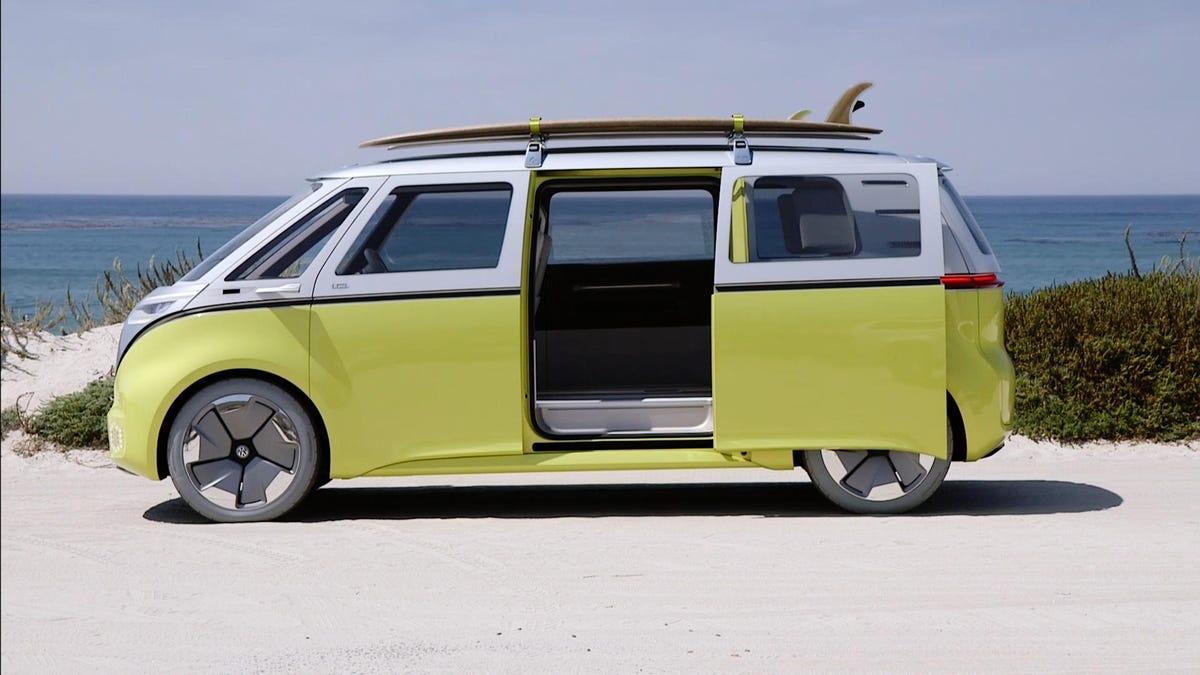
The Canoo looks pretty awesome. If ends up being good, it will be a decent competitor to the Ford Maverick. I will say though that they did the same trick as the VW Buzz. They extended the windshield down to the very front of the vehicle, but the driver is still sitting behind the front wheels.
So VW mostly "got rid of" the crumple zone on the VW Buzz through visual styling.
https://www.cnet.com/a/img/resize/e4948b43b5a2e77ce3119ebe70...
If you look at that picture you can see the steering wheel and the drive is behind the front wheels. They just extended the front windshield to give the same look at the older vans.
I recently demoed an old hot tub that came with out house which ended up having a bunch of mice nests in it. Took it all the transfer station then just hosed all the mouse poop out of the bed out afterwards, and was able to help a friend move a couch the next day.
The biggest advantage of a truck bed is the separation of the truck bed from the cab. I can haul mulch, or the nasty rotting wood from an old hot tub in the bed without getting the rest of the vehicle gross. Another advantage is unbounded height constraints, I recently got a heat pump water heater for my house and they recommend keeping them vertical because of the compressor. So I was able to strap it upright in the bed which isn't possible in an SUV.
Sure you can haul a lot of stuff in a mini van or SUV but largely you run the risk of ruining the interior which I would prefer not to do in my vehicles.
Largely automakers don't make a lot of long bed trucks because they don't sell. Ford/GM/Ram all make long bed trucks but they only really sell for fleets.
But if you check out the Ford Maverick you can put 3/4 of a ton in the bed, and you get modern safety features.
So most likely that is focused on hydronic heating systems. Personally at my local home improvement store all the fitting in the plumbing section are listed as potable/lead free.
If you have some examples of fittings that you are referring to I would be interested. I can only really find hydronic circulator pumps that are only low lead instead of lead free.
It depends on what else you have available. If you have natural gas available at your house then a heat pump is probably not the most economical choice. Here in New Hampshire though NG is not available at many homes and a cold weather heat pump ends up being the cheapest option versus heating oil or propane.
USB 3.0 isn't really necessary to support higher charging speeds that is mostly through Power Delivery which I believe both the regular 15 and pro support since they both advertise 20W fast charging.
>"Rechargeable zinc-air batteries (ZABs) are becoming more appealing because of their low cost, environmental friendliness, high theoretical energy density, and inherent safety," Dr Muhammad Rizwan Azhar said.
From the article there. They cover that rechargeable zinc-air batteries exist and that is what this is focused on.
Yeah your AFCI in theory is supposed to help reduce fire risk. Since failures like that cause arcing. But yeah it will be around $60-$80 per breaker, but there is definitely cheaper than ripping open walls to re-run wires.
So the risk would be reduced. Since if the failure causes a electricity to travel anywhere other than the neutral it will cause the gfci to trip. A scenario where a device would pull more power would be a short developing in a heating element reducing its resistance. So it would just pull more power but all of the power is still going to the neutral and wouldn't trip the GFCI.
Also with replacing all your breakers it can increase safety. But first the breakers are not cheap. Second it can lead to a lot of nuisance trips, albeit that is better than it used to be with modern breakers.
Yeah the only situation I can think of only 120v being available in a house is if it is a separate unit running off a 120v sub panel from the main building. The other option would be some off grid setups for like a tiny home might only run 120v. That is mostly because anything that would require 240v would be too power hungry to run off of the solar system.
The US also has fused plugs but their are not widely used for some reason. I see them mostly on Christmas lights, but I have also seen it on some small home electronics like a window fan and air purifier.
Largely yes a 1.5 kW device (a 12.5 amp space heater for example) is less safe on a 40 amp circuit. Since if it fail pulling more load than designed but not truly shorted the breaker may not trip. But if you put that space heater on a 15 amp circuit it would most likely trip the breaker. As other commenters have said the UK addresses that risk with fuses in the plug.
Also I recently redid my kitchen and I added an additional 20 amp circuit just for the kitchen island outlets and it has been super nice.
Yeah sadly having separate circuits for each room is not required by the NEC to the best of my knowledge (and might be overkill depending on the situation). Usually though best practice is to have a separate circuit though for each bedroom. Depending on how your outlets are wired it might be possible to split them off onto separate breakers relatively easily though.
Pensions if a person gets them which is rare (in the US) is typically tied to their company or the government if they were employed by the government.
So your first statement is correct for apartments and condos. Typically 3 phase comes into the building then each unit gets 2 phases and a neutral ran to them. This actually works out to 208V phase to phase but phase to neutral is still 120v. Appliances like cooktops and ovens are definitely less power when ran off of 208v. For single family homes you only get a single phase, a center tapped transformer steps down the voltage to 240V leg to leg so coming into the house is two legs from the transformer and the center tap which is your neutral. Some really large houses sometimes get 3 phase but that is very rare. Usually large houses will just bump to 400 amp service.
Fundamentally the US just wires things differently. If a house has an electric or induction hob(Cooktop) it will be permanently wired for 240v. All your high power devices such as HVAC, ovens, cooktops, and EV chargers have dedicated lines at 240v for them. Every house in the US other than some super niche scenarios has 240V. Yes largely most everything is wired for 120V and only a few special lines at 240v but that is because those are the only things that really require more power.
Largely this is resolved by US houses having a lot more circuits. My bathroom has a dedicated 20 amp (2.4 kW) circuit for the outlets and a separate 15 amp (1.8 kW) circuit for the lights. Every bedroom in my house has its own 15 amp breaker. The kitchen has 3 20 amp breakers for different wall outlets, a 15 amp breaker for the lights, then a 30 amp 240v (7.2 kW) breaker for the cooktop, and a 20 amp 240v (4.8 kW) breaker for the oven.
For the a typical US house the standard feed into the house is 200 amps at 240v. So 48kW of power coming in we just segment it down a lot more.
American induction cooktops also have boost functionality. All boost does is temporarily increases the power output usually at the expense of other elements. Power isn't "stolen" from other phases. Usually the reason why the cooktop cannot be in boost mode the entire time is cooling related.
https://www.subzero-wolf.com/assistance/answers/wolf/common/...
> People are buying based on the working voltage nominally 3.6V, Lithium Ion chemistry, battery capacity, form factor. Not on the internal details of the battery, which are not normally listed in sales documentation on consumer oriented outlets anyway.
Lithium Ion chemistry is the internal details of the battery. Which denotes the type of lithium ion battery, there is no generic lithium ion battery. It will fall under a certain category (Ex LFP, NMC, NCA).
The same battery you linked on other websites is called out as NMC:
https://voltaplex.com/sony-vtc6-18650-battery-us18650vtc6
Sure you can go buy unmarked cells on ebay but any reputable website should list the battery chemistry on their website or have a link to the datasheet. It is no different than buying any other electronic component.
Sorry but that just isn't right. The battery you listed is an just an NMC battery , the listing pages are just lazy and don't list it. There isn't just a plain lithium ion cell. Also lithium polymer just means that a polymer electrolyte is used instead of a liquid electrolyte.
https://en.wikipedia.org/wiki/Lithium-ion_battery