nousermane
Relevant: https://xkcd.com/1988/
> using the conditional-value ("ternary") operator in any capacity
Looks like author of some code I had to review recently, had that among guidelines. Said code was replete with:
  if(function_that_returns_boolean()){
    return true;
  }else{
    return false;
  }
  if(foo()){
    return true;
  }else{
    if(bar()){
      return true;
    }else{
      return false;
    }
}Minimal performance penalty (certainly less than all that "Pointer Authentication" malarkey). And would eliminate 95% of gadgets, including most all of short, easy-to-use ones.
Or am I missing something?
Don't see Netherlands in either TFA of your source. Over here, current average consumer price is ~68 cents per kW*h (€0.409 base price [1], plus €0.1524 energy tax [2], plus 21% VAT)
[1] https://www.energievergelijk.nl/energieprijzen/stroomprijs
  import html
  print(html.unescape(foo))
For fellow website admins, this is your regular reminder to use static site generators, where possible, and server-side cache where not.
  $ cat foo.tsv

  name    foo     bar
  Alice   10      8888
  Bob     20      9999

  $ cat foo.tsv | sqlite3 -batch \
    -cmd ".mode tabs" \
    -cmd ".import /dev/stdin x" \
    -cmd "select foo from x where bar > 9000;"

20Sounds like a recipe for getting utter garbage out of the door.
This reminds me of (now deleted) twitter thread where IE 4.0 developer was retelling account of engineers taking heavy personal toll - working 16 hours a day, sleeping in the office and ruining families - all for sake of shipping product on time, with full features.
Punchline is - many users hated IE 4.0, and for MS themselves, that product brought little else, than attracting some pretty heavy antitrust scrutiny.
https://source.android.com/docs/setup/build/building
...somewhere in the middle, there are software components small enough to be complied in a second or two, so you can do things like do away with DSLs and complex config files, and instead just change source code, recompile, and restart - every time configuration change is required, much like you can do with "interpreted" language code:
https://dwm.suckless.org/customisation/
...and all the way on the other end - there are JIT compilers, where "rebuild" is not a (separate) thing at all - just a number of small pauses spread throughout runtime.
Micripython's "viper" just-in-time compiler. It can only be applied to one function at a time, restricts what you can do in such a JIT-ted function quite severely, but resulting speed is pretty much native:
https://docs.micropython.org/en/latest/reference/speed_pytho...
It's really not that hard, once you get used to it. Or, if you rather not spend that precious time, there is a GUI tool that would configure those parameters for you:
Bonus: once started with virt-manager, run "ps ax | grep qemu", et voila - you have your qemu parameters, ready to copy-paste, should you wish to run exact same VM later from a script, or something...
Over in the Netherlands, "ton" is a similarly semi-obscure reference for 100_000 (hundred thousand). I wonder is that's coincidence or borrowing.
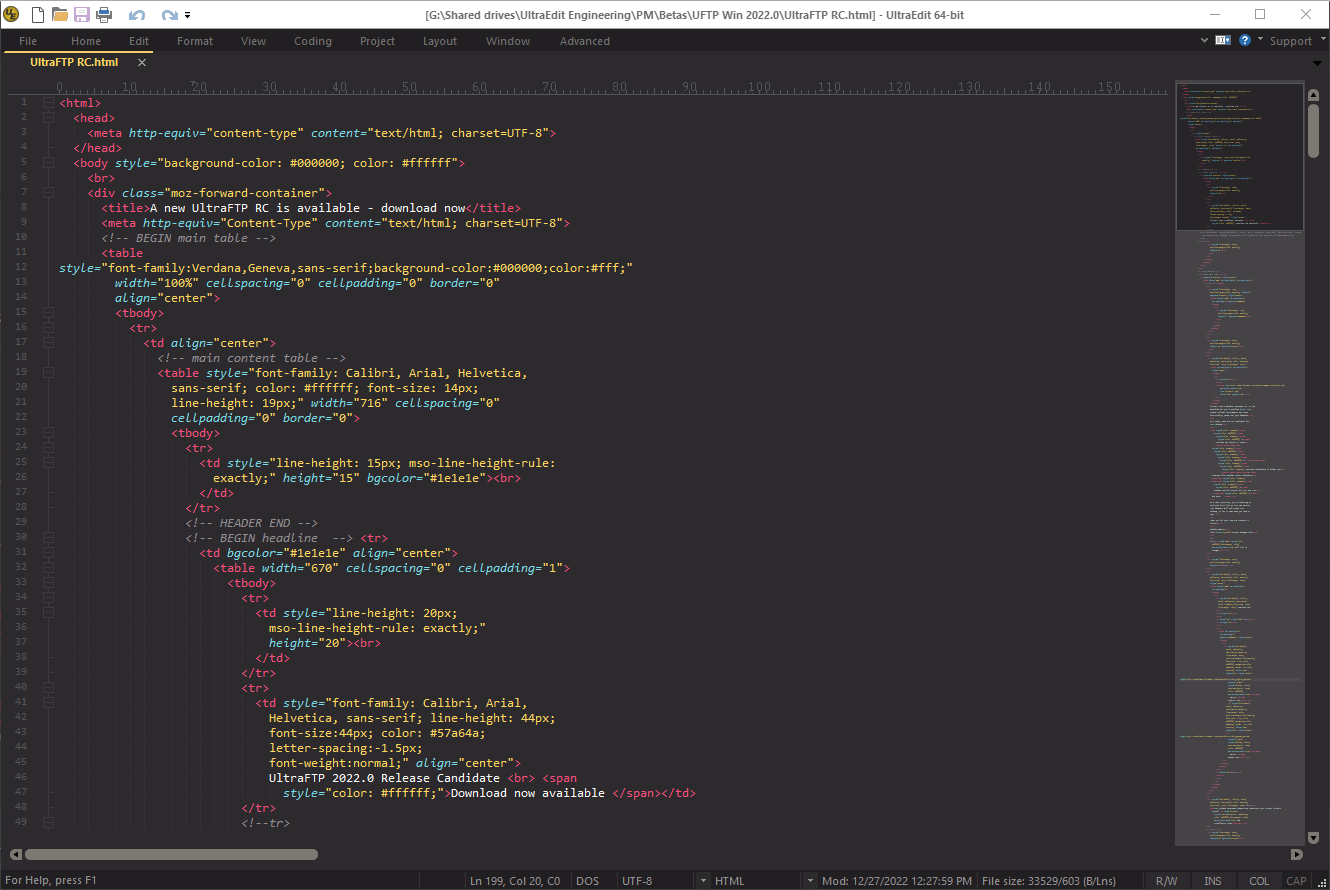
https://www.ultraedit.com/wp-content/uploads/2023/01/ue-img-...
It's a shame that OpenSSH can't use those directly. "ssh-keygen -i" can import individual keys, but alas - SSH certificate signatures are generated differently from X.509 certs.
Number of defects vary. Chips coming from the same factory, even same batch, will have different number of defects, and will be binned accordingly.
Devices with larger (but manageable) number of defects will simply have larger ECC region reserved - leaving smaller space to show to host computer. OP's new USB stick is like that, that's it.
Yep, that seems to be the key, and some realized that already: https://news.ycombinator.com/item?id=34463061
And conversely, same languages call element for "K" - "kalium". But English goes for for "potassium", from "potash", mineral name.
186 kiloWatt * hour / (1000 * hour)
Not exclusively in C, not anymore: https://docs.kernel.org/rust/index.html
It might take another decade for a C-free build to be possible, though.
https://nl.wikipedia.org/wiki/Bulgarenfraude (in Dutch, google translate does a passable job)
That being said, are we at that point yet, where X11/X.org server implementation enters firmly into "legacy" software category, and special conservancy effort would be required to keep it alive?
[0] suggests that Xserver is doing well for now - newest version (21.1.6) was released just earlier this week.
Most banks/payment processors would charge a fixed amount per small transaction. Amount varies a lot, but as an order of magnitute, say - €0.15 or something like that. This means customer that bought cup of coffee for €1.50 and insists on paying with a card, will cost vendor whooping 10% extra (it is not allowed for vendor to pass on card transaction cost to customer).
Of course, for a larger purchase, €30, €60, and more - transaction charge is negligible.
Many of real-world ones, especially "desktop" apps, are not like that at all. At times you'll get an electron or qt5html app that run Opus codec, DSP algorithms (echo cancellation) and custom cryptography inside JIT-ted javascript, and regular recent x86 CPU is barely fast enough to run it. Zoom Linux app is like that, among others.
Thanks to glaciers melting, earth rotation is (temporarily) accelerating. Because of that, positive leap seconds, regular before, didn't happen since 2017 - so there could very well be (recent) software out there that has that code-path broken, and nobody noticed yet.
And due to exact same geophysical effect we might see a negative leap second - something that never ever happened before. What are the odds that every single piece of software gets that one right?
UT1 - based on Earth's rotation only, strictly 86400 seconds per day; length of each second varies; takes a heck of a lot of effort (and time) to measure accurately.
UTC - has same length of a second as TAI, but (for now) tracks UT1 to a precision of +/- 1 second. To achieve that, can have days that are 86399, or 86400, or 86401 seconds long.
None of 3 is planned for scrapping. The only change discussed in TFA is to fix UTC day to 86400 seconds (at cost of letting it drift further away from UT1).