lynndotpy
It's 2009 or so and I want to try Linux. "Just try Ubuntu" they say, and I have a good time. I see that many "How to use X on Linux" guides, or FOSS software, often build for only Debian, and sometimes only Ubuntu. This is fine until snaps give me huge problems in 2018, and so I completely stop using Ubuntu desktop.
Now in 2026, I manage three servers (two on Ubuntu), one Raspberry Pi (on Ubuntu), and two Linux desktop installations. I stopped using Ubuntu desktop in 2018 but snaps are less problematic for my server workflows, so now I have three Ubuntu server installs. On my desktops and my one non-Ubuntu server, I find myself sometimes missing Ubuntuland. (These aren't Debian though, so I might just be missing Debianland.)
"Just use Ubuntu" is now something that has bitten me in using servers. Two bites in 17 years is a fantastic track record. But this slow response to a CVE fix has me looking at Debian, and this has shaken my faith in canonical. "Do they pull in upstream security fixes quickly" is one of my first questions for any FOSS I use.
But my servers aren't Nix or IaC or whatever, and so... Taking them down and putting them up would take a lot of time and risk, which are two things I'm not so willing to spend. Maybe it's 10 minutes, or maybe there's a bandaid fix I have from 2023 that I forgot about and would need an hour to re-derive. So, I find myself taking the security gamble instead.
It is funny because the video is 50 minutes long which requires a difficult soldering job and chip reprogramming. This does not include the process of opening the Macbook Pro, disassembling it, removing the logic board, nor the reverse process.
Sam predicted price-per-transistor-per-square-inch density would asymptote, while Leslie predicted it would level off and then regress.
Leslie's Law is in full effect, it seems.
NP is not yet proven to be subexponential but still, ETH disproven is huge
This means hard problems aren't as hard as we thought, and it's still possible P=NP. If it turns out to be true P=NP, we're a little closer to that. (I hope P!=NP!)
Every paper which assumes ETH is true might now have their conclusions be disproven.
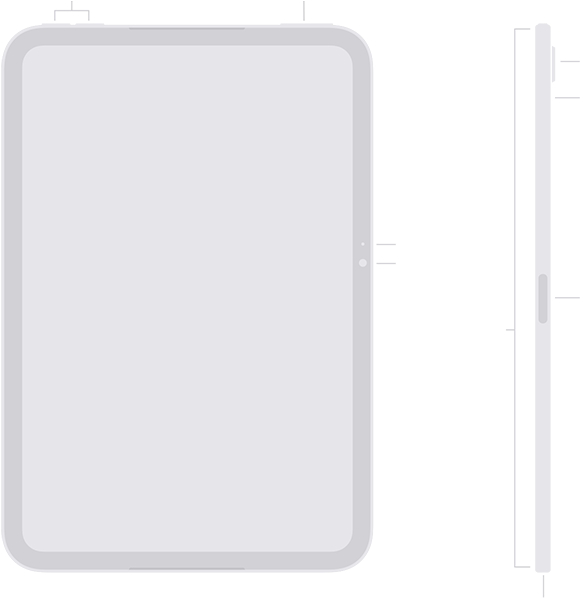
from this page: https://www.apple.com/ipad-mini/specs/
Whether the hardware can keep up with Liquid Glass and push 120 frames a second is a different story, of course.
So, I read it as, "C++ uses 160 bytes and an allocation, when Goose requires 29 bytes and no allocation".
But at https://obsproject.com/help we see OBS has a Discord (regular gamer), a Forum, a Feedback page, and a Mastodon.
LLMs generally cannot report the outputs of their own activation functions. Taking the output of softmax as if it were a probability score is considered a first-year PhD student misconception.
I don't think pulling mitigations from random users online during a developing situation is a good idea. I think shutting down ones PHP services for the time being is a very good idea if that's an option.
I shut down my servers five hours ago. This might have seemed premature at the time.
I think the best course of advice for most people is to shut down their servers as soon as they possibly can.
The only questions which the official timeline answers is how exactly to connect some otherwise-disparate sequences of games into a unified directed graph.
2002 was the first point in time where having a timeline document was useful, because it was the first game to make it clear there was at least a "child timeline" and an "adult timeline". Before then, there was a simple sequential chronology in the series.
But then Link returns to his childhood time. As a child, Link warns Zelda about Ganon, and preempts the future (where Ganon takes power and adult Link defeats him) from happening. So, there are at least two timelines.
Majora's Mask follows this child Link in one of the few explicit sequels in the series.
But then Wind Waker faces off against the Ganon defeated by adult Link. This is explicitly referenced in the text but it's not so clear-cut a sequel.
Meanwhile, Ocarina of Time was explicitly a prequel to A Link to the Past (depicting the events described in ALttP's backstory). But (1) some events don't quite line up and (2) the continuity of games established in the other timelines can't really neatly fit the ALttP-LA-OoS/OoA-LoZ-LA chronology. So a third timeline is just the neatest way to do it.
None of this really matters for playing or understanding the games, though. With the exception of Majora's Mask (and Phantom Hourglass / Spirit Tracks to a lesser extent), each Zelda game can be enjoyed as someones first Zelda.
AoL was a sequel to LoZ. ALttP was a prequel to LoZ. LA was a sequel to ALttP.
OoT is explicitly a prequel to ALttP.
OoT splits into at least two timelines. MM explicitly follows the child Link who preempted Ganon's ascension. WW explicitly has you fight the Ganon defeated by adult Link. TP explicitly places itself as a sequel to the "child timeline" and so also a sequel to MM.
The only games which lacked an explicit placement to the rest were the Four Swords series and the Oracle games. Not small exceptions, but exceptions none the less, and that's only if you ignore interviews. (And interviews would give you Minish Cap preceding Four Swords preceding Ocarina of Time.)
This is not a deep-Zelda-nerd take, this is mostly working with simple connections like "Zelda 2 is a sequel to Zelda 1".
I think most Nintendo IPs are about playing around with the same motifs, ideas, narratives, and gameplay elements. Metroid is another series where this is very evident, with half of the games being spiritually a remake of a game which game before. A timeline doesn't preclude the Zelda series as a story about the cyclical nature of conflict, about archetypes reappearing throughout history, or as a legend passed over generations.
Similar story for Macs. It's hard not to see the graph for "macos broken" ( https://trends.google.com/trends/explore?date=all&q=macos%20... ) or "macos slow" ( https://trends.google.com/trends/explore?date=all&q=macos%20... ) or "how to fix macos" ( https://trends.google.com/trends/explore?date=all&q=how%20to... ) and find any reason for this other than people having a surge in bad experiences with Liquid Glass.
Of course, this is only Google Trends, and even if we interpret this as a 4x to 100x increase in bad experiences with Apple products with the forced introduction of Liquid Glass, it still might be the case that >50% of people aren't consciously experiencing problems from it.
- A bug or regression is identified in a beta or release candidate. People quickly come to defend Apple saying it will surely get fixed.
- The bug or regression is released. People quickly come to defend Apple saying it's not a big deal, there are workarounds, and it will probably get fixed.
- The bug or regression is now the status quo. Why are you rehashing old news? Nobody cares, this impacts only 1% of people, you're imagining things, thread locked, user banned, et cetera.
The time to complain loudly and broadly is _before_ the bug or regression becomes the new status quo for the platform.
The big concern for me is if I ever find myself in an emergency situation and I need to use my phone to contact someone. Apple's iPhone is so inconsistent and unreliable even in the best of conditions.
AirTags are expensive at $30, which is about five hours of the legal take-home minimum wage of about $6/hour in the United States, after tax. The cheapest cordless drill you can find is about $20 and you run the risk of damaging the AirTag.
This device was $10 and meant to be foolproof. Instead of spending $20 + $30 for each "practice AirTag", you can spend $10 with certainty.
For those on the side of our economy with more access to resources, they might value their time enough that $10 is a trivial price to pay to silence multiple airtags more easily.
I do agree keyboard shortcut consistency is important and useful. GIMP is awful on macOS just for this reason
I remember a time when you could feel that apps were built on a consistent set of standards on a platform, and that meant they were fast, and it was weird when an app had its own wacky GUI. But today, native apps are neither consistent across eachother, nor are they performant.
WebView2 is native on Windows and the practical default, but who wants more apps like Microsoft Teams? Music.app is native on macOS and slower than music.apple.com, but who wants more apps like Apple Music? These are abysmally slow apps.
Things are better on Linux before, but "native" is DE-specific anyways. Between electron, GTK, and KDE, I tend to prefer electron. Only second to apps like Blender or Godot, which have great UX advantages from having their own bespoke GUI frameworks which are consistent across OSes.
Here are two sources on the matter:
https://www.reddit.com/r/conspiracy_commons/comments/gin79z/...
https://www.fox13memphis.com/news/activists-find-camera-insi...
In August 2020, this was unbelievable, and it would have been considered reasonable (if wrong) to dismiss OP as paranoid, especially for the subreddit they posted in.