lumirth
Rest assured, my next printer will not be a Bambu, and in the meantime I only buy 3rd part replacement parts and filament. Does Bambu do market research? I’d love to see which knucklehead put together the powerpoint that convinced them that their remarkably technical audience would be amenable to such tactics.
That, alongside a number of other tidbits (Back’s activity and inactivity patterns lining up with Satoshi’s appearance and disappearance, his refusal to provide email metadata, his financial incentive to hide his identity as Satoshi under US securities law) makes the case a lot more meaningful than just “likely p-hacking.”
And also, from my understanding, Back allegedly had some not-insignificant ties or meetings with Epstein?
Point being, journalism like this is morally complex, and not as simple as “doxxing innocent people.” Of course, we are biased, as hackers on a web forum, we naturally relate with Satoshi, who was also a techie on a web forum.
Not sure the idea of housing being an asset which endlessly accrues value is good for anybody involved, long-term. Open to disagreement, though! I’m no economist.
The thing I struggle most with, honestly, is when AI (usually GPT5.3-Codex) asks me a question and I genuinely don’t know the answer. I’m just like “well, uh… follow industry best practice, please? unless best practice is dumb, I guess. do a good. please do a good.” And then I get to find out what the answer should’ve been the hard way.
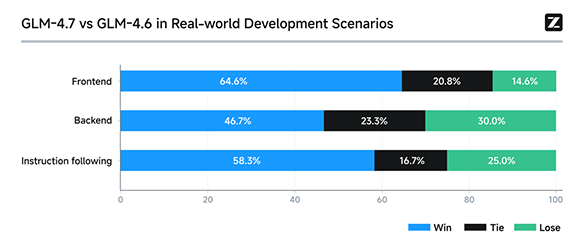
either that, or it has a delusional level of instruction following. doesn’t mean it can’t code like sonnet though
Here's the trick: it's not the public they're marketing to. It's other CEOs. As is often the case, consumers are either the product, or, best case, bystanders, and worst case, victims, of the machinations of the corporate world. May both sides of all of their pillows be warm. May their beds be filled with crumbs.
Are the people that make these apps tasteless? Or soulless? Or do they just have no respect for the craft? Probably. That’s not much different than how things were before. I’ve had tasteless coworkers who only programmed for a paycheck. The were perfectly pleasant people to work with, and I don’t judge them in the slightest. Besides, how do you distinguish an excited novice who genuinely wants to get into programming versus someone trying to extract value versus someone using AI to finally bring a hobby project to life? The same way you did before.
Point being, I doubt HN will suddenly stop being discerning or start celebrating low-effort garbage any more than they did before LLMs. The tasteful remain tasteful. The tasteless remain tasteless. And as such, I find myself more interested in directing my AI-related concern elsewhere.
For example, I spent the better half of a Sunday making my Nespresso machine easier to use. I moved the pods from a zipped bag in a drawer to a 3D-printed holder on the side of the cabinet. I made a similar holder for some disposable coffee cups. Unsurprisingly, now I finally use the machine I paid good money for. Yet, my family recoiled. “You’re so lazy you can’t just open the drawer?”, and other similar sentiments were repeated.
Life is about friction and incentives. Make the good things easier to do (put vegetables in nice containers in an easy-to-see part of the fridge) and the bad things harder to do (charge your phone in another room to avoid using it in bed).
This is all to say, however much willpower you think you have in a day, you have less than that. And you should spend your time building a life where the tired, exhausted version of you can do great things. The same applies to businesses. Design a business effectively, and lazy/tired/stressed employees will still be able to contribute.
As soon as I have the financial stability and space, I expect to enclose it and vent it out a window. Whatever the true risks are, I simply don’t trust melting plastics in my living space.
Soft skills were never optional.
Neat!
From my understanding, this is because modern AI models are basically pattern extrapolation machines. Humans are too, by the way. If every time you eat a particular kind of berry, you crap your guts out, you’re probably going to avoid that berry.
That is to say, LLMs are trained to give you the most likely text (their response) which follows some preceding text (the context). From my experience, if the LLM agent loads a history of commands run into context, and one of those commands is a deletion command, the subsequent text is almost always “there was a deletion.” Which makes sense!
So while yes, it is theoretically possible for things to go sideways and for it to hallucinate in some weird way (which grows increasingly likely if there’s a lot of junk clogging the context window), in this case I get the impression it’s close to impossible to get a faulty response. But close to impossible ≠ impossible, so precautions are still essential.
[1]: https://service.campaigndelivery.cn/resources/templateImages...
When I was in high school, I found the exact model of door knob on my childhood bedroom and found one that looked exactly the same, except with a lock. It was the kind of door knob that you could unlock with any long, thin piece of metal. The next couple years were a slow war as I stole every screwdriver, skewer, and dart in the house. Eventually, my parents got used to not being able to barge in. When I moved out, I left a pile of screwdrivers and darts on the kitchen table. They hadn’t barged into my room in months. Unsurprisingly, those last couple of months were also the safest and happiest I had ever felt there.
Moral of the story being: kids have a natural inclination to privacy, and will chafe at the lack of it. Trust is difficult to gain, easy to lose, and the trust of your kids is worth more than words can say.
> Claude Code for navigating codebases and getting up to speed fast. It's not magic - it's just the pragmatic choice right now.
This text, with all due respect, sounds so obviously AI-written that it’s painful. The “it’s not [thing] — it’s [other thing]” is a huge AI smell. If you’re talking about the pragmatic choice and “getting up to speed”, it would ring less hollow if the text on your website wasn’t written (or didn’t sound like it was written) by AI. If I’m going to your website, it’s because I want to hear from you, not Gemini, Claude, or ChatGPT.
That said, the blog post itself is an interesting reflection. Though, again, I’d appreciate more of the text being a reflection on your part and less of it just being a paste of the AI’s response.
link: https://en.wikipedia.org/wiki/Liebeck_v._McDonald's_Restaura...
I suppose I don’t know data ingestion that well. Is de-obfuscating really something they do? If I was maintaining such a pipeline and found the associated garbage data, I doubt I’d bother adding a step for the edge case of getting the right caesar cipher to make text coherent. Unless I was fine-tuning a model for a particular topic and a critical resource/expert obfuscated their content, I’d probably just drop it and move on.
That said, after watching my father struggle deeply with the complex computer usage his job requires when he developed cataracts, I don’t see any such method as tenable. The proverbial “fuck you” to the disabled folks who interact with one’s content is deeply unacceptable. Accessible web content should be mandatory in the same way ramps and handicap parking are—if not more-so. For that matter, it shouldn’t take seeing a loved one slowly and painfully lose their able body to give a shit about accessibility. Point being, you’re right to be pissed and I’m glad this post had a direct response from somebody with direct personal experience needing accessible content so quickly after it went up.
Is there a reason you believe getting filtered out is only a “maybe?” Not getting filtered out would seem to me to imply that LLM training can naturally extract meaning from obfuscated tokens. If that’s the case, LLMs are more impressive than I thought.
Part of the reason it might be useful is not because “no AI can ever read it” (because I’m sure a pentesting-focused Claude Code could get past almost any similar obfuscation), but rather that the completely automated and dumb scrapers stealing your content for the training of the AI models can’t read it. For many systems, that’s more than enough.
That said, I recently completely tore apart my website and rebuilt it from the ground up because I wasn’t happy with how inaccessible it was. For many like me, sacrificing accessibility is not just a bad look, but plainly unacceptable.