klaasvakie
Steel core strings (on guitar) have a much higher coefficient of thermal expansion than gut-core strings (on orchestra instruments). If you start a concert at dusk your guitar will go quite a bit sharp if you have a cool breeze blowing across the stage after the sun sets.
Some of the playing styles require large bends or use of a tremelo which is much more likely to throw some of your strings out during a performance. Having a pedal means you can quickly re-tune between songs without having to blast it over the PA.
Also at an orchestra it is expected that the crowd will be relatively quiet so that the musicians can hear their instruments while they are tuning. At a rock concert you will have a tough time hearing your instrument while tuning, and you don't necessarily want to subject the crowd to your tuning noise over the PA.
EDIT: Oh yeah, and I should add - most other string instruments aren't fretted so the musician has the opportunity to correctly intonate a slightly off-pitch string. The frets on guitar means the strings have to be perfectly tuned unless you can bend them in (which isn't really a standard skill)
Doing this anonymously would be much harder, but that's not what you were suggesting.
If you are looking for feature requests :)
  Twisted pairs
  Ability to add cable braid to cable sections
  Ability to add heatshrink to connector backshells
  Ability to specify labels
edit: formatting
SIM-swap fraud is super common here, so turning on 2FA actually reduces the security of my account.
If the drive part of a RAID setup I would actually prefer it just reports itself failed and doesn't slow down access to the array by scanning itself for 20 minutes.
As far as I know, that is one of the main differences when buying enterprise or nas drives compared to consumer drives. With nas drives, the firmware gives up very quickly since the drive is assumed to be part of an array with redundancy. Consumer drives will retry reads for a very long time before reporting i/o error.
Obviously killing elephants (any animal really) in large numbers is a big problem on many levels. Transporting elephants is also difficult and expensive, and more importantly you need someplace to put them. Most of the other big game reserves in Southern Africa also have problems keeping their elephant numbers in check. Where would you take them?
> And the proposed law will not fix that, hunting would only be allowed outside preservation areas.
I haven't been up there in a couple of years, but the fencing around Chobe is spotty at best, the entire riverfront is unfenced (at least the part you get to see as a visitor), so I don't think there is really a big restriction on the Elephants' freedom of movement. I am guessing this is one of the reasons why they can cause so much damage to the crops of local farmers, they aren't really fenced inside the game reserve properly.
Targeting the elephants outside the park does more to alleviate the farmers' immediate problem, but its the same population of elephants (in the broad sense, not the herd sense) inside and outside the park.
If they can raise money for conservation by combining their culling activities with trophy hunting I think it is a win for everybody. This can turn a pure cost-centre into a revenue generating activity with the income applied to other desperately underfunded efforts like Rhino conservation.
I support hunting for food, but don't support trophy hunting unless it is part of a culling program or part of removing problem animals.
I'm not sure what the low level difference is between an alias like in the article, or a "eth0:1" type alias (made with ifconfig eth0:1 xx.xx.xx.xx up), but the "eth0:1" type alias seems infinitely more useful.
This is also a major deficiency of the Ubuntu 18.04 netplan implementation, it can only do the systemd.networkd type aliases and not the "eth0:1" type ones. What gives?
As a developer, do you plan on having a market/app store where I can sell my "apps" to other root users?
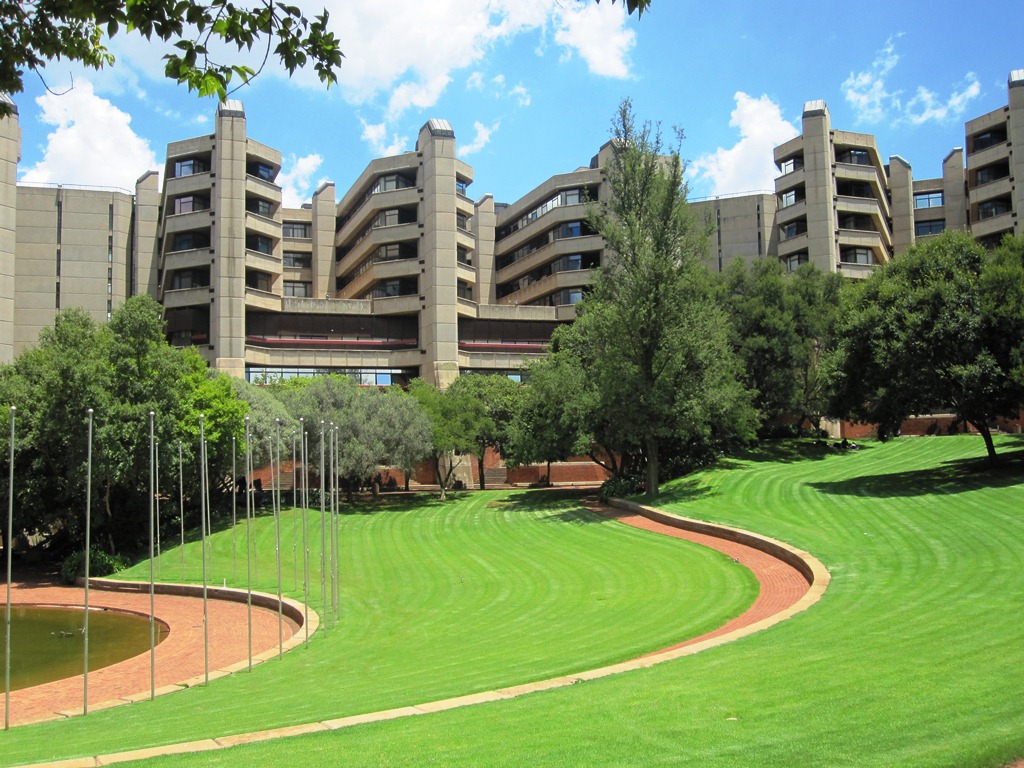
Another great (to me at least) looking brutalist building in Johannesburg is UJ (https://upload.wikimedia.org/wikipedia/commons/d/d3/Universi...)
The QT stuff is worse since they cannot be fixed by adjusting only the font size.
The older (Xaw3D,TK) stuff is really bad.
I have never seen different DPI on different displays working.
99% of my day is spent in the terminal (xfce4-terminal) though and the crisp text makes it all worth while.
Also, I get 7.5 hours on the battery, I wonder what went wrong between the UX31E and the UX31A?
It seems that for the "normal" use cases (i.e. laptop running gnome+vi, server running postgres) systemd will be simpler.
For embedded / single purpose applications, it seems that it will require a chunk more work. I have use cases like a) Only power the 3G module and bring up ppp when I am within certain GPS coordinates. b) switch the wifi between hostapd and wpa_supplicant depending on the state of a GPIO.
The fact there is no general purpose programming language in the .service files makes them simpler, but for anything out of the ordinary you will be writing bash/python anyway. And then it feels like systemd is just getting in the way.
The replacement daemons also seem a bit weak, compare timesyncd with chrony for example.
Sometimes all you need PID 1 to do is run the equivalent of rc.local and get out of the way (almost like slackware's rc.M)
So I guess my point is that not everybody is in the love/hate systemd camp, some of us are just careful and still sceptical.
So from 2 3 5 8 13 21 ... you can see that 3 miles is 5 kilometres, 8 miles is 13 kilometres etc.
1) Mining 2) Power/Electricity 3) Support for the above.
Most companies don't hire in the countries they operate in, since the skills just don't exist. Most sites are populated by a mix of European/South African/Indian expats who are there for a limited period (typically < 5 years)
The way to get into these types of jobs is to get hired by the European or South African companies that operate in these areas, and then ask for placement at your shithole of choice. The current rule of thumb is to ask for your SA salary * 4 or * 5 depending on how bad the place actually is.
At the moment there is is a lot of activity in Northen Zambia (copper) with companies like Yokogawa/Siemens/ABB looking for people.
Northern Mozambique is pretty active (coal/gas) with Vale/Jindal being the major mining houses and ABB/Siemens etc. providing the tech.
On the power generation side - South Africa has quite a lot of activity on the renewable side with Spanish and Danish companies taking the lead (Abengoa for solar esp.)
There is currently also a bit of a power generation boom in Ghana and Benin, but I don't know anyone directly involved.
Most of the work is in hardware, project management, or process control though. It is going to be much harder to find software only work.
EDIT: I forgot to mention - there might be more opportunity for software only work in banking. I know Barclays is currently busy with a big push up into Africa, but I am not very familiar with that industry.
The impression I get as a visitor to many of these countries is that except for a few big cities it is just too difficult to guarantee power and telecoms access to bet your job on it.
Most people will find a job locally doing "boring" software since there is less risk. Working remotely for a company in the US/Europe requires them to understand your (african) problems which is always difficult.
If I am at the office and we have no power, my boss understands; If I am remote-working, will my "American/European" boss understand why I just lost a day?
The advantage of staying here (in SA) means that even if you are doing boring software, your salary is probably good enough to give you spectacular buying power compared to 99% of the planet.
As you move to more remote places, the salaries just keep increasing. I was recently looking at a job in Tete (Northern Mozambique) which paid around USD450k p.a.
So, I guess that doesn't really answer your question, but I think Africa is quiet mostly because the "boring" jobs pay disproportionately well --- the incentive to be an entrepreneur is mostly gone. (I say this as someone working at a startup of sorts)
It's not like I have anywhere else to call home.
Can you give an example of the "no longer bring up everything (completely)"?
"Since systemd is very tightly welded with the Linux kernel API, this also makes different systemd versions incompatible with different kernel versions."
I was pretty meh about the whole systemd thing, but having to change userspace when swopping out kernels is a spectacular disadvantage. Imagine having to downgrade your distro whenever you need to test against older kernels --- madness.
This is especially bad with ARM/embedded stuff where one often runs a modern userspace with an older kernel.
Some feature requests (I m sure you have heard these before):
1) Don't require exact part numbers for common passives (100nF 0603 25V X7R 20%) should get me to say the 10 cheapest results across suppliers.
2) Better information if part numbers are out of stock (Digikey and Mouser both allow you to see projected ship dates) - This also allows for another optimization slider, "Lead time"
Best of luck, this is very exciting.
If I had to buy now though, i'd get the UX31A (Full HD IPS in 13"), but looks like some things there don't work yet: https://help.ubuntu.com/community/AsusZenbookPrime
For the record, I don't think he is very clued up either, but I do think there is some truth in his statement that google search is hurting. In fact more and more of my non-geek friends are getting into the mindset that internet==facebook. (Yes, this is anecdotal, unfortunately this is all I have --- maybe the head of Google SA has seen some actual data that confirms this?)
I have looked at the Z21, but I haven't heard many reports about linux+lightpeak, so I am holding off my purchase until I can gather more data.