jankcorn
The society is based so strongly on group cohesion and de-emphasis of the individual, the experience of living there is very, very different than the West.
I think that this "deep cultural difference" is what the original comment was trying to get at. Sadly the reference point of "American South" ended up triggering a different (less useful) trajectory for the responses.
I have only seen right->left on signs; I have never seen it in books or magazines.
It seems like many times "society vs individual" discussion comes down to a cartoon like straw man discussion, but, living in Japan a long time, the difference in balance point feels quite tangible every day. I won't claim that this is a good tradeoff for everybody, but each society has quite serious benefits as (at times grating) restrictions.
It can be quite difficult to do something too outside the norm in Tokyo, but I am always surprised by the kindness, thoughtfulness and humane-ness I have been shown over the years. In places like San Francisco, a wild variation of individual expression is encouraged, but it sometimes interactions with other people can feel quite jarring and little recognition for simple, calm coexisting humanity.
It really comes down to personal preferences.
(The main difference being 3D in Japan and 2D at Gatwick)
In "inheritance", it often feels like the programmer's mindset is static, along the lines of "here is a deep relationship that I discovered between 2 seemingly unrelated types", which ends up being frozen in time. For example, a later developer might want to make a subtle innovation to the base type; it can be quite frightening to see how this flows though the "derived" types without any explicit indiction.
Of course, YMMV, but I think of "composition" as "support change" and "inheritance" as "we found the 'correct way to think about this' and changes can be quite difficult".
Since I think that the key to building large systems handling complex requirements is 'how do we support disciplined change in the future' (empowering intellectual contributions by later generations of developers rather than just drudge maintenance).
The only formula I know that works is "hire good people and listen to them". From experience, the only way legacy companies can do this is acquire and/or seriously partner with companies that have established a track record in what you need (even if it is only a couple of years, as long as they are _delivering product_).
As software effectiveness/innovation speed/productivity continue to increasingly crush legacy industries, it is extraordinarily frustrating to see how hard it is to make (seemingly simple!) changes.
p.s.: nice to see you Jilles! :-)
This allows you to get money for customizing the software for specific applications, but still build up a valuable asset over time (instead of just being a T&M slave).
Of course, the attribution of causes to this is highly subjective and I expect every person to come away from the elephant with a different interpretation.
In my case, the very, very top down 'age hierarchy' culture was (and continues unabated) to crush any ideas and proposals that come up from younger and more competent engineers. In the last 30 years with Japan, I have met only a small handful of people that are willing to take input, let alone change direction, from someone younger than them. (a trivial example was a fellow company director of mine that was born 5 _days_ earlier than me. In 4 years working together, not once would he take anything I said seriously. Hmm...)
Give the number of excellent Japanese software engineers that I know, the burden of this "culture" is (to me) quite tragic on its impact slowing down national progress in an important global field. If anyone as ideas how to get around this, I would love to know and learn.
He said that after 9/11, the US government came down very hard on MIT to force use of last names and that is the first time I ever knew what it was.
Deeply thoughtful, highly caring and warm to all the people he met, he will be deeply missed!
It has great illustrations that quickly get the idea across for Japanese onomatopoeia.
To give an idea of what it is like, here are a couple of example pages: <https://livedoor.blogimg.jp/akky_san/imgs/b/2/b21ad72f.jpg> <https://livedoor.blogimg.jp/akky_san/imgs/3/4/34cf6c82.jpg>
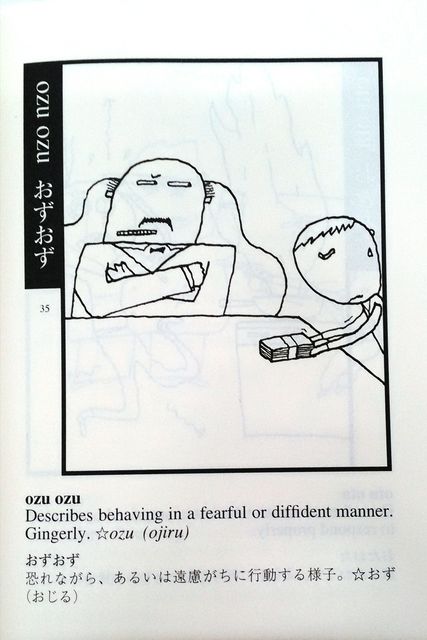
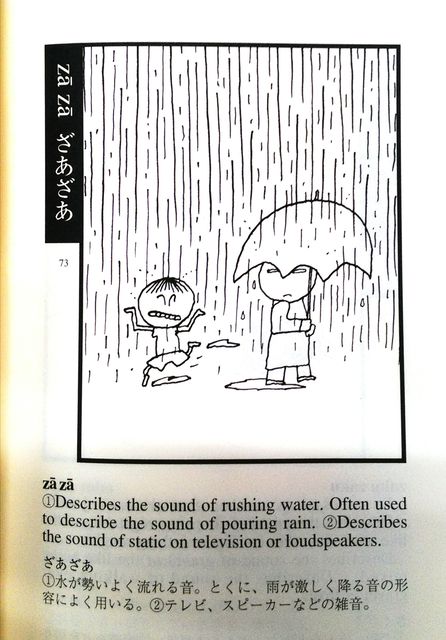
Quite fun to read!
https://www.govinfo.gov/content/pkg/CPRT-107SPRT80393/pdf/CPRT-107SPRT80393.pdf
In one case, the board member said that the only material about the company they were ever given was carefully constructed/managed by the CEO/executive team and was not detailed enough to support any critical analysis of executive team decisions.
In all cases, the board members seemed to feel that they were there merely for "helpful advice" rather than "proactive intervention" and the only decision that was clearly in their domain was "replace the CEO", which is pretty grand step.
The directors I have known were all quite competent, sincere people, but knew that their continued presence on the board was predicated on being just a sounding board for the CEO and/or Chairman.
In addition, I was told that, in the US, conflict of interest and other legal liability for directors is now so intricate and severe, that it was no longer possible to hire directors that were competent in the field and not yet fully retired (so hiring directors in the 45-65 age range is impossible, a bit of a problem for high tech!) For those among us who think that steep liability for directors is a good thing, I have a question: would you take that job, when you are just paid a fixed, modest sum for board appearances (perhaps $50-100k/year, total)?
In any case, I don't know how to get "responsibility" and "authority" tightly connected at the top of any modern company. (The only exception I know of is when the company is still run by the founders)
If anyone has ideas, I would love to hear them.
The nice side effect of being a contractor is that your CV now looks like you have been in the same position for 10 years instead of a series of 2 year stints.
I have done this and always worked hard to help the team succeed. Later, when I decided to try working for a couple of large companies, I was stunned to be treated as "you work in my organization and will follow my every whim".
One example is attending endless pointless meetings waiting for the client to decide what spec they want, just because the manager wants to everyone on the team to be present (and silent). As a contractor, it becomes quite easy to say "it looks like I am not adding much to your project until the project spec gets settled. Please let me know when you are ready to implement (or have more detailed questions that you need to know to flesh out the spec) and I will be happy to help anytime". In my experience, it is quite common that they will have hashed out the requirements and be ready to start work after 12 months or so and were happy to talk then.
The homelessness (mentally ill), open drug use, and theft/vandalism are pretty draining.
I lived for a long time in Cambridge/Boston and very, very rarely had any similar experience.
Ise Jingu is my favorite place anywhere; it is a place to stop thinking, become humble before nature and appreciate things as they are.