curl-up
People love providing such explanations to various observed trends, but never consider looking back to check if trends are new in the first place. FWIW, I don't see how these games are allowing players to "focus in on one thing" (and put things in order) any more than Solitare or Farmville.
But she claims that the fact that AI exists decreases her drive to create. That is a much stronger and less obvious argument, and something that doesn't apply to you if you're still building those models.
If she simply "enjoys the effort", as you claim, she would do the same as you - continue enjoying it. But she is not.
To be clear, I'm not asking this in some new age way, and I'm sure it's better than the amount of pesti/herbicides used traditionally (and the whole movement behind hydro/aquaponics is fascinating to me), just wondering if this is something you ever tried minimising with such setups?
Similar mess with can be found in `Figure 34.`, with an added bonus of "DO NOT MAKE MISTAKES!" and "If you make a mistake you'll be fined $100".
Also, why are all of these research papers always using such weak LLMs to do anything? All of this makes their results very questionable, even if they mostly agree with "common intuition".
Tried a million different things, but haven't heard of Turbopuffer yet. Any references on how they perform with such additional filters?
From a fellow LLM-powered app builder, I wish you best of luck!
I wonder what obscure (probably online?) source of information of today we'll be comparing to the mainstream sources of tomorrow.
[1] https://www.theguardian.com/technology/2011/oct/09/steve-job...
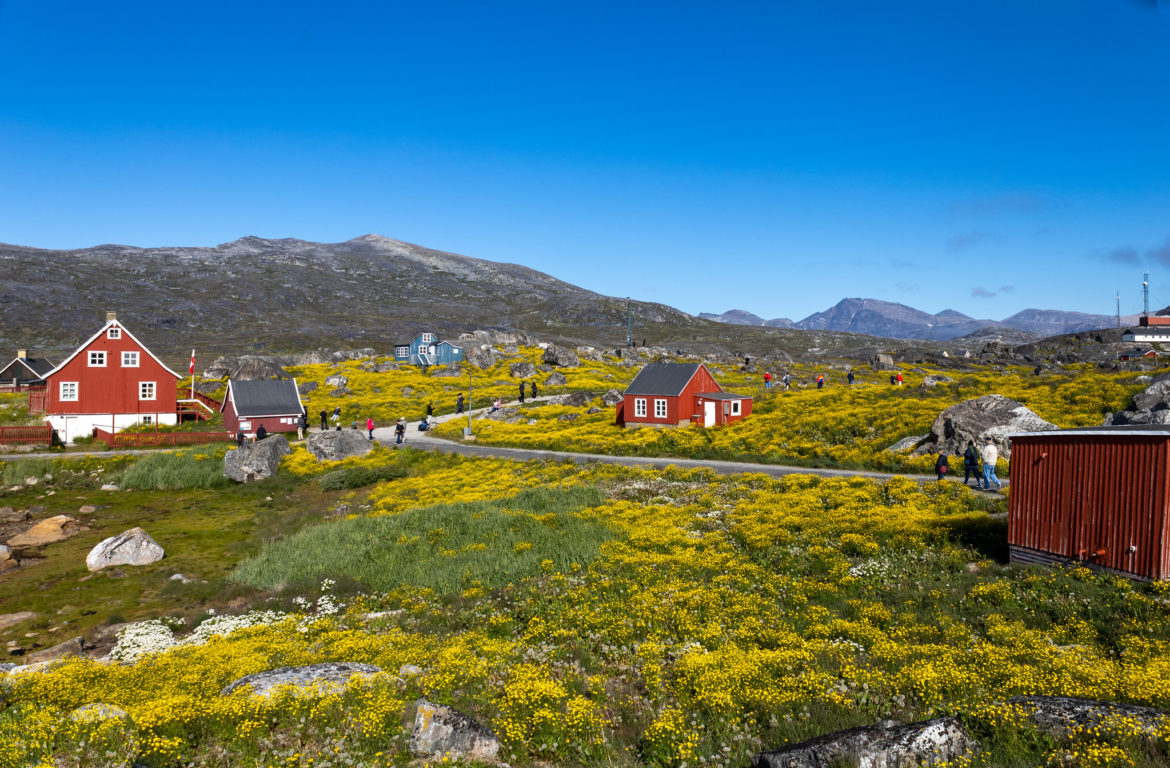
This is only true of the area around the airport. Even his pictures further into the article show how misleading this description is. I was actually very surprised how little snow/ice there was. Now when I think of Greenland, I think of something similar to [1].
Of course, in the winter, it's a completely different story (I was there in July). But he was there during the warm period as well (as is obvious from his photos).
> The city itself sits in a landscape so dramatically inhospitable it makes the surface of Mars look cozy.
If you look at a map, you will notice that Nuuk is at the same latitude as Reykjavik. There's a common meme about Iceland being green and Greenland being icy, and that's definitely true if you compare inland or northern Greenland with Iceland during summer (during winter, both are icy and dark), but hiking around Nuuk is a very "green" experience. Yes, there's a ton of mosquitoes, but nature itself is very inviting. I did not get any of the "inhospitable" vibes he mentions.
> But again even riding the bus around it is impossible to escape the feeling that this is a fundamentally hostile to human life place. The sun is bright and during the summer its pretty hot, with my skin feeling like it was starting the burn pretty much the second it was exposed to the light. It's hard to even dress for, with layers of sunscreen, bug spray and then something warm on top if you suddenly got cold.
This whole section is just overblown BS.
All in all, I enjoyed it a lot. Compared to Iceland, it's definitely a lot less "user friendly" and you need to prepare better, but I have never been to a place that is less affected by humans, and in our age, that is something worth experiencing.
[1] https://truewindhealingtravel.com/wp-content/uploads/2022/08...
As to why, it's because I'm building an app with a growing userbase and need to accommodate to their requirements and build new features to stay ahead of the competition. Why you decided I'm describing a toy project is beyond me.
My life quality (as a startup cofounder wearing many different hats across the whole stack) would drop significantly if Cursor-like tools [1] were taken away from me, because it takes me a lot of mental effort to push myself to do the boring task, which leads to procrastination, which leads to delays, which leads to frustration. Being able to offload such tasks to AI is incredibly valuable, and since I've been in this space from "day 1", I think I have a very good grasp on what type of task I can trust it to do correctly. Here are some examples:
- Add logging throughout some code
- Turn a set of function calls that have gotten too deep into a nice class with clean interfaces
- Build a Streamlit dashboard that shows some basic stats from some table in the database
- Rewrite this LLM prompt to fix any typos and inconsistencies - yeah, "compiling" English instructions into English code also works great!
- Write all the "create index" lines for this SQL table, so that <insert a bunch of search usecases> perform well.
[1] I'm actually currently back to Copilot Chat, but it doesn't really matter that much.
This is my main issue with all these agentic frameworks - they always conviniently forget that there is nothing "individual" about the thing they label "an agent" and draw a box around.
Such "on demand" agents, spawned directly from previos LLM output, are never in any way substantially different from dynamic context compression/filtering.
I think the only sensible framework is to think in terms of tools, with clear interfaces, and a single "agent" (single linear interaction chain) using those tools towards a goal. Such tools could be LLM-based or not. Forcing a distinction between a "function tool" and an "agent that does somethng" doesn't make sense.
I did not claim that AI-based rendering will overcome traditional methods, and have even explicitly said that this is a heavy assumption, but explained why I see it as exciting.
The problem with using equations is that they seem to have plateaued. Hardware requirements for games today keep growing, and yet every character still has that awful "plastic skin", among all the other issues, and for a lot of people (me included) this creates heavy uncanny-valley effects that makes modern games unplayable.
On the other hand, images created by image models today look fully realistic. If we assume (and I fully agree that this is a strong and optimistic assumption) that it will soon be possible to run such models in real time, and that techniques for object permanence will improve (as they keep improving at an incredible phase right now), then this might finally bring us to the next level of realism.
Even if realism is not what you're aiming for, I think it's easy to imagine how this might change the game.
I'm interested in both full model finetunes, and downstream matrix optimization as done in [1].
[1] https://github.com/openai/openai-cookbook/blob/main/examples...
What I am saying is that (1) I regard this as an unhealthy relationship to creativity (and I accept that this is subjective), and (2) that most people do not feel that way, as can be confirmed by the fact that chess, go, and live music performances are all still very much practiced.
But his argument does not align with that. His argument is that he enjoys the act of writing itself. If he views his act of writing (regardless of the idea being transmitted) as his "contribution to world's knowledge", then I have to say I disagree - I don't think his writing is particularly interesting in and of itself. His ideas might be interesting (even if I disagree), but he obviously doesn't find the formation of ideas enjoyable enough.
So the fun, all along, was not in the process of creation itself, but in the fact that the creator could somehow feel superior to others not being able to create? I find this to be a very unhealthy relationship to creativity.
My mixer can mix dough better than I can, but I still enjoy kneading it by hand. The incredibly good artisanal bakery down the street did not reduce my enjoyment of baking, even though I cannot compete with them in quality by any measure. Modern slip casting can make superior pottery by many different quality measures, but potters enjoy throwing it on a wheel and producing unique pieces.
But if your idea of fun is tied to the "no one else can do this but me", then you've been doing it wrong before AI existed.
Being able to clearly and correctly discuss science topics, to write about art, to understand nuances in (previously unseen) literature, etc. is impossible simply through powerful-reasoning + RAG, and so many advanced use cases would be enabled by this. Sonnet 3.5+ and GPT 4.5 are still unparalleled here, and it's not even close.