cbracken
On a similar note, I recently requested a list of historical transactions from a brokerage and found that transaction dates continued to be annotated as Heisei all the way through Heisei 36 (2024), a full 5 years after Heisei officially ended in Heisei 31 / Reiwa 1 (2019). Late in 2024, transactions finally started being annotated Reiwa 6.
The first Murakami book I read was Hard-boiled Wonderland and the End of the World, and it's still one of my favourites, with a new translation by Jay Rubin coming out later this year. The book of his that's always spoken to me the most is South of the Border, West of the Sun.
If you're ever in Tokyo, consider visiting the Murakami library at Waseda University. It's got a small cafe downstairs, sometimes with live music performances, and lots of nooks and corners for sitting and relaxing with a book. There are copies of all of his books, and tons of translated copies in many languages.
App Store: https://apps.apple.com/us/app/wonderous/id1612491897
Code: https://github.com/gskinnerTeam/flutter-wonderous-app
(Disclaimer: I work on Flutter)
Agreed that the UI for Japanese train ticket machines can be confusing for first-time users such as foreign visitors, but foreign visitors aren't the primary use case. These machines are designed to be familiar and fast for the bulk of their users: residents of Japan who know how the train system works. Stations need to move massive numbers of people through these machines quickly, and this layout is incredibly efficient for that.
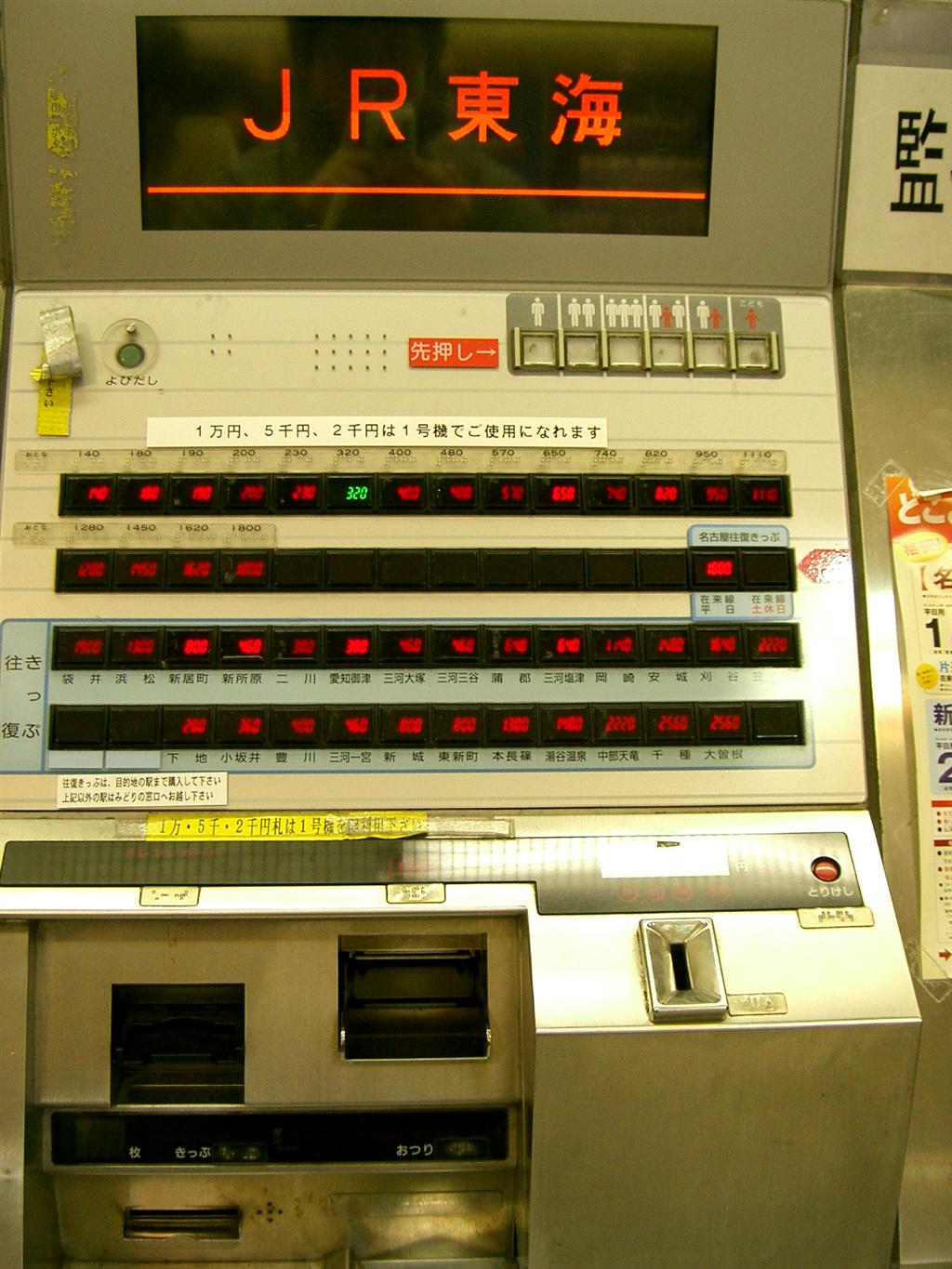
Older terminals used a very similar layout of two groupings [1]:
1. physical pushbuttons with prices displayed using 7-segment LEDs
2. physical pushbuttons for most common multi-passenger sets
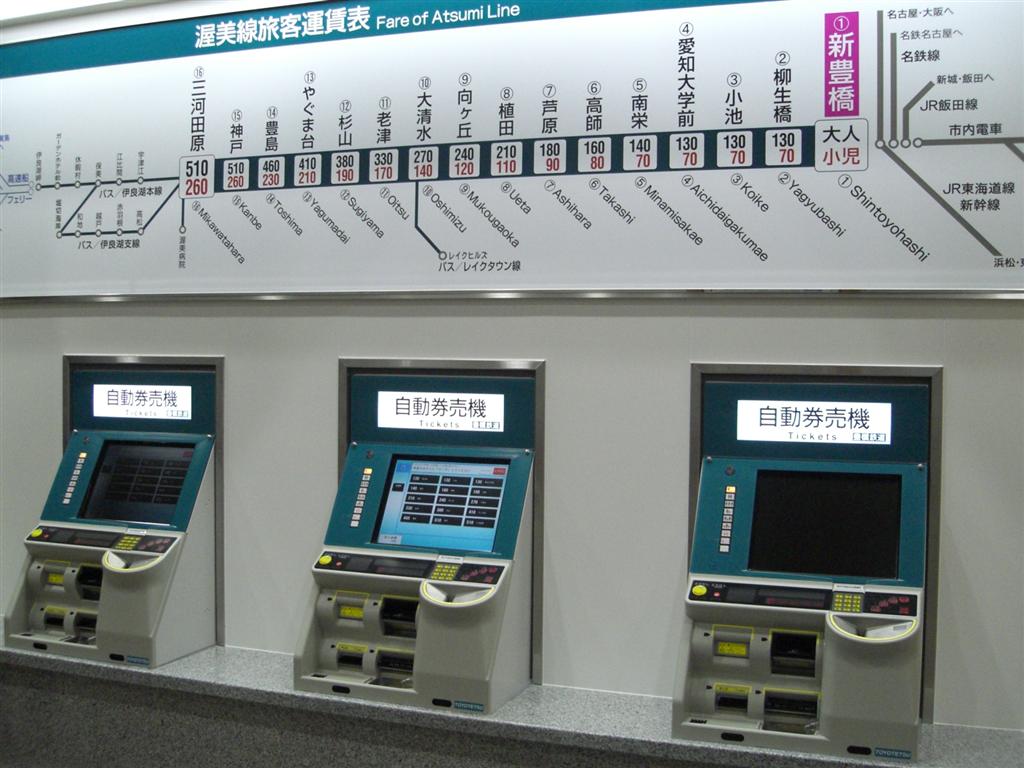
The touchscreen terminals provide this exact same layout, which provided continuity as the changeover happened, and kept the lines at the machines moving quickly. They're also freakin' brilliant when it comes to minimising the button-presses required to buy tickets. e.g. two parents and a kid going to a station that's 400-yen from here? Press the "two adults, one kid" button, then the fare. You're done. Fare zones are listed on a large train network map usually posted right above the machines with both adult/child prices [2], but locals almost always know where they're going and how much.
Given how heavily-trafficked Japanese stations are, it's way more critical to minimise the time required to use the machines and keep the lines flowing than it is to provide an easy experience for foreign visitors. Compare to e.g. Montréal where even users familiar with the metro can spend upwards of a minute to buy a ticket or recharge an Opus card.
[1] https://livedoor.blogimg.jp/ticket4_ta/imgs/f/d/fdfe28d7.jpg
[2] https://livedoor.blogimg.jp/ticket4_ta/imgs/4/9/4987e9ba.jpg
PlatformView support is one of our top desktop priorities this year (along with multi-window support).
During recombination epoch ~400,000 years after the Big Bang, this light would have been visible. Due to expansion, over time that light has stretched to longer and longer wavelengths, and we currently see it as microwaves.
Note: It's been ~30 years since I was actually studying physics & astronomy; others may be able to offer better explanations or correct me.
The conviction rate is 99.3%. By only stating this high conviction rate it is often misunderstood as too high—however, this high conviction rate drops significantly when accounting for the fact that Japanese prosecutors drop roughly half the cases they are given. If measured in the same way, the United States' conviction rate would be 99.8%.
Each of these layers is public API and follows the same breaking change process as any other part of Flutter's public API, so with a bit of effort an alternative imperative framework could conceivably be built built on top of what's there. The downside is that since the widgets layer is reactive, you'd be giving up all those shiny widgets that are part of the SDK and need to build your own (or find a way to wrap what's in the SDK).
This (old, but still accurate) talk by hixie covers the layers in detail: https://www.youtube.com/watch?v=dkyY9WCGMi0
TL;DR it's entirely possible to create an imperative framework on top of Flutter's lower layers, re-using a lot of our existing code, but (as far as I know) such a thing doesn't exist today.
I've done a lot of cycling across various bits of Japan, from shorter day trips on the order of 150km to longer 1000km+ trips. One thing to keep in mind for visiting cyclists on longer road trips: this may seem obvious but Japan is very mountainous which means a lot of narrow roads with little/no shoulder, and long (sometimes multi-kilometre) tunnels. Fortunately drivers are in general, very considerate and careful around cyclists.
For shorter day trips, many large rivers/lakes in Japan have cycling/walking paths along one or both sides and make for really nice riding. In Tokyo, the Tamagawa or in Kyoto Kamogawa and Katsuragawa have paths. Lake Biwa has a really nice cycling trail as well.
One of my favourite longer routes was along the north coast of Japan between Tsuruga and the north end of Fukui. The mountain pass along no. 8 through Takefu has some nice views but a lot of climbing and tunnels. For something shorter but pretty, follow the Tamagawa from Tokyo up to Lake Okutama. As someone else mentioned, I find travelling in rural Japan a lot nicer than cycling in/near big cities.
[1]: https://www.canada.ca/en/health-canada/services/medical-assi...
[2]: https://exit.ch/en/englisch/engagement-of-exit/our-end-of-li...
While I understand this may be a dealbreaker issue for your use-case, we've been pretty busy getting a few higher-priority (overall) issues fixed (universal binary support, CJK text input, key event APIs, etc.) prior to 3.0, but we'll get to this.
I manually tested on each of Windows, macOS, Linux, and iOS (where I've done a lot of work specific to CJK input) and was able to correctly input Japanese, Chinese, and Korean text [2], so looks like this is likely an issue specific to Flutter's web runtime. I work on Flutter's desktop embedders, but if there isn't someone who's a heavy IME user on the web team, I'll gladly give em a hand to help get this fixed.
(Disclaimer: I work on the Flutter team.)
We made a decision early on to focus where those of us who work on Flutter could deliver the most value, and for Desktop that meant getting the runtimes and platform integration for each of the desktop OSes in good shape (international text input, accessibility support, rendering performance, etc.) as well as core integrations like the menu bar, file chooser dialogs, etc. These are things that need to land in the runtime itself and are significantly more painful for the community to contribute, or author and publish on pub.dev.
We're working on filling in the gaps for widgets that are part of the Material spec, and I expect the community to make and publish widgets on pub.dev that continue to surprise me; I'm blown away time and time again at the beautiful widgets and the community continues to produce either in packages or as pull requests. You should be able to find community-authored packages for treeview, datagrid, and charting on pub.dev today in the meantime.
I remember being disappointed at the original iPhone since it didn't include a fingerprint scanner, digital wallet/train pass, or video recording support, all of which were available on my Japanese flip-phone that had been released 3 years earlier at less than half the price.
As an example, while my daughter's record of birth in Tokyo is a printout of a digital record, my son's record of birth in Kyoto is hand-written, and other than the handwriting, looks identical to my wife's from the 1970s.
To answer the question, this service doesn't exist in any other country I've lived in -- Canada or Japan, in my case.
In terms of nails on blackboards, I ask that you bathe for a moment in the exquisite splendour of the romanisation that is "Mt Huzi", Japan's highest peak.
It does, though not being a rigid body, the rate of rotation is a function of latitude. Near the equator, the period of rotation is ~24 days. As you near the poles, the period is closer to 30-35 days. A means of measuring these rates available to backyard astronomers is through measuring the positions of sunspots over time. [1]
[1] Please don't look at the sun through a telescope or really at all without knowing what you're doing and taking appropriate precautions: https://www.youtube.com/watch?v=R9cMXCemoJI
While there’s no doubt that one can find cases to which this applies, I’d think that applying that broadly to the vast majority of people who are arguing in good faith would stifle debate.
If you're after code completion, vim-lsc plugin combined with dart_language_server should work.