Kabootit
There is a use case of using HTML for transactional emails:
- enhance company branding with design - embed call to action items via hrefs
(3) Communicating clearly is an orthogonal skill to coding clearly. I think this skill is barely acknowledged in engineering cultures in comparison to the above.
I feel you have to have an engineering culture that values institutional knowledge retention, team education and growth — and not treating engineers as fungible — to get to level (2). Level (3) would be a great place to work.
In my experience the use case is not limited to a single full-stack developer - this approach has turned our entire polyglot team into full-stack devs — no one is afraid of the data layer now. Super refreshing.
For public facing endpoints, "exposing an OpenAPI 3.0+ compliant JSON REST API" would be the first thing I'd reach for.
In my journey I've tried about just every setup imaginable. This app checks all the boxes I've been looking for:
- local data (privacy) - import and store all ride gpx's - can map out new rides - can export routes to gpx for sharing and loading up on Garmin/iWatch/etc - UI/UX clean and simple
Has everything I want and nothing more. I wish I had coded this... :)
EDIT: the meta data cataloging options to be explored. Personal ride journal in one place finally?
Add in a SvelteKit and deploy to a Vercel and you have a minimal yet powerful stack with everything you need for 90% of business CRUD app demands.
The whole company was remote-first from the beginning several years before the pandemic. As a result we have a well honed async work culture that prioritizes transparency and communication over layers of bureaucracy. We believe in engineers doing engineering things and collaborating directly. We don't do Scrum — we pace ourselves along the lines of 37Signal's 6-week cycles.
Looking for a senior engineer with a focus on the backend to join our polyglot team. We wrangle a lot of data and business workflows across many boundaries and keeping everything organized is our main engineering challenge! Not sexy but still a significant challenge that takes systems thinking and creativity to keep from coding ourselves into unmanageable messes.
Tech stack is Typescript, Postgres and EdgeDB, SvelteKit, serverless, etc – all in a couple of monorepos.
My name is David and I am the engineering team lead. Feel free to reach out to me directly at dave at apmhelp dot com!
The UI editor was fantastic: https://raw.githubusercontent.com/datamosaic/data-sutra-waka...
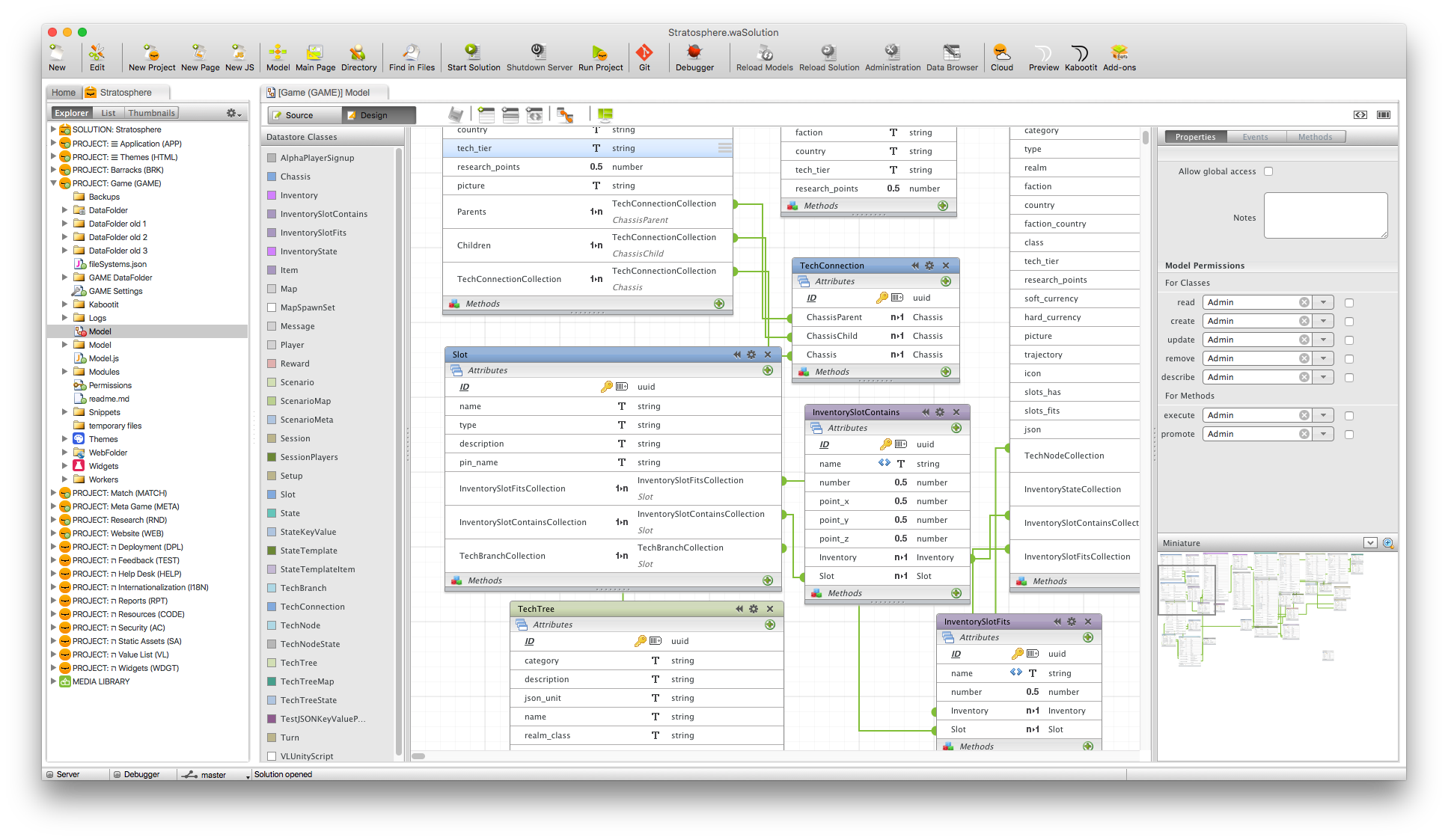
The query language was imperative in the "fluent" style:
var record = ds.Group.query("name = :1",group).first();
Really psyched about what EdgeDB is doing moving this space forward. The declarative composable query language is a paradigm shift imo — not just a better ORM.
TL;DR We arrived at Google Projects Beta and to our collective surprise just about everyone likes it a lot. Took a bit of experimentation with custom fields to setup — what makes our boards sing is the timeseries custom field type. Makes it easy to map our long term goals over the individual data points.
One minor quibble we solved with some name spacing conventions for issue titles to make it easier to scan a gird of issue titles and see what are "parent" issues and what are "task" issues.
Summary of our decision making process:
Jira
Because of complexity, at the mercy of the individuals putting the most time in Jira doing the setting up, organizing, creating tasks, managing workflows, etc. This encourages top-down flow, not team collaboration.
Has a lot of structure and opinions about data buckets and workflows. This is optimized for project managers types managing engineering types. Encourages treating engineers as a fungible commodity (imo).
To state an opinion bluntly, terrible tool for non-engineering tasks. Which engineering tasks should be synergizing with.
Trello
Easy, everyone can use and understand. Without creating a whole bunch of additional structure, happy path is a hodgepodge of cards organized loosely. This scales very badly.
Creating structure in Trello mirrors the mind of the person who does the structuring...per board. A single team might have a nice snowflake to be proud of but diffs between teams/boards can be jarring. At the organization scope you still have hodgepodge.
Shortcut
Easy, anyone can use, people like to use, different disciplines can use, comes with Just Enough™ structure, organized view from any scope (org level down to specific teams over to specific sprints down to specific individuals), easy to zoom in/out....
APM Help is reimagining property management systems enabling property owners and management companies to be secure in knowing they are always 100% compliant and up-to-date with their books and finances. We are the tech-enabled "back office in a box" that eliminates the tedium and grunt work of accounting and maintenance coordination tasks.
The whole company was remote-first from the beginning several years before the pandemic. As a result we have a well honed async work culture that prioritizes transparency and communication over layers of bureaucracy. We believe in engineers doing engineering things and collaborating directly. We don't do Scrum — we pace ourselves along the lines of 37Signal's 6-week cycles.
Looking for junior to senior engineers with a focus on the backend. We wrangle a lot of data and business workflows across many boundaries and keeping everything organized is our main engineering challenge! Not sexy but still a significant challenge that takes systems thinking and creativity to keep from coding ourselves into unmanageable messes.
Tech stack is Typescript, Postgres and EdgeDB, SvelteKit, serverless, etc – all in a couple of monorepos.
My name is David and I am the engineering team lead. Feel free to reach out to me directly at dave at apmhelp dot com!
Not only in structure, but how they compose. The typical top-down tree components composition is typical. What is not immediately obvious is how child components can expose functionality upstream. So simple.
Homesnap is an award-winning technology company serving the real estate industry. We're well-funded and based in Bethesda, MD. Our website and app empower people to find and share accurate, real-time real estate information, whether they are standing in front of a house or sitting on a couch.
We've been awarded several prestigious awards, including 2018 Washington Post Top Workplaces, Inc. Magazine Best Workplaces, #43 on Deloitte's Fast 500, and DC Inno Coolest Companies.
We are looking for a JavaScript Engineer who is motivated to combine the art of design with the art of programming. Responsibilities will include implementing visual elements and their behaviors with user interactions. You will work with both front-end and backend web developers to build all client-side logic. You will also be bridging the gap between the visual elements and the server-side infrastructure, taking an active role on both sides, and defining how the application looks and functions.
Email us at [email protected] to apply and we'll respond to you promptly.
Multiple slots available, mid to senior experience preferred.
Homesnap is an award-winning technology company serving the real estate industry. We're well-funded and based in Bethesda, MD. Our website and app empower people to find and share accurate, real-time real estate information, whether they are standing in front of a house or sitting on a couch.
We've been awarded several prestigious awards, including 2018 Washington Post Top Workplaces, Inc. Magazine Best Workplaces, #43 on Deloitte's Fast 500, and DC Inno Coolest Companies.
We are looking for JavaScript Engineers who are motivated to combine the art of design with the art of programming. Responsibilities will include implementing visual elements and their behaviors with user interactions. You will work with both front-end and backend web developers to build all client-side logic. You will also be bridging the gap between the visual elements and the server-side infrastructure, taking an active role on both sides, and defining how the application looks and functions.
Email us at [email protected] to apply and we'll respond to you promptly.
All levels accepted (bootcamp is cool too!).
Homesnap is an award-winning technology company serving the real estate industry. We're well-funded and based in Bethesda, MD. Our website and app empower people to find and share accurate, real-time real estate information, whether they are standing in front of a house or sitting on a couch.
We've been awarded several prestigious awards, including 2018 Washington Post Top Workplaces, Inc. Magazine Best Workplaces, #43 on Deloitte's Fast 500, and DC Inno Coolest Companies.
We are looking for a JavaScript Engineer who is motivated to combine the art of design with the art of programming. Responsibilities will include implementing visual elements and their behaviors with user interactions. You will work with both front-end and backend web developers to build all client-side logic. You will also be bridging the gap between the visual elements and the server-side infrastructure, taking an active role on both sides, and defining how the application looks and functions.
Email us at [email protected] to apply and we'll respond to you promptly.
Exactly!
> By far the biggest mistake I see developers make is making their method/function bodies too long. Extract your methods people
As a general rule this is just one side of the coin imo. I often see this approach increasing the complexity of control flow in direct proportion to the simplification of individual code blocks. Net gain zero.
A fellow developer does this via some app on his Windows box to keep entire projects grouped together.
Also some instructions for getting it going in VS Code.
Never been a fan of narrow fonts but I'm sold on this one.
And who wouldn't want to use both of these projects together.
Seems like a sweet spot to me.
Transparency: I felt like it wouldn't be hard to figure out what was going on behind each step. First guess easy vs black box not-so-fun.
Overall easy to grok created app plus Hasura meta data associations and transformation points.
First impressions: very little magics/transparent, reasonable pieces, reasonable architecture, well packaged, nicely automated, descriptive UI, no glaring wtfs, all the bases are covered, looks easy enough to customize at any layer with skills I already have — all very sensible.
Damn.
My preference most of the time is to optimize for discontinuity since it is usually inevitable and I want to minimize negative pressure producers. "Being in the flow" is great for productivity and all but I'd rather not count on it or optimize for it. Instead:
#1 When exiting a work session, I write on a Post-it note the next immediate steps/chunks/steps in order of priority. I usually also write down the next theoretical milestone/goal these steps are part. Sometimes I'll even write down the tentative 2nd milestone.
Note that this is separate from my Github-based task tracking and kanban board. That system is for when I'm in the flow and can have reasonable expectations of continuity (and when working with others).
This technique minimizes "spinning up". Instead of having to mentally conceptualize the project and all its tasks to start working, I just start working and let the full scope of the project flow into my brain as I progress.
If I enter flow state as a result, great. If I don't, no biggie — something gets done and I'm off to the next thing in life. #2 and #3 fit right in here. Rinse and repeat.
Disclaimer: I like colored Post-it notes.
I've fought many battles for quality data driven development — everything about this resonates on so many levels.
A joy to read straight through.