Cowen
For people wondering what they are:
> "The only information responsive to the subpoena held by OWS is the time of account creation and the date of the last connection to Signal servers for account [redacted]. Consistent with the Electronic Conununications Privacy Act ("ECPA"), 18 U.S.C. § 2703(c)(2), OWS is providing this information in response to the subpoena."
Their response to the subpoena then goes on to object to its overly broad scope, which asked for things that require a court order or a search warrant. They also object to the scope of the nondisclosure order included in the subpoena.
National Defense University (an actual part of the Department of Defense) has links to them all here.
* http://www.ndu.edu/Libraries/Professional-Military-Reading-L...
EDIT: Well, plenty of the links appear to actually be broken. But a quick Google can probably find those ones.
That said, I have no idea if this will be that influential on economists changing their tools, or the tools that they teach to their students. People tend to stick with tools that they know and like. But it's very possible that this will help Julia in the eyes of people getting into the field choosing their first programming language.
But Matt Levine's really are the best. Hilarious and insightful five days a week.
It won't guarantee the absolute best return, but it can effectively guarantee a very respectable average return.
This depends on perspective.
In terms of domestic elections, chances are the TPP won't make a real difference in countries like the US or Canada one way or another. Foreign policy generally only affects domestic elections at its extremes, e.g. winning/losing a war. Voters might be for or against TPP for any number of reasons, but chances are when they actually step into the voting booth, TPP will be low on their list of reasons for voting whichever way they do.
In terms of international relations, reneging on a huge deal that was painstakingly negotiated over seven years is obviously never a good thing. But it's hard to say how or when that could come back to bite whichever countries back out of the deal.
Real contexts, where abstract concepts have been concrete realities, put natural and rational limits on the ability to treat those concepts as abstract ideas to be debated solely on their hypothesized merits rather than their hard realities. There is a very rational difference between arguing in favor of communism on an American college campus, where communism is a lovely abstract ideal, and arguing in favor of it in Romania or Ukraine where communism was a brutal reality.
Moldbug is an American, being read by Americans, writing about his support for the institution of slavery, and explicitly saying that some races are genetically better suited for slavery than others. It is far more rational to treat that as racist than to bend over backwards and pretend that it is not in the name of free debate.
Kind of like what you're doing right now?
After all, it's not like Moldbug's writing shies away from this idea.
> Not all humans are born the same, of course, and the innate character and intelligence of some is more suited to mastery than slavery. For others, it is more suited to slavery. And others still are badly suited to either. These characteristics can be expected to group differently in human populations of different origins. Thus, Spaniards and Englishmen in the Americas in the 17th and earlier centuries, whose sense of political correctness was negligible, found that Africans tended to make good slaves and Indians did not. This broad pattern of observation is most parsimoniously explained by genetic differences.
I've never read a word of Moldybug or whatever, but in the American context, the very concept of slavery is absolutely considered racist and rightly so. America's history of slavery is completely inseparable from racism.
So yeah, I'm not sure what estimate they're using for the growth multiple from liberalizing land-use constraints, but if they're predicting a near doubling of the combined metro economies, it's safe to assume it's pretty high.
I do agree that land-use restrictions are currently holding all three cities back, my Friday night napkin math (read: probably wrong, way oversimplified math) just thinks their estimates are a little optimistic.
EDIT: Another question would be what's the time frame for this addition to GDP? 9% growth in one year is insanely great. 9% growth over ten years is insanely bad.
The cost of care in the US is much higher than in other countries. There are a bunch of reasons for this, and everyone has their preferred scapegoats and solutions, but the end result is that healthcare prices in the US are astronomically higher than in other countries. So it's often cheaper to just go somewhere else and buy the care you need there at a fraction of the cost.
[1] http://www.vox.com/cards/health-prices/america-is-getting-go...
But of course, that's the best part about transparency.
It helps us figure out what are real issues and what are not.
"If only Legal System X had more People Similar To Me That Agree With My Values, The World would be a better place."
It's arguably the driving sentiment behind representative democracy.
This is really the only way I can imagine they got to that number.
Spring, a beastly enterprise Java codebase if ever there was one, is still "only" 460K lines of Java code according to cloc.
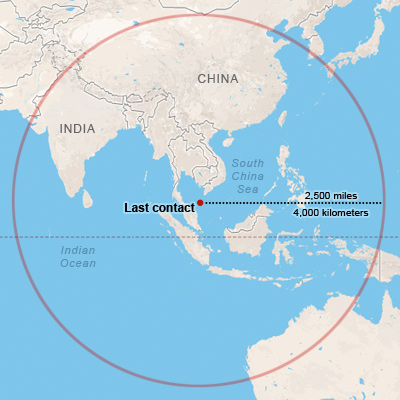
[0]- http://i.cdn.turner.com/cnn/interactive/2014/03/world/malays...
Explicit is better than implicit.
When I transferred to a new university I was placed in their first year calculus program over my own protests. I had already done AP Calculus in high school, and completed the first year calculus course at my previous college, which was admittedly of much lower quality than the university I was transferring to. I thought this new one would be a complete waste of my time.
The first thing we covered in this new course were limits. I rolled my eyes; everyone knows how to find a limit. Was this really the kind of thing we were going to cover in this class? Then the professor said these words I had never heard in relation to limits before, "epsilon" and "delta." And here my troubles began.
That turned out to be one of the hardest courses I've ever taken, I had to relearn almost everything I thought I knew about math.
Learning fluent English doesn't teach you Portuguese.
But I think the real test for this phone's market share will be the subsidized price that carriers offer it at, which would have to be substantially lower than current subsidized flagship smartphones. I don't think most smartphone consumers value unlocked phones enough that they would pay a similar amount for one as they would pay for a subsidized iPhone 5S. A subsidized 5C would still be even cheaper than the unlocked Moto G.
A subsidized $50 Moto G vs. a subsidized $100 iPhone 5C though? I could definitely see that taking off.
Whether or not they accomplish those goals is obviously a matter of serious debate, but Velde's reasoning there is consistent with all other arguments for government intervention.
There's no point in trying to spin that statement into him giving the traditional banking system a pass.
Politics is such a polarizing and passionate issue that these blogs easily gain readership among people who already agree with their political agenda. It's incredibly easy to start a political blog that is purely speculation, vitriol, or outright lies. A lot of political blogs even devote themselves to minutiae like dissecting every single word out of Senator John Doe's mouth to advance some ridiculous pre-formulated conclusion -- "Senator Doe ate French Fries! Clearly he hates America!"
Wonkblog does none of those things, often posting only about actual reports or expert's interviews. It's both rare and relieving to see a political blog that at least attempts to stick to non-partisanship.
Even here you can see that they aren't declaring this event to be any bigger than it is. The guy who oversaw healthcare.gov resigned, here's his resume, here's what he's doing, here's what the CMS said about it. The end.
So far, Arduino and IntelliJ are the only apps that I haven't gotten working on my Chromebook. The former relies on some x86 libraries that obviously won't work on an ARM processor, and the latter prefers the Oracle JVM which is just too much of a pain for me to set up when OpenJDK and Eclipse work well enough. I've also had some issues with my VPN (IPSec Xauth PSK).
I probably wouldn't recommend a Chromebook as a full time development machine, but it can certainly be done better than just a fancy SSH terminal. It's served me well enough when I've needed to work on the road. It's the best traveling laptop I've ever owned.
Motion sickness is mostly caused by your brain trying to resolve opposing signals between your eyes and your sense of motion. If you're looking at a non-moving scene like a screen in the car, but everything else in your body says you're moving at 60 MPH, you might get motion sickness.
A gimbal-mounted seat would change how often you bumped around, but your vestibular system would still sense things like going up/down a hill or making a turn.
Basically, a gimbal-mounted seat would be about as effective as a perfectly paved road.