8372049
In this way it is an apt analogy, since many deaf get CI. The implant process removes any residual hearing, so the moment they turn it off everything is completely quiet. It's nowhere near a fully qualified hearing, however, so it's useful as a supplement to sign language, not as a replacement.
I don't know of a good analogy for it, but sign language obviously also carries with it some advantages and disadvantages that vocal communication does not. You need a flashlight to talk in darkness, but you can talk (sign) as much as you want in a library, through a soundprood window or in a noisy environment.
The conversation dynamics are also completely different. Often everyone will sit in a big circle with multiple conversations going on at once, and you can "opt in" to the one you want by watching whoever is speaking.
No, it's not, and this claim just shows your ignorance and prejudice.
> If there was a cure for deafness, nearly all deaf people would take it
This is pure conjecture, and I frankly think you are wrong.
> almost no one intentionally seeks to become deaf
Do you genuinely not understand that this has more to do with culture, language, habits and the familiar, not to mention ignorance of what it means to be deaf/Deaf, than an accurate judgment of the qualities of hearing vs. silence?
This means that if you have a life that isn't worth living, you are not at risk of losing anything of value, and so the potential loss is still bounded. Sure, there is the potential that life can change in the future, but whether you have 10, 100 or 1000 years left of potential life, you don't really care much about that if your life is an agonizing living hell.
Don't ask me how I know.
I know this is a common trope, but just think about how far it is from the truth. And not just because of business secrets, classified information, privacy rules and so on—think of the signal to noise ratio, the vast quantities of "fake news", propaganda, misconceptions, not to mention how hard it is to find reliable and detailed information about niche stuff. Information is vastly more accessible than ever before, but we still have a very long way to go.
If you're deaf and live in a Deaf community (i.e. with sign language), you will function normally in virtually every way. If you're deaf and live in a hearing community with hearing aids, you'll be forever impaired. With hearing aids and/or CI you will still be hard of hearing, you will still struggle with group conversations, at the beach or in a swimming pool, in noisy environments and so on.
Secondly, the Deaf community strongly objects to the notion that lack of hearing is a handicap and instead consider it a cultural difference. Somehow, when (we) hearing people think of the deaf we consider it a disability to e.g. have to use a vibrating wakeup alarm, but we don't consider our own inability to fall asleep in a noisy place a disability.
(For reference, deaf=impaired hearing, Deaf=sign language user)
In other words, if 100,018 = x, then 100,000 can't be greater than x.
Talked to some CNE boys about that many years ago. They were remarkably conscious about it. They took specific steps and deliberate care to avoid that some poor sysadmin in their target country would be thrown in jail or worse for their access. Sounded almost like the technical equivalent of WW2 resistance fighters in France, Norway etc., using British uniforms to avoid reprisals against the civpop.
You'd be surprised how much time SOFs im general spend lying in a bush, peeing on bottles and radioing in updates. Although US SOFs may have been doing it less than others during GWOT. Not everything is DA.
(That doesn't change your general point though, and SOF training is extremely rigorous and demanding and does include a lot of shooting. But not all day every day.)
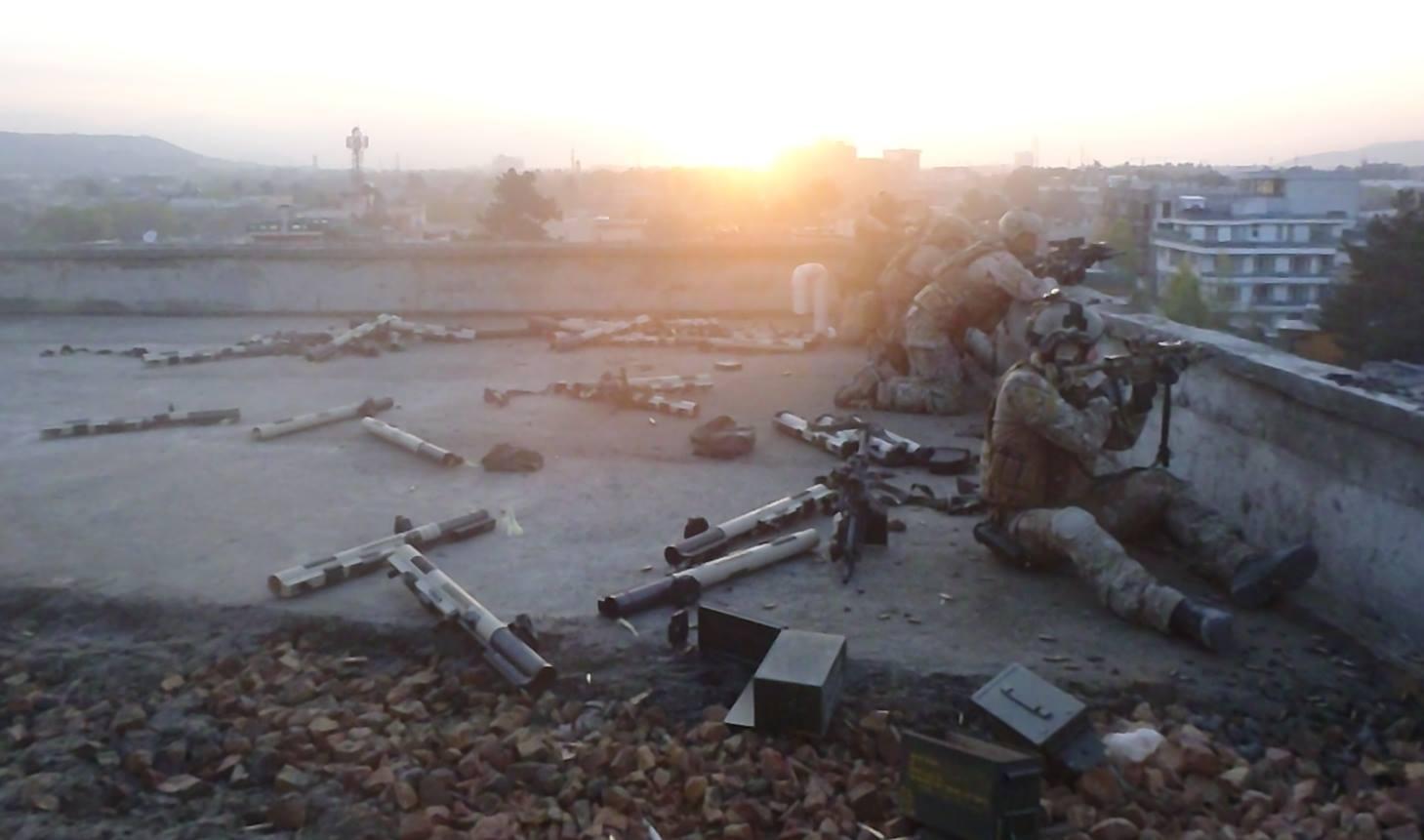
Do you know that, or are you thinking "these are AT weapons so they wouldn't be used"?
I haven't worked with US forces on a tactical level, but I have served in Afghanistan with my own country's SOFs. We used M72s extensively, even though we never engaged any armor.
I wasn't around for this picture, but it illustrates the point:
No need for Yoda notation. clang will warn of this by default and gcc will do so if you compile with -Wall, which should also be your default.
Still way higher than Russia or China. While a little over 15 % of the US population are immigrants (defined as not born in the country), only 0.07 % of the Chinese population are immigrants. Roughly 7 % of Russian population is immigrants.
Source: https://worldpopulationreview.com/country-rankings/immigrati...
Obviously not meant to be taken literally, but surprisingly often could be.
State-based intelligence is not "malicious", and so you are misusing language yourself. State-based intelligence can be roughly divided into three sectors: Civilian, military and counter-terrorism. In peacetime, strategic civilian intelligence is by far the biggest, and is used to back trade agreements, various political decisions and so on. It's simply about preserving the country's interests.
With "malicious" out of the way: Most technological espionage is absolutely done with intent and without the knowledge or at least informed understanding of most subjects.